Yoga for Seniors: Where to Start Safely
Quick answer
Yoga for seniors starts with a gentle style you can do on a chair, standing beside a counter, or on a mat, whichever suits your balance and your health. Pick the version that keeps you steady, move slowly, stop at a mild stretch, and check with your doctor first if you have a health condition. Research on yoga in older adults is limited: it shows modest gains in balance and leg strength, but it hasn't been shown to prevent falls, and the largest trial found slightly more falls, not fewer.
We may earn a commission when you buy through links on this page. It never changes what we recommend. As an Amazon Associate we earn from qualifying purchases.
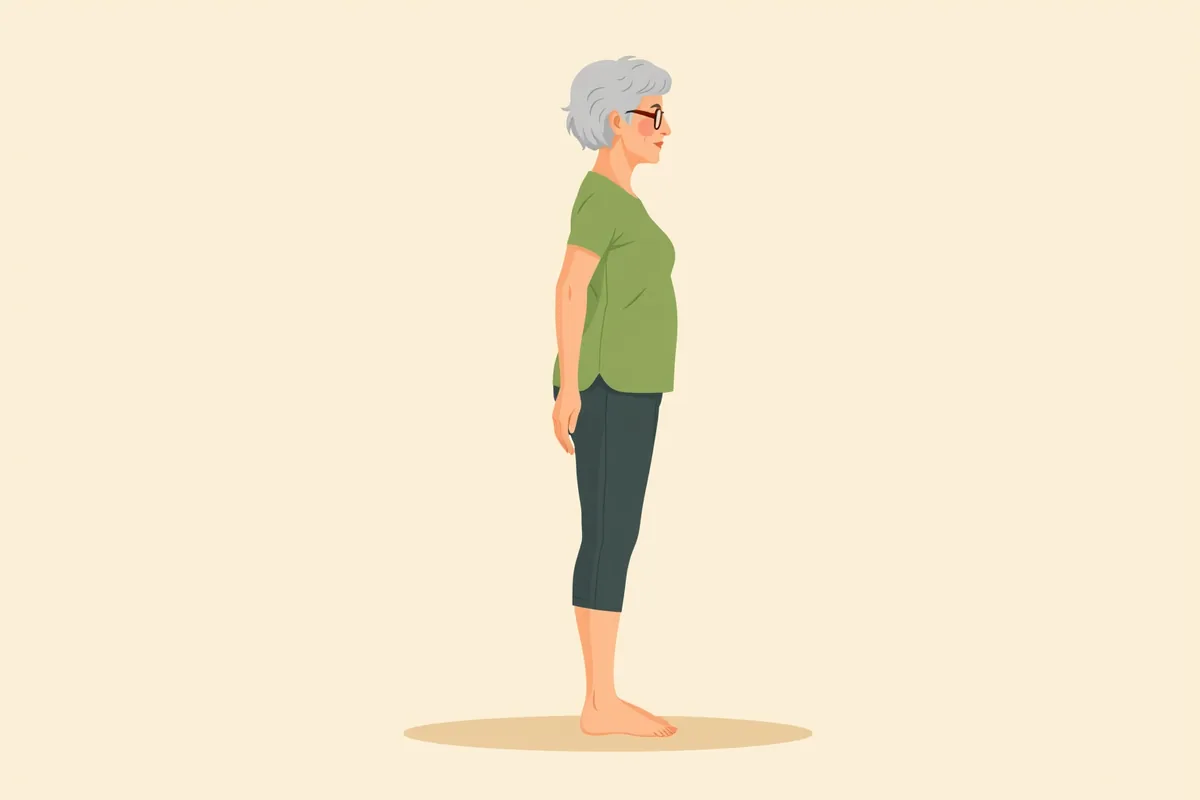
Yoga for seniors is yoga adapted to your balance, strength and health: done in a chair, standing beside a counter, or on a mat. If you’re 65 or older and new to it, start with a gentle class or a short routine you can do with something sturdy to hold, and let your health decide how far to go. This guide is a first stop. It helps you choose a version, check what needs a doctor’s OK, get through a first week and find a class. You’ll find related pages in our Yoga For section.
This is general information, not medical advice, and it makes no promise about balance, pain or falls.
In this guide
- Is yoga safe for seniors?
- Which kind of yoga is right for you?
- Where should you start? A short decision path
- Getting down to and up from the floor, or skipping it
- Your first week: a simple plan
- Is yoga enough exercise for older adults?
- What to ask your doctor or physical therapist
- How to find a yoga class for seniors
- Make it easier (props)
- Who should skip it or ask a doctor first
- What the research says
- Frequently asked questions
- Sources
Is yoga safe for seniors?
It can be, with sensible choices. The NCCIH calls yoga generally safe for healthy people when it’s done under a qualified instructor, and says older adults may need to be particularly cautious. Its data also show a higher rate of yoga injuries seen in emergency departments among people 65 and over than among younger adults. Learning alone without supervision has been linked to more risk.
That doesn’t mean skip it. It means three things: pick a style that suits your body, learn from a qualified teacher when you can, and treat the conditions below as reasons to ask first. The NCCIH’s list of conditions that may call for changed or skipped poses includes past knee or hip injuries, lower-spine disease, severe high blood pressure, balance problems and glaucoma.
Which kind of yoga is right for you?
There are three practical starting points.
| Version | What it is | A good fit if |
|---|---|---|
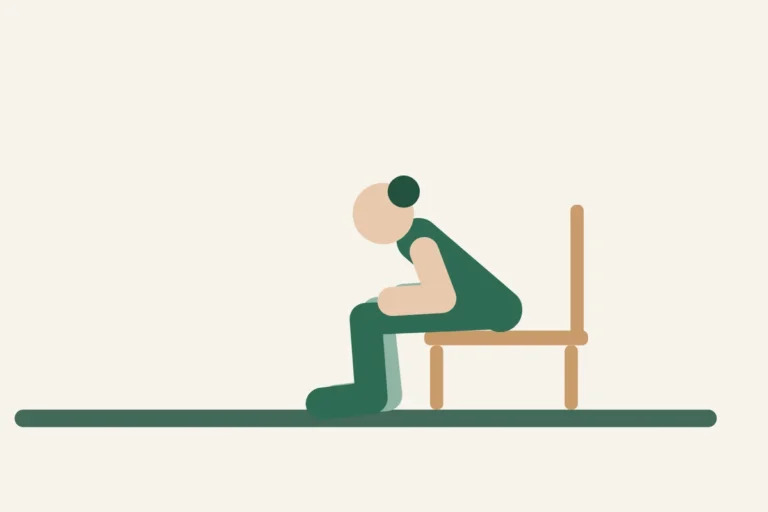
| Chair | Seated moves, or standing moves with a chair held for support | Standing for long is tiring, balance is a worry, or the floor is hard to reach |
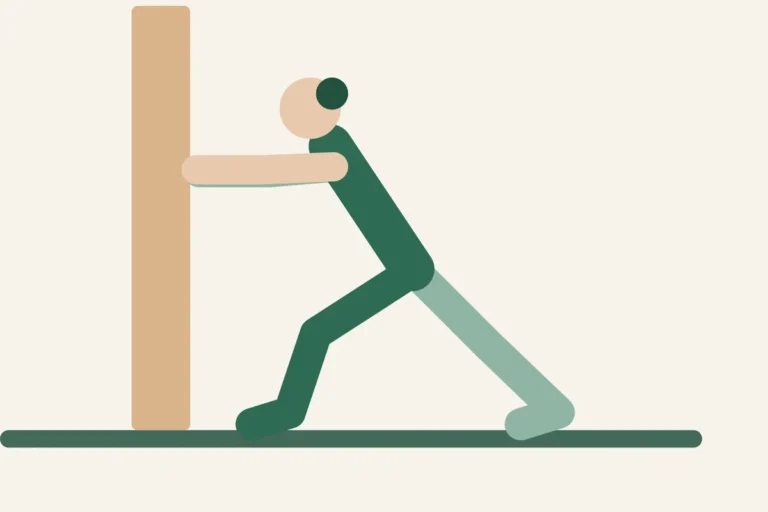
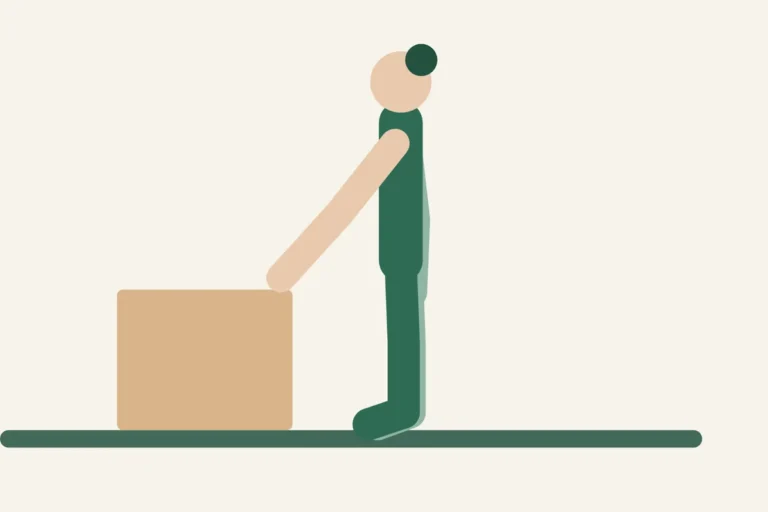
| Standing with support | Mountain Pose and simple moves beside a counter or wall | You feel steady on your feet but want something to touch |
| Mat | Floor poses on a non-slip mat, usually with blocks or a blanket | You get down and up easily and your knees and wrists are comfortable on the floor |
Harvard Health describes chair yoga as open to anyone, and most useful when balance is shaky, long standing is hard, or the floor is a struggle to reach and leave. Our guide to chair yoga for seniors has 12 seated moves and a chart you can print from the page.
For the names of classes, Cleveland Clinic suggests a beginner hatha, slow flow or restorative class for newcomers, and says Iyengar teachers use chairs, blocks and straps. The NCCIH advises new students to avoid headstands, shoulder stands, the lotus position and forceful breathing, and says hot yoga adds risks of overheating and dehydration. Those are good “not yet” items at any age.
Where should you start? A short decision path
Find the line that fits you best. If several do, take the most careful one and ask your doctor or physical therapist.
| If this is you | Start here | Keep in mind |
|---|---|---|
| Steady, active, no conditions | A beginner class, or how to start yoga at home | Keep a wall or chair within reach for standing poses |
| Tired by standing, or the floor is hard | Chair yoga | Stand only at the end, slowly |
| Feel unsteady, have fallen, or get dizzy | Ask your doctor or a physical therapist first, then seated moves | See the balance exercises guide only with support and after your clinician agrees |
| Osteoporosis or low bone density | Seated or standing moves with a long, upright spine | Avoid strongly rounded forward bends |
| Glaucoma | Seated or standing moves | Keep your head above your heart |
| High blood pressure | Ask your doctor, especially if it’s severe | The NCCIH lists severe high blood pressure as a reason to adjust |
| Hip replacement | Follow your surgeon’s rules first | Chair and leg-crossing rules are below |
| Knee or hip pain, or past injury | Ask first; chair versions and shorter holds | The NCCIH lists knee and hip injuries |
Why those cautions? In a review of 89 patients with injuries attributed to yoga, the poses most often involved were ones with extreme bending or arching of the spine, and the authors advised people with osteopenia or osteoporosis to avoid extreme spinal flexion (Lee et al., 2019). For glaucoma, researchers measured eye pressure in 10 people with the condition and 10 without while they held four head-down positions: it rose within a minute and was back to baseline two minutes after they sat up (Jasien et al., 2015).
Dizziness deserves its own line. MedlinePlus notes that rising too fast can bring on low-pressure symptoms in some people, and calls low blood pressure a problem only when dizziness, fainting or, in extreme cases, shock follows. Come out of any pose slowly, and sit down if you feel light-headed.
After a hip replacement
MedlinePlus says to take the most care in the first few months. Among its rules: don’t cross your legs or ankles, don’t bend the hip past a right angle, keep your feet and knees pointing straight ahead, and use a firm, straight-backed chair with armrests, with your hips higher than your knees. That differs from the usual yoga advice for an armless chair, so follow your surgeon or physical therapist, whose rules depend on your operation. So some common poses, such as a seated figure-4 or a deep forward fold, wait until you’re cleared.
Getting down to and up from the floor, or skipping it
The floor is optional. Every pose in the first-week plan below has a standing or seated version. If you do want a mat, plan the way down and up before you start.
The NCOA article on this topic, written by a physical therapy professor, says strength and balance exercises can help you keep or build the skill of getting up and down from the floor. If you struggle with it, it suggests a physical therapist who can teach strategies suited to your abilities. A physical therapist is the best person to show you how, because the right method depends on your knees, hips and strength.
A few planning tips of our own, not from a source:
- Practice beside something sturdy, such as a heavy chair or a bed, and not alone in a room where nobody could hear you.
- Keep your phone within reach.
- Use a non-slip mat on a firm floor, not a thick rug.
- If you aren’t sure you can get up unaided, stay with chair and standing versions until a physical therapist has shown you a method.
Your first week: a simple plan
This plan is our suggestion, not a tested program. It uses four beginner poses and sends you to the page for each one, so the steps stay in one place. Each pose page has chair, wall or prop versions. Stay with a version that lets you breathe smoothly.
| Day | Do | Version to choose |
|---|---|---|
| 1 | Mountain Pose, 5 slow breaths, then rest | Seated, or standing beside a counter |
| 2 | Rest, or a short walk | |
| 3 | Mountain Pose, then Cat-Cow for a few slow rounds | Chair version of Cat-Cow |
| 4 | Rest | |
| 5 | Mountain Pose, Cat-Cow, then Seated Forward Fold | Chair version, head above your heart if you have glaucoma or get dizzy |
| 6 | Rest, or a walk | |
| 7 | All three, then a few quiet breaths. Child’s Pose is optional, only if kneeling is comfortable, and not with glaucoma, osteoporosis or a hip replacement | Skip Child’s Pose if the floor is hard |
If you have osteoporosis, keep Cat small (favor the Cow half) and hinge forward with a long back instead of rounding. After a hip replacement, skip Seated Forward Fold and Child’s Pose until your surgeon clears you, because both bend the hip past a right angle. With glaucoma, skip Child’s Pose, because your head ends up below your hips.
Keep each session short, about 10 minutes, and stop while you still feel good. Those timings are ours. If a day feels like too much, repeat the day before. When the week feels easy, how long to hold a yoga pose helps you pace the holds, and the easy yoga poses list has more to add. For gentle stretches beyond these poses, see stretching exercises for seniors.
Is yoga enough exercise for older adults?
On its own, no. For adults 65 and over, the CDC lists a weekly target of 150 minutes of moderate activity, strengthening work on 2 or more days, and some balance training, scaled to what your abilities and conditions allow. The CDC page doesn’t mention yoga, and none of the studies we read measured whether a gentle class meets those minutes or counts as strength or balance work. Treat yoga as one part of a week that also has walking and strength work. Strength work you can do seated is in chair exercises for seniors.
What to ask your doctor or physical therapist
Bring this list to your next visit if anything above applies to you.
- Is there any pose or movement I should avoid, given my conditions, medicines or surgeries?
- Should I keep my head above my heart, or avoid forward bends, because of my eyes, bones or blood pressure?
- Do any of my medicines make me dizzy when I stand up?
- Is chair, standing or mat yoga the better start for me?
- If I’ve fallen or feel unsteady, should I see a physical therapist before I try balance work?
- Which warning signs mean I should stop and call you?
Harvard Health suggests a doctor’s check before chair yoga after recent surgery on the abdomen, shoulder or hip, or if your back, shoulders or hips give you trouble.
How to find a yoga class for seniors
The NCCIH advises you to ask about an instructor’s training and experience. Practical things to look for and ask:
- A class description that fits you. Words such as gentle, chair, restorative or beginner are good signs. Cleveland Clinic says a studio should describe each class and let you watch your first one.
- A teacher who adapts poses. Cleveland Clinic says instructors can help you modify poses, including using a chair if you can’t lie on the floor.
- Training. Cleveland Clinic suggests a teacher with a Yoga Alliance or similar recognized credential. Ask what experience the teacher has with older adults, which is a question of ours.
- Time to talk. Tell the teacher about surgeries, injuries and dizziness before class starts.
If you can’t get to a class, a live online class with your camera on lets the teacher see you. How to start yoga at home covers choosing videos and staying safe without a teacher in the room.
Make it easier (props)
You can start with a chair and a wall. If you later add floor work, a few props help:
- A sturdy chair without wheels, and a counter or wall to touch. A chair with armrests is the one to use after a hip replacement.
- Blocks under your hands to bring the floor closer. See how to use yoga blocks.
- A strap or belt to extend your reach in seated stretches. A non-slip mat on a firm floor helps if you go to the floor; see yoga mats for beginners.
Helpful gear for this
 Manduka begin yoga mat, 5 mm
5 mm TPE mat, 68 x 24 in, light to carry, with a center alignment stripe (maker's spec).
See it on Amazon Gaiam foam yoga blocks, pair
Two light foam blocks, 9 x 6 x 4 in each, to raise the floor under your hands (maker's spec).
See it on Amazon Hugger Mugger cotton D-ring yoga strap, 10 ft
Cotton webbing 1.5 in wide with a metal D-ring buckle, 10 ft long (maker's spec).
See it on Amazon
As an Amazon Associate we earn from qualifying purchases. How we choose gear
Who should skip it or ask a doctor first
- Talk with your doctor, and with your yoga teacher, before starting, especially if you live with a health condition, take a medicine that can make you dizzy, or have been inactive for a while. The NCCIH advises this for older adults, says they may need to be particularly cautious, and lists knee or hip injuries, lumbar spine disease, severe high blood pressure, balance problems and glaucoma as conditions that may need changes.
- Falls and balance: keep a chair, counter or wall within reach, and stay seated if you feel unsteady. If you’ve fallen or feel unsteady, ask your doctor or physical therapist before any standing balance work.
- Dizziness or fainting: stop and sit. MedlinePlus notes that standing up too fast can bring on dizziness in some people. Rise slowly, and bring it up with your doctor if it comes back.
- Osteoporosis or low bone density: stay away from poses that curl the spine hard (Lee et al., 2019). The study points to extreme bending and arching of the spine. Ask your doctor whether twisting is OK for you too.
- Glaucoma: hold poses with your head up, above your heart. Head-down positions raised eye pressure in a small study (Jasien et al., 2015). Ask your eye doctor.
- Hip replacement: follow your surgeon’s rules. MedlinePlus lists not crossing your legs or ankles, not bending the hip past 90 degrees and using a firm, straight-backed chair with armrests, with hips higher than knees.
- Pain: a mild stretch is fine. Sharp or joint pain means stop; Harvard Health says never to push to the point of strain or pain.
- Chest pain, fainting, or sudden weakness or numbness: stop and call 911 (general safety advice, our own).
What the research says
Evidence: limited
The evidence for yoga in older adults is limited. There are reviews with small to moderate gains on some physical tests, mixed results against other exercise, and one large trial in which a year of yoga classes was followed by more falls, not fewer. No study tested the first-week plan on this page.
Balance and strength. A 2019 review of 22 randomized trials in older adults with an average age of 60 or more, not selected for a disease, pooled seven studies (265 people) in which yoga beat no-exercise groups on balance (effect size 0.70, 95% CI 0.19 to 1.22, results varied widely) and seven (485 people) in which it beat them on leg strength. Against exercise groups such as walking or chair aerobics, the balance difference was not significant (5 studies, 264 people), though leg strength favored yoga (3 studies, 225 people). Harms noted in the yoga arms of four studies were a groin strain, a fall mid-session and musculoskeletal pain (Sivaramakrishnan et al., 2019). A 2016 review of 6 trials with 307 participants aged 60 and over found a small improvement in balance (effect size 0.40, 95% CI 0.15 to 0.65), and its authors said more research is needed to know whether it carries over to preventing falls (Youkhana et al., 2016).
Frailty markers. A 2023 review of 33 trials (2,384 people aged 65 and over) in varied groups, mostly Hatha yoga and often Iyengar or chair-based, found moderate-certainty evidence that yoga improved gait speed and lower-body strength and endurance compared with education or no intervention, and low-certainty evidence for balance. The authors said yoga may not offer benefit over active interventions such as exercise, and none of the studies used a validated definition of frailty. The review’s summary doesn’t give the number of trials behind each result (Loewenthal et al., 2023).
Falls. A Cochrane review pooled 108 trials of exercise to prevent falls (23,407 community-dwelling adults aged 60 and over). All exercise types together lowered the fall rate by 23% (59 studies, 12,981 people, high certainty); balance and functional exercise lowered it by 24% (39 studies, 7,920 people). Yoga is not among the exercise categories named in its abstract (Sherrington et al., 2019). None of the yoga reviews above reports a pooled result for falls. The one large trial that measured falls assigned 700 Australians aged 60 and over (average age 67) to a year of twice-weekly Iyengar-style classes, mostly online, or to two seated relaxation workshops. In the published results the yoga group reported more falls, a difference that was only just statistically significant, and the authors advise against recommending that program, as it stands, to prevent falls (Oliveira et al., 2025). The journal published a correction in 2026 that we haven’t been able to read, so we don’t quote the fall rates here.
Why “limited”: the gains are on tests, not falls, and the one large falls trial found more falls; the trials mix many yoga styles and are small; and yoga was not clearly better than other exercise.
Frequently asked questions
Can seniors start yoga with no experience?
Yes. Age alone isn’t a barrier, though the NCCIH advises older adults to take extra care. Begin with a gentle or chair class, tell the teacher about your health, and build up slowly. See yoga for beginners for the general first month.
Is there free chair yoga for seniors?
Our chair yoga for seniors page has a free one-page chart of 12 moves on screen; there is no PDF to download.
Can yoga prevent falls?
It hasn’t been shown to. In the largest trial, a year of Iyengar-style classes was followed by slightly more falls, not fewer, than a seated relaxation program. On balance tests, yoga did better than no-exercise or comparison groups in the reviews, but results varied a lot and the certainty was low in the newest review; against other exercise the balance difference wasn’t significant. The strongest evidence for fewer falls is for exercise programs in general, especially balance and functional exercise. Our balance exercises for seniors page has the details.
Sources
- National Center for Complementary and Integrative Health (NCCIH). Yoga: Effectiveness and Safety. Last updated August 2023., checked Nov 23, 2026
- Sivaramakrishnan D, Fitzsimons C, Kelly P, et al. The effects of yoga compared to active and inactive controls on physical function and health related quality of life in older adults: systematic review and meta-analysis of randomised controlled trials. Int J Behav Nutr Phys Act. 2019;16(1):33., checked Nov 23, 2026
- Youkhana S, Dean CM, Wolff M, Sherrington C, Tiedemann A. Yoga-based exercise improves balance and mobility in people aged 60 and over: a systematic review and meta-analysis. Age Ageing. 2016;45(1):21-29., checked Nov 23, 2026
- Loewenthal J, Innes KE, Mitzner M, Mita C, Orkaby AR. Effect of yoga on frailty in older adults: a systematic review. Ann Intern Med. 2023;176(4):524-535., checked Nov 23, 2026
- Oliveira JS, Sherrington C, Lord SR, et al. The effect of an Iyengar yoga-based exercise programme versus a seated yoga relaxation programme on falls in people aged 60 years and older (SAGE): a pragmatic, two-arm, parallel randomised controlled trial. Lancet Healthy Longev. 2025;6(9):100749. (A correction was published in 2026;7(3):100825; we could not read it.), checked Nov 23, 2026
- Sherrington C, Fairhall NJ, Wallbank GK, et al. Exercise for preventing falls in older people living in the community. Cochrane Database Syst Rev. 2019;1(1):CD012424., checked Nov 23, 2026
- Lee M, Huntoon EA, Sinaki M. Soft tissue and bony injuries attributed to the practice of yoga: a biomechanical analysis and implications for management. Mayo Clin Proc. 2019;94(3):424-431., checked Nov 23, 2026
- Jasien JV, Jonas JB, de Moraes CG, Ritch R. Intraocular pressure rise in subjects with and without glaucoma during four common yoga positions. PLoS One. 2015;10(12):e0144505., checked Nov 23, 2026
- MedlinePlus (U.S. National Library of Medicine). Taking care of your new hip joint. Reviewed November 7, 2024., checked Nov 23, 2026
- MedlinePlus (U.S. National Library of Medicine). Low blood pressure. Last updated January 28, 2019., checked Nov 23, 2026
- Harvard Health Publishing (Klein S; reviewed by Shmerling RH). Chair yoga: Benefits of a mind-body practice without the risk of falling. February 11, 2025., checked Nov 23, 2026
- Cleveland Clinic. 7 Different Kinds of Yoga and How To Find the Right Practice. Health Essentials. June 2, 2022., checked Nov 23, 2026
- Centers for Disease Control and Prevention (CDC). Older Adult Activity: An Overview. Page dated December 4, 2025., checked Nov 23, 2026
- National Council on Aging (NCOA; Schrodt L, Western Carolina University). Getting to and from the floor. June 18, 2025., checked Nov 23, 2026
Image credits: Illustration: AI-generated for YogaForFitness (FLUX.1-schnell), checked for pose accuracy