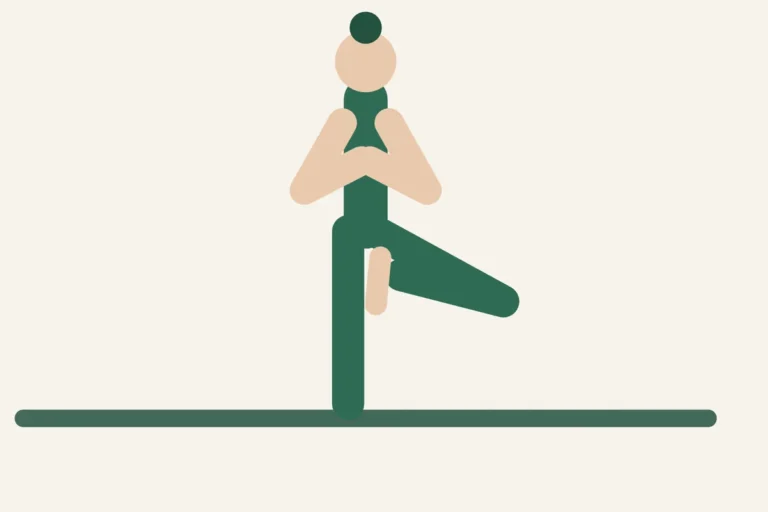
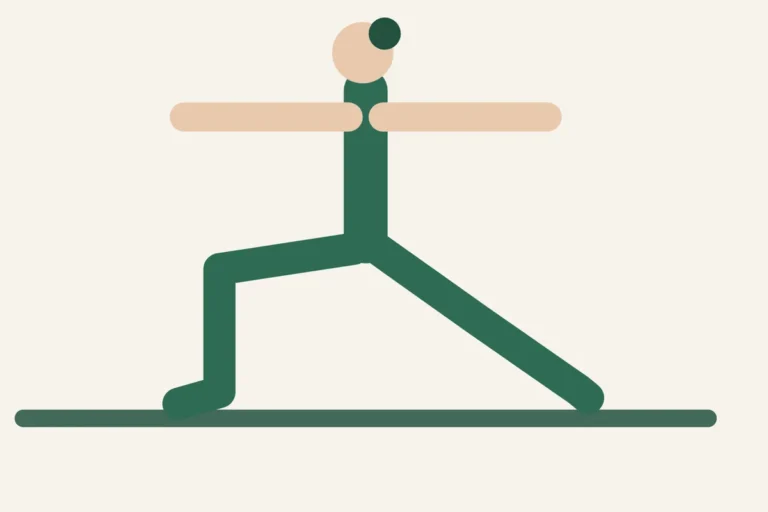
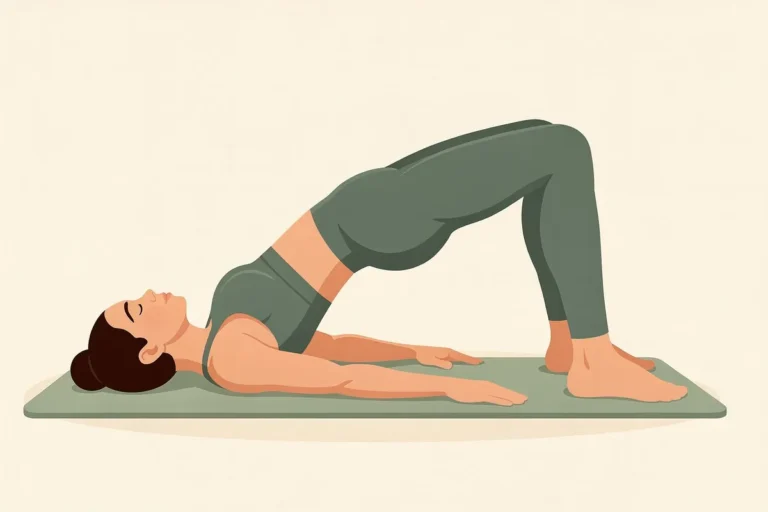
- Level: Beginner
- Pose type: Seated · Forward fold
- Body area: Hamstrings · Calves · Spine · Lower back
- Props: blanket, strap, block, bolster, chair
Seated Forward Fold (Paschimottanasana)
Pronounced pash-chee-moh-tahn-AHS-ah-nah
Quick answer
Sit with your legs out in front of you, on a folded blanket if your lower back slumps. Bend your knees as far as you need to, tip forward from your hips with a long back, and rest your hands on your shins or hold a strap looped around your feet. Stop at a mild pull in the backs of your thighs and stay for 3 to 5 slow breaths.
We may earn a commission when you buy through links on this page. It never changes what we recommend. As an Amazon Associate we earn from qualifying purchases.
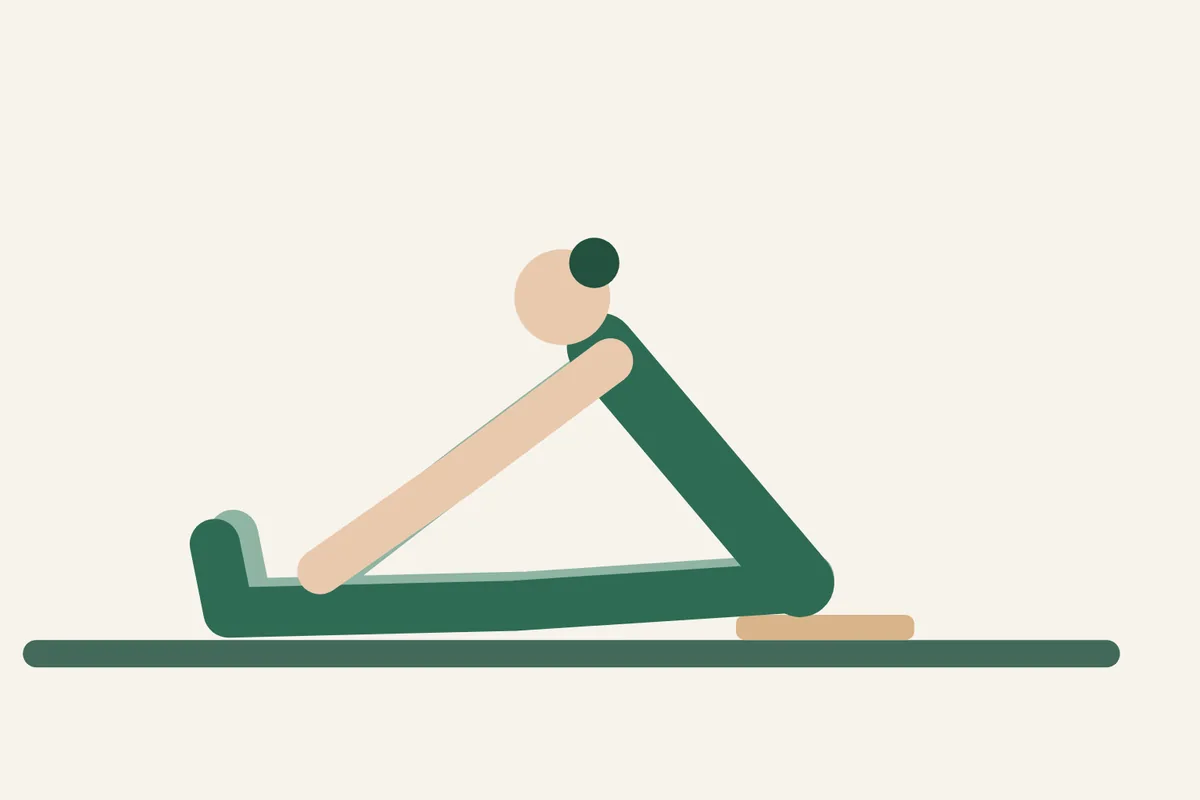
Seated Forward Fold looks like the simplest pose in yoga: sit down, legs straight, lean over them. For many people it is one of the most stubborn. Tight hamstrings hold the pelvis back, the lower back rounds to make up the distance, and the feet stay far away. You don’t need your chest on your thighs for the pose to be worth doing.
This guide starts with the beginner version, then covers the question most people get stuck on, whether to hinge at the hips or round the back, and the versions with a blanket, a strap, a bolster or a chair. The pose is part of our pose library and one of the ten foundation poses in yoga for beginners. For a full stretching plan for the backs of your legs, see yoga for tight hamstrings.
In this guide
- How to do Seated Forward Fold
- Alignment cues
- Common mistakes
- Should you hinge from your hips or round your back?
- What you should feel, and where you shouldn’t
- Make it easier (props)
- Variations
- How long should you hold Seated Forward Fold?
- Poses to do before and after
- Who should skip it or ask a doctor first
- What the research says
- Frequently asked questions
- Sources
How to do Seated Forward Fold
- Sit on the front edge of a folded blanket with both legs stretched out ahead of you, feet about hip-width apart. This upright starting shape is called Staff Pose.
- Check your lower back with one hand. If it bulges backward, or you feel you’re tipping onto your tailbone, bend your knees until you can sit straight up. Add height under your hips if that isn’t enough.
- Flex your feet so your toes and kneecaps point at the ceiling.
- Rest your hands on your thighs and breathe in. Grow taller from your sitting bones to the top of your head.
- As you breathe out, tip your whole trunk forward from your hip joints, the way a door swings on its hinges. Lead with your breastbone, not your forehead.
- Let your hands slide down your legs. Rest them on your shins or ankles, or hold a strap looped around the balls of your feet. Hold your feet only if you can reach them without rounding your back.
- The moment your lower back begins to curve, or the pull in your thighs turns sharp, stop. For many beginners that is a small lean, with the chest still well above the thighs.
- Keep your neck in line with the rest of your spine and look at your shins or toes. Let your shoulders drop away from your ears.
- Stay for 3 to 5 slow breaths. On each in-breath lengthen a little, and on each out-breath soften without pulling.
- To come out, breathe in, press your sitting bones down and lift your trunk back to upright with your back still long.
Alignment cues
- Pelvis: tipped slightly forward, like a bowl spilling a little water toward your feet. This is the cue that matters most.
- Legs and feet: thighs gently firm, kneecaps and toes pointing up, feet flexed as if you were standing on a wall.
- Trunk: long from your navel to your breastbone. Think “chest toward toes,” not “nose toward knees.”
- Head and neck: in line with your spine. Don’t crane your chin up, and don’t let your head hang.
- Breath: slow and even. If it turns ragged, you’re too deep.
Common mistakes
- Pulling yourself down with your arms. Hands on the feet make it tempting to drag the chest lower. That rounds your back and makes it easy to overstretch.
- Chasing your toes. Touching your feet is not the goal. A long back with your hands on your shins is a complete version of the pose.
- Pressing the knees down. Straight is enough. Don’t force your knees flat to the floor or push them past straight.
- Bouncing. The American Council on Exercise advises reaching only to the point of tension, without bouncing or pushing into pain.
Watch out for: pain, tingling or numbness that runs down a leg, a sharp pain at a sitting bone or behind a knee, or a pinch in your lower back. Sit up right away. If the symptoms keep coming back, see a doctor before you return to the pose.
Should you hinge from your hips or round your back?
Start with the hinge. Beginner instructions for this pose agree on one thing: fold only as far as you can with a long back. Long does not mean rigid. It means the forward movement comes from your pelvis tipping over the tops of your thigh bones, not from your spine curling down toward your knees.
Why the pelvis matters. Your hamstrings begin at the bottom of your pelvis, on the sitting bones, and they cross the back of the knee before they attach to your lower leg (AAOS). When you sit on the floor with straight legs, they are already under tension. If they’re short, they hold your pelvis tipped backward, and the only way left to go forward is to bend your spine.
A quick test. Sit on the bare floor with straight legs. If you can’t sit upright without leaning on your hands, or your lower back curves outward, your pelvis is tipped back before the fold has even started. That’s common, and it’s a matter of setup, not effort. Three changes help:
- Sit higher. A folded blanket, a firm cushion or a yoga block under your sitting bones lifts your hips, which makes it easier to tip your pelvis forward. Cleveland Clinic notes that a rolled-up towel or a block can make the upright starting pose easier.
- Bend your knees. This slackens the hamstrings at the knee end, so the pelvis is free to move. Bend them as much as it takes, even until your feet are flat on the floor.
- Fold less. A small lean with a long back puts the stretch in your hamstrings. A deep curl mostly bends your spine.
What about rounding? In the full pose, and in the supported resting version below, the upper back does curve gently once the pelvis has tipped as far as it goes. That soft curve is different from hauling yourself down with your arms. Forced, deep rounding is the part to avoid. When Mayo Clinic doctors reviewed the records of 89 patients with injuries attributed to yoga, the poses most often blamed bent the spine to its limit, forward or backward (Lee et al., 2019). If you have low bone density or a disc problem, read the caution box before you try any version.
Don’t overcorrect, either. Sticking your chest out and arching your lower back hard to “keep it flat” swaps one extreme for another. Aim for a spine that keeps roughly the shape it has when you sit tall.
What you should feel, and where you shouldn’t
- Expect: a steady, mild pull along the middle of the backs of your thighs, and often in your calves when your feet are flexed. It should ease when you back off a little.
- Behind the knee: a sharp or stringy pull right behind the knee is a signal to bend that knee slightly and fold less.
- Lower back: an ache or pinch there means you’ve gone too far or your pelvis is tipped back. Sit higher, bend your knees more or come up.
- At the sitting bone: pain deep in the buttock, right where the hamstring begins, is not a stretch to push through. See the caution box.
- Down the leg: tingling, burning, numbness or pain that travels down the leg can be signs of sciatica, an irritated nerve, rather than a tight muscle (MedlinePlus). Come out of the pose.
Make it easier (props)
- A folded blanket or block under your hips. Sit on the front edge of the support so your pelvis can tilt forward. If you still slump, add another fold.
- Knees bent over a rolled blanket. Slide a rolled blanket or towel under your knees and let them rest on it, so your back can lengthen.
- A strap around your feet. Pass a yoga strap around the balls of both feet (a belt or towel works too) and hold one end in each hand, arms nearly straight. Walk your hands along the strap as you hinge. The strap reaches your feet for you, so your back doesn’t have to round.
- One leg at a time. Let one knee fall out to the side with that foot resting on the other leg’s inner thigh, and lean over the leg that stays straight. Then switch. With only one hamstring holding you back, the pelvis tips more easily.
- Chair version. Sit toward the front of a stable chair with no wheels. Keep one foot flat on the floor and stretch the other leg out with the heel down and toes up. Grow tall, then hinge forward from your hips over the straight leg with your hands on your thigh. Take a few breaths, sit up and change legs. Chair yoga has more seated options.
Helpful gear for this pose
 Manduka Align yoga strap, 8 ft
Cotton strap 1.75 in wide with a zinc-alloy buckle, 8 ft long (maker's spec).
See it on Amazon Manduka cork yoga block
Solid cork, 9 x 6 x 4 in and 2.2 lb, firmer and heavier than foam for steadier support (maker's spec).
See it on Amazon Gaiam foam yoga blocks, pair
Two light foam blocks, 9 x 6 x 4 in each, one for each hand (maker's spec).
See it on Amazon
As an Amazon Associate we earn from qualifying purchases. How we choose gear
Variations
- Supported fold with a bolster. Sit on a folded blanket and lay a bolster or two firm pillows lengthwise on your legs. Fold forward and rest your chest and forehead on the support, adding height until your head is held without strain. Let your arms rest beside the bolster. Set a timer and stay awake (see the next section).
- Legs wide. Take your feet hip-width or a little wider, up to the width of your mat, and fold between your legs. This leaves room for your belly and moves some of the stretch to your inner thighs.
- The deep fold. If your pelvis tips freely and your hamstrings allow it, your belly meets your thighs first, then your ribs, then your head. Hold the outer edges of your feet with your elbows bent out to the sides. Skip this stage with a back or bone condition.
How long should you hold Seated Forward Fold?
As a beginner, 3 to 5 slow breaths is enough, and you can repeat it once or twice. As the pose gets familiar, work up to 30 seconds to a minute.
The 30-to-60-second range comes from research on hamstring stretches in general, not on this pose. One trial split 57 people with tight hamstrings, ages 21 to 37, into four groups: three stretched 5 days a week for 6 weeks and one did not stretch. Holds of 30 or 60 seconds improved flexibility more than 15 seconds or no stretching, and 60 seconds did no better than 30 (Bandy & Irion, 1994). In 62 people aged 65 to 97 with tight hamstrings, on the same schedule, the 60-second group gained knee range at a faster weekly rate than the 15- and 30-second groups (Feland et al., 2001). The American College of Sports Medicine’s position stand sets a minimum of 2 days a week of flexibility work, adding up to 60 seconds for each exercise (Garber et al., 2011).
Teachers often hold the supported bolster version for a couple of minutes. Keep it to that, and don’t doze off in it. One case report describes a woman who fell asleep in this pose and afterward had severe weakness and abnormal sensation in her legs, which her doctors put down to pressure on the sciatic nerves (Walker et al., 2005). It’s a single rare case, but a good reason to use a timer. More on timing: how long to hold a yoga pose.
Poses to do before and after
- Before: a few rounds of Cat-Cow to warm up your spine, then Downward-Facing Dog with bent knees for the backs of your legs.
- After: many sequences follow a forward bend with a gentle back bend, such as Bridge Pose or a low Cobra Pose.
- To rest: kneel and fold into Child’s Pose.
- Read next: mobility vs flexibility.
Who should skip it or ask a doctor first
- Disc problems, sciatica or another lower-back condition. Disease of the lumbar spine is one of the conditions the NCCIH says can require a modified yoga practice, and MedlinePlus names repetitive bending of the lower back among the risk factors for a herniated disc. Teaching guides say to skip this pose with a lower-back injury (YogaEasy). Ask your doctor or physical therapist first. Contact your provider right away about leg pain that reaches below the knee, a weak or numb leg or buttock, or trouble controlling your bladder or bowels (MedlinePlus).
- A hamstring strain or tear. If the back of your thigh hurt suddenly and sharply during exercise, the NHS says to rest the leg for the first 2 to 3 days. If it isn’t better after a few days, see a provider, and hold off on harder activity until you’re cleared (Cleveland Clinic). Skip this pose while it heals, and ask your provider when to start stretching again.
- Pain at the sitting bone. Deep buttock pain right where the hamstrings attach can have several causes. One of them, a tendon problem called proximal hamstring tendinopathy, typically shows up as pain in that spot and is often long-lasting (Goom et al., 2016). The hamstrings attach there (AAOS), so don’t stretch into that pain. Skip the pose and have it checked.
- Osteoporosis or low bone density. Toe touches and similar forward bends from the waist are on the MedlinePlus list of movements that may cause a fracture. In the Mayo Clinic record review above, 13 of the 89 patients had compression fractures of the spine, and the authors’ advice for people with osteopenia or osteoporosis is to avoid extreme forward bending of the spine (Lee et al., 2019). Check with your doctor or physical therapist whether any version suits you, and skip the rounded and deep versions.
- Hip replacement or hip injury. For people with a new hip, MedlinePlus gives a general rule not to bend the hip past 90 degrees, with special care in the first months after surgery. Sitting upright with straight legs is already about a right angle, and folding goes past it. Your surgeon or physical therapist can tell you which positions are allowed, and from when. With any hip injury, ask first.
- Pregnancy. The NCCIH advises an evaluation by your health care provider before exercising in pregnancy, says you may need to modify yoga, and says to avoid long periods of being still. We found no official health guidance on this pose in pregnancy, so ask your provider or a prenatal-trained teacher whether and how to do it. As a comfort option, a teaching guide for prenatal classes suggests sitting tall with the legs out instead of folding, or taking the feet wider so the belly has room (Yoga International); that is teaching practice, not medical advice. Keep your back long and your holds short, and stop if you feel uncomfortable, too hot or unwell (NHS).
- Glaucoma or severe high blood pressure. Both are on the NCCIH’s list. A small study found that eye pressure rose within a minute in four head-down poses, among them Downward-Facing Dog and a standing forward fold (Jasien et al., 2015). It did not test this seated pose, and we found no study that did. If you have glaucoma, ask your eye doctor before you try the deep fold, where your head comes down to your legs. With severe high blood pressure, ask your doctor before you start, and stay with the upright, long-back version unless told otherwise.
- Knee injuries, or age 65 or older. Knee injuries are on the NCCIH’s list too: keep your knees bent over a rolled blanket. The NCCIH also advises older adults to be particularly careful, and reports a higher rate of emergency-room visits for yoga injuries at 65 and over. Start with the chair or one-leg version, and keep your back long. If you’re new to yoga or have a health condition, the NCCIH notes that learning with a qualified teacher is safer than learning alone.
What the research says
Evidence: limited
We found two trials that tested this pose itself. Both are recent and from India, in healthy young adults. One measured flexibility and has not been repeated as far as we could find. The other measured mood after a single 90-second hold in people who already practiced yoga, and its summary notes that an earlier, smaller study pointed to backward bends, not forward bends, as the poses that alone raised positive mood. That is why we rate the evidence as limited.
- Flexibility. A randomized trial published in 2026 enrolled 150 healthy 18-to-28-year-olds at a North Indian university. For 4 weeks, 6 days a week, everyone began with 16 minutes of loosening exercises. One group then practiced this pose for 4 minutes, and the other rested on their backs for those 4 minutes. According to the published summary, sit-and-reach scores improved significantly in the pose group compared with the rest group, but it gives no numbers for that comparison (Thapa et al., 2026). The only figures it reports are before-and-after changes within each group on a second measure. We could read only the summary, not the full paper.
- What that test measures. In the sit-and-reach test you sit with straight legs and reach forward as far as you can, much like the pose. A meta-analysis of 34 studies found that it reflects hamstring flexibility only moderately well and lower-back flexibility poorly (Mayorga-Vega et al., 2014). So a better score is not, by itself, proof of looser hamstrings.
- Mood. In a 2026 crossover trial, 64 young adults with yoga experience held each of six poses for 90 seconds on separate days. After the seated forward bend they rated themselves as more peppy, happy and content and less drowsy than before it. The comparison sitting pose, a simple cross-legged seat, also changed some mood ratings and was the only one that raised overall relaxation (Telles et al., 2026). These are before-and-after ratings within one short session. The summary reports no head-to-head comparison between the fold and the plain seat, so it doesn’t show that folding lifts mood more than sitting quietly does.
- General context, not a test of this pose. A 2016 meta-analysis of controlled trials in healthy young adults (19 trials in all, pooled separately for each test) found more hamstring flexibility with static stretching than without, on each of three standard tests (Medeiros et al., 2016). It covered held hamstring stretches in general, not this pose.
We found no trials of this pose for digestion, sleep, period pain or back pain, although such benefits are often claimed for it.
Frequently asked questions
Why is Seated Forward Fold so hard?
Mostly because of the setup. With straight legs, tight hamstrings hold your pelvis tipped back, so you start the pose already at your limit. A folded blanket and bent knees free the pelvis. Your build plays a part too: the length of your arms, legs and trunk helps decide whether your hands reach your feet, so comparing yourself with a photo tells you little.
Is it OK to bend your knees in Seated Forward Fold?
Yes. Bent knees are the standard beginner version, not a shortcut. Straighten your legs gradually over weeks, and only as far as your back keeps its shape.
Seated or standing forward fold: which is better for tight hamstrings?
Both stretch the backs of your thighs. Seated, nothing pulls you deeper, so the fold is easy to control with a strap. Standing, your upper body’s weight pulls you deeper and your head hangs below your heart, which some people need to avoid (see the caution box). If the floor version feels impossible, the half fold at a chair in yoga for tight hamstrings is often an easier start.
Does Seated Forward Fold increase height?
No. Growth plates, the zones that lengthen your bones, close for good sometime during adolescence (NIAMS). We found no study showing that this or any yoga pose adds height in adults.
Sources
- National Center for Complementary and Integrative Health (NCCIH). Yoga: Effectiveness and Safety. Last updated August 2023., checked Nov 17, 2026
- American Academy of Orthopaedic Surgeons (AAOS). Hamstring Muscle Injuries. OrthoInfo., checked Nov 17, 2026
- MedlinePlus (U.S. National Library of Medicine). Sciatica. Reviewed August 27, 2024., checked Nov 17, 2026
- MedlinePlus (U.S. National Library of Medicine). Herniated disk. Reviewed August 27, 2024., checked Nov 17, 2026
- MedlinePlus (U.S. National Library of Medicine). Osteoporosis., checked Nov 17, 2026
- Lee M, Huntoon EA, Sinaki M. Soft Tissue and Bony Injuries Attributed to the Practice of Yoga: A Biomechanical Analysis and Implications for Management. Mayo Clin Proc. 2019;94(3):424-431., checked Nov 17, 2026
- NHS. Hamstring injury. Page last reviewed July 28, 2025., checked Nov 17, 2026
- Cleveland Clinic. Hamstring Injury. Health Library. Last updated April 16, 2025., checked Nov 17, 2026
- Goom TS, Malliaras P, Reiman MP, Purdam CR. Proximal Hamstring Tendinopathy: Clinical Aspects of Assessment and Management. J Orthop Sports Phys Ther. 2016;46(6):483-493., checked Nov 17, 2026
- Walker M, Meekins G, Hu SC. Yoga neuropathy. A snoozer. Neurologist. 2005;11(3):176-178., checked Nov 17, 2026
- MedlinePlus (U.S. National Library of Medicine). Taking care of your new hip joint. Reviewed November 7, 2024., checked Nov 17, 2026
- NHS. Exercise in pregnancy. Page last reviewed September 24, 2026., checked Nov 17, 2026
- Jasien JV, Jonas JB, de Moraes CG, Ritch R. Intraocular Pressure Rise in Subjects with and without Glaucoma during Four Common Yoga Positions. PLoS One. 2015;10(12):e0144505., checked Nov 17, 2026
- Thapa R, Chandrabanshi A, Singh A, Kumar R. Effect of 4 Weeks of Yogic-based Paschimottanasana Practice on Sit-and-Reach Test and Goniometer Measurements among Healthy Participants: A Randomized Controlled Trial. Adv Mind Body Med. 2026;40(2):22-27., checked Nov 17, 2026
- Telles S, Sharma SK, Kumar A, Gandharva K, Mishra P, Balakrishna A. Embodied Affect and Cognition in Yoga Postures: A Randomized Crossover Trial. Int J Yoga Therap. 2026;35(2025):Article 12., checked Nov 17, 2026
- Mayorga-Vega D, Merino-Marban R, Viciana J. Criterion-Related Validity of Sit-and-Reach Tests for Estimating Hamstring and Lumbar Extensibility: a Meta-Analysis. J Sports Sci Med. 2014;13(1):1-14., checked Nov 17, 2026
- Medeiros DM, Cini A, Sbruzzi G, Lima CS. Influence of static stretching on hamstring flexibility in healthy young adults: Systematic review and meta-analysis. Physiother Theory Pract. 2016;32(6):438-445., checked Nov 17, 2026
- Bandy WD, Irion JM. The effect of time on static stretch on the flexibility of the hamstring muscles. Phys Ther. 1994;74(9):845-850., checked Nov 17, 2026
- Feland JB, Myrer JW, Schulthies SS, Fellingham GW, Measom GW. The effect of duration of stretching of the hamstring muscle group for increasing range of motion in people aged 65 years or older. Phys Ther. 2001;81(5):1110-1117., checked Nov 17, 2026
- Garber CE, Blissmer B, Deschenes MR, et al. American College of Sports Medicine position stand. Quantity and quality of exercise for developing and maintaining cardiorespiratory, musculoskeletal, and neuromotor fitness in apparently healthy adults. Med Sci Sports Exerc. 2011;43(7):1334-1359., checked Nov 17, 2026
- American Council on Exercise (ACE). Seated Toe Touches. Exercise Library., checked Nov 17, 2026
- Cleveland Clinic. Yoga poses to improve flexibility (Staff pose). Health Essentials., checked Nov 17, 2026
- YogaEasy. Seated Forward Bend (Paschimottanasana)., checked Nov 17, 2026
- Yoga International. 6 Tips for Modifying Your Class for Pregnant Students., checked Nov 17, 2026
- National Institute of Arthritis and Musculoskeletal and Skin Diseases (NIAMS). Growth Plate Injuries. Last reviewed December 2023., checked Nov 17, 2026
Image credits: Illustration: YogaForFitness (vector figure), drawn from the steps above