Yin Yoga: What It Is and 6 Beginner Poses
Quick answer
Yin yoga is a slow style in which you settle into mostly seated and lying poses, relax your muscles and stay still, usually for one to five minutes or longer. As a beginner, start with holds of one to two minutes, use props freely and come out right away if you feel pain, tingling or numbness.
We may earn a commission when you buy through links on this page. It never changes what we recommend. As an Amazon Associate we earn from qualifying purchases.
A yin class asks you to do less than most exercise does. You ease into a shape on the floor, let your muscles go soft and wait while a timer runs.
Here you’ll find six beginner poses, safety advice and the research. New to the mat? Begin with yoga for beginners or browse Start Here.
In this guide
What is yin yoga?
It’s a mostly passive practice: gravity and time do the work while your muscles stay relaxed. Teaching sites say you mostly sit or lie down, and the shapes focus on the lower body, from the hips and pelvis to the inner thighs and lower back (yinyoga.com; YogaEasy).
The names come from the Taoist idea of yin and yang, a pair of opposites that complete each other: yin is the still side, yang the moving one. YogaEasy teaches that Daoist yoga in China and Taiwan has used similar long holds for centuries.
Teachers also explain what the long holds are for. They say yin loads connective tissue, such as ligaments, tendons and fascia (the wrapping around muscles), more than the muscles themselves (Yoga International). Some add that the poses improve the flow of qi, or energy, along the meridians of Traditional Chinese Medicine (YogaEasy). Treat both as the tradition’s explanation. Our PubMed search turned up no study that tested whether yin changes ligaments, fascia or meridians.
How is it different from restorative, hatha and flow classes?
| Style | What you do | Typical hold |
|---|---|---|
| Yin | Relaxed, still floor poses taken to a clear stretch or pressure | About 1 to 5 minutes; one guide says up to nearly 10 |
| Restorative | Rest on props that support you, aiming for full relaxation | 5 to 10 minutes or longer |
| Hatha | Standing and seated poses with breathing work | Several breaths |
| Flow or vinyasa | Move from pose to pose with your breath | Brief |
Yin and restorative yoga can look alike, yet yinyoga.com states plainly that yin is not restorative. It tells yin students to expect some discomfort. A restorative teacher quoted by Cleveland Clinic says there should be none, with bolsters and blankets for support. The hatha and flow rows follow Cleveland Clinic’s guide to yoga styles.
Sources differ on the longest holds; compare them in how long to hold a yoga pose. For quiet practice without an edge, try yoga nidra.
How to practice, step by step
- Set up. Keep cushions, blocks and blankets close. You won’t build much heat, so add a layer or warm the room
(yinyoga.com). Set a timer.
- Ease in to your edge, the first point where your body clearly resists. It may give way after 30 seconds or a
minute, or it may not. Teachers expect a dull ache, never pain. As a beginner, choose the milder depth: a Cleveland Clinic expert calls pain in a joint a red flag.
- Be still, unless something hurts, you’re struggling or your body opens and you want to
- Breathe quietly, without forcing the breath.
- Start with one or two minutes and build over time. Leave
early if you’re struggling, even if the timer hasn’t rung.
- Come out gently and slowly, using your hands, and pause before the
next shape.
When should you come out right away?
- Burning, sharp, electric or deep twisting pain.
yinyoga.com says to leave the pose immediately.
- Strain you can’t relax through. Tensing muscles mean
you’re struggling, and strained or uneven breathing is another cue to ease back.
- Tingling, numbness or pins and needles. Don’t
wait it out. Move and take the weight off the area. See a doctor if it’s constant or keeps coming back.
- Lightheadedness as you get up. Rise in stages, sitting before you stand, and get checked if it
- Drowsiness in a fold. In a single case report, a woman had severe leg
weakness and altered sensation after falling asleep in a seated forward fold. Set a timer and stay awake.
6 yin yoga poses for beginners
Read the caution box further down first. Hold each pose for one to two minutes to begin with; the longer times below are teaching targets for later. Give both sides the same time.
1. Butterfly
Where you may feel it: inner thighs, backs of the legs and along the spine.
- Sit on the edge of a folded blanket or a cushion.
- Press your soles together and move your heels well forward, so your legs form a loose diamond.
- Tip forward from your hips and let your back curve.
- Let your hands settle on your feet or in front of them, and lower your head only as far as is comfortable.
To come out: push into the floor and uncurl slowly. Lean back on your hands, then bring your knees together and straighten your legs.
Longer hold: 3 to 5 minutes (yinyoga.com; YogaEasy).
Easier: put blocks under your knees or thighs, or lay a bolster across your thighs and rest your chest on it. You can hold your head in your hands, elbows propped.
Watch out for: sciatica, which this shape can aggravate. Sit high enough that your knees are below your hips, or skip it. If your lower back shouldn’t bend forward, keep it straight. After whiplash, or with a reversed neck curve, don’t let your head drop. It’s a rounder relative of Bound Angle in yoga for tight hips.
2. Dragon
Where you may feel it: the front of the back hip and thigh, and the groin.
This is a long, relaxed Low Lunge; that page covers the entry in detail.
- Start on hands and knees. Step your right foot up between your hands, with the ankle under the knee.
- Keep your left knee down on a folded blanket and inch it back until the stretch appears. Try to rest just above the
kneecap, not squarely on it.
- Keep your hands on the floor or on blocks, one on each side of the front foot.
- Let your hips sink without pushing.
To come out: put your weight in your hands, draw the back knee forward, tuck the toes and step back to hands and knees. Rest before the second side.
Longer hold: 3 to 5 minutes (yinyoga.com). YogaEasy suggests 1 to 3 minutes to start, since the feeling can get intense.
Easier: raise the floor with blocks, put a bolster under your back shin or stand a block under your front thigh for support (yinyoga.com; YogaEasy).
Watch out for: knee injuries. Pad the back knee and pay close attention to the front one. If your lower back is sensitive, stay low and take care before lifting your chest.
3. Sphinx
Where you may feel it: mild pressure in the lower back and a stretch down the front of the body.
- Lie on your front with your legs a comfortable distance apart.
- Prop yourself on your forearms, with your elbows under your shoulders or a little ahead of them.
- Rest your palms on the floor, or cradle each elbow in the other hand.
- Soften your buttocks and legs. Keep your neck easy, or rest your chin on your fists.
To come out: lower your chest slowly, rest one cheek on your hands and stay flat for a few breaths.
Longer hold: up to 5 minutes (yinyoga.com).
Easier: walk your elbows farther forward so your chest sits lower, slide a bolster under your armpits, or simply lie flat with your forehead on your hands (yinyoga.com; YogaEasy).
Watch out for: sharp or pinching pain, which means come out. YogaEasy says to avoid the pose in pregnancy, and yinyoga.com lists a bad back, a tight sacrum and a headache as reasons against it. Cobra Pose is its more muscular cousin.
4. Child’s Pose
Where you may feel it: along the back and the ankles.
Follow our Child’s Pose steps: sit your hips toward your heels, fold forward and rest your forehead on the floor, stacked fists or a block.
To come out: press with your hands, roll up slowly with your head last, and sit for a moment.
Hold: up to a minute as a pause between poses, or 3 to 5 minutes as a pose of its own (yinyoga.com).
Easier: tuck a blanket between your thighs and calves, pad your ankles, or lay your chest on a bolster with your knees apart.
Watch out for: knee problems. Use the blanket or leave the pose out. Both yinyoga.com and YogaEasy list pregnancy as a reason to skip it. If your provider agrees, our Child’s Pose guide has a wide-knee version with short holds; a long yin hold isn’t it.
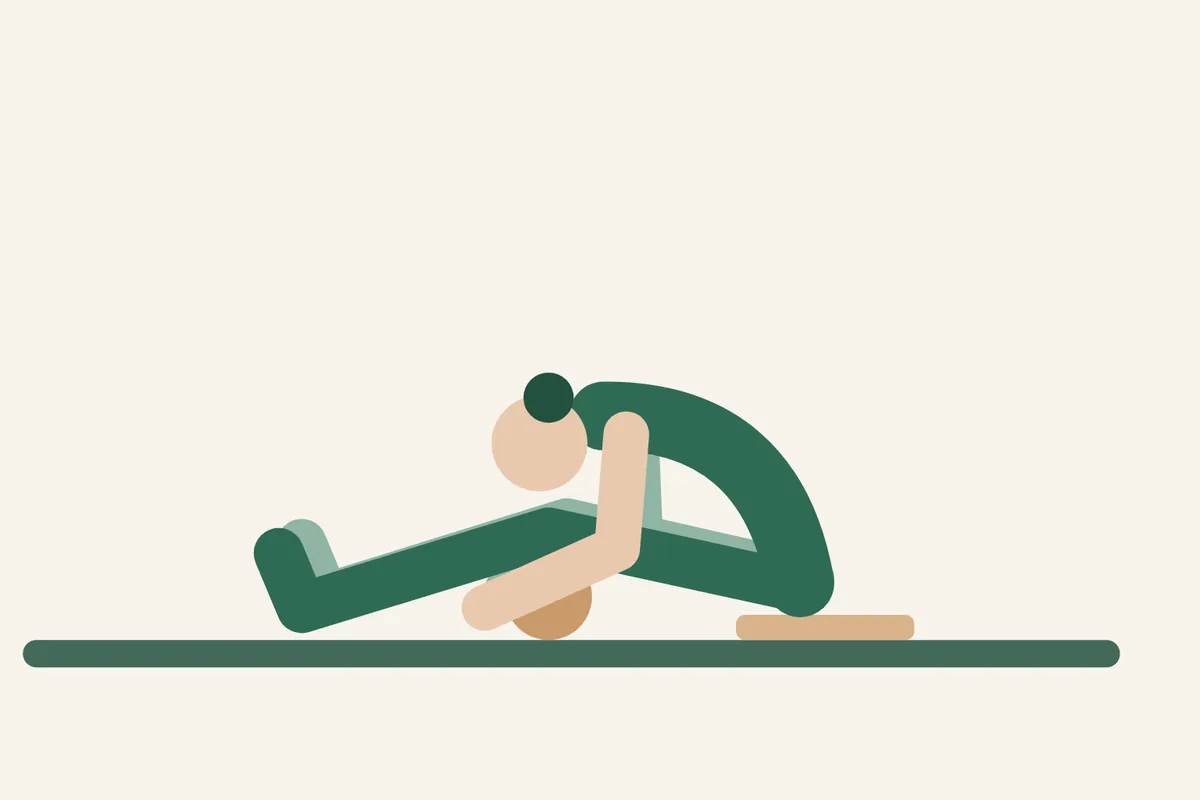
5. Caterpillar
Where you may feel it: along the spine and the backs of the thighs.
This is the yin take on Seated Forward Fold. The shape matches, but you don’t try to keep a long back or reach your head to your feet.
- Sit up on a cushion and stretch your legs forward.
- Bend your knees over a bolster or rolled blanket if your hamstrings pull.
- Hinge at your hips, then allow your spine to round.
- Let your hands rest anywhere and your legs fall loose.
To come out: press the floor away, rise slowly, lean back on your hands and then move your legs.
Longer hold: 3 to 5 minutes or more (yinyoga.com).
Easier: sit higher, bend your knees more, rest your chest on a bolster or hold your head in your hands with your elbows propped (yinyoga.com; YogaEasy).
Watch out for: sciatica, which this fold can aggravate, and back conditions that rule out forward bending. Skip it or ask a clinician which version fits. Bend your knees if you have a hamstring injury or an aching lower back.
6. Banana (Bananasana)
Where you may feel it: down one side of the body, from the armpit and ribs to the outer hip.
- Lie face up, legs long and touching.
- Reach your arms past your head and hold your elbows, or one wrist.
- Keeping both buttocks on the floor, shift your feet to the right.
- Slide your upper body to the right as well, so you curve like a crescent.
- If it’s comfortable, cross your ankles to help your legs stay put.
To come out: return your upper body and legs to the center, lower your arms and pause. Then curve to the left.
Longer hold: 3 to 5 minutes (yinyoga.com; YogaEasy).
Easier: curve less, and rest your arms on a bolster or across your chest.
Watch out for: tingling in your hands or arms. Support the arms or bring them down. With lower back trouble, stay shallow. This pose is done lying on the back, so leave it out in pregnancy.
Make it easier (props)
A folded blanket or cushion raises your seat or pads a knee, a bolster or firm pillows take the weight of your chest or arms, and two blocks bring the floor closer.
Helpful gear for this
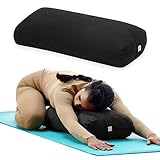 Gaiam rectangular yoga bolster
Rectangular bolster, 25 x 12 x 5 in, with a removable, machine-washable cover (maker's spec).
See it on Amazon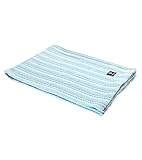 Hugger Mugger cotton yoga blanket
Woven cotton blanket to fold, roll or stack under your hips or knees (maker's description).
See it on Amazon Gaiam foam yoga blocks, pair
Two light foam blocks, 9 x 6 x 4 in each, to prop a bolster or rest under your forehead (maker's spec).
See it on Amazon
As an Amazon Associate we earn from qualifying purchases. How we choose gear
A 20-minute yin sequence
This is our own arrangement, with pauses between the bigger changes of shape; no study has tested it. The timed parts add up to 18 minutes, leaving two for transitions.
| Order | Pose | Time |
|---|---|---|
| 1 | Sit or lie comfortably and notice your breath | 1 min |
| 2 | Butterfly | 2 min |
| 3 | Dragon, right foot forward | 1 min 30 s |
| 4 | Child’s Pose | 1 min |
| 5 | Dragon, left foot forward | 1 min 30 s |
| 6 | Sphinx | 2 min |
| 7 | Child’s Pose, entered slowly | 1 min |
| 8 | Caterpillar | 2 min |
| 9 | Banana, each side | 1 min 30 s per side |
| 10 | Rest on your back (Savasana) | 3 min |
Don’t use this sequence in pregnancy: it relies on still holds and ends lying on the back. Anyone else can swap a pose for rest. To finish, roll to one side, sit, wait a moment and then stand.
Who should skip or change long passive holds
Talk with a health care provider first if any of these apply, and tell your teacher. The NCCIH also advises practicing under a qualified instructor.
- Pregnancy. The NCCIH says to get your provider’s evaluation before exercising and to avoid long spells of stillness or lying on your back, yoga poses included. That describes a standard yin class, so don’t join one without your provider’s advice. For later pregnancy, the NHS also advises against activities that keep you flat on your back beyond a few minutes.
- Hypermobile joints. The NHS tells people with joint hypermobility syndrome not to overextend joints just because they can, and names better strength and fitness as the main treatment. Ask a physical therapist whether long passive holds suit you. If you practice, don’t hang at the far end of a joint’s range. See a doctor about joints that keep hurting, spraining or dislocating.
- Osteoporosis or low bone density. After reviewing 89 people with yoga-related injuries, Mayo Clinic authors advised people with osteopenia or osteoporosis to avoid extreme forward bending of the spine (Lee et al., 2019). Leave out Caterpillar, folded Butterfly and Snail, which are built on a rounded back. Child’s Pose rounds your back too, so ask your doctor or physical therapist before you use it. The authors also urge care with extreme backbends, so ask your doctor or physical therapist about Sphinx and the other shapes.
- Glaucoma. In a study of 10 people with glaucoma and 10 without, eye pressure rose within a minute in four head-down positions: Downward-Facing Dog, a standing forward fold, Plow and legs up the wall (Jasien et al., 2015). It tested none of our six. Some yin classes include Snail, a Plow-like shape that yinyoga.com advises against with glaucoma. So skip it. Child’s Pose and the folded versions of Butterfly and Caterpillar also bring your head low. Ask your eye doctor about these and any other head-down pose, including legs up the wall, which raised eye pressure in this study.
- Recent injury or surgery. Get clearance first, and give damaged tissue time to recover before you work it again.
- Joint replacement. Ask your surgeon first. While you recover from a hip replacement, the NHS says not to bend the hip past a right angle, cross your legs or reach down to your feet, and to try not to sit still for long. Skip yin until your surgeon clears you.
- Knee or hip injuries, lower spine disease, severe high blood pressure or balance problems. The NCCIH lists these among the conditions that may call for changes to yoga.
- Heart or blood vessel disease, epilepsy or diabetes. yinyoga.com asks students with these, especially high blood pressure, to discuss yoga with a health care professional.
- Age 65 or older. The NCCIH reports a higher rate of emergency-room visits for yoga injuries in this age group. Get down to the floor and up again slowly, moving from lying to sitting to standing (NHS).
Yoga doesn’t replace medical care. Don’t put off seeing a provider about pain or another problem.
What the research says
Evidence: limited
Our PubMed search for “yin yoga” on November 26, 2026 returned eight records: five randomized trials, two small studies without a comparison group and one systematic review of many yoga styles and stress.
Yin classes tested against no new activity
- Stressed middle-aged adults. A Swedish trial randomly assigned 105 people to three groups (its baseline table lists 97). The yin-only group (34 at the start, 29 at the end) practiced for an hour twice a week for five weeks, plus a daily breathing recording. Compared with 30 people who did no yoga, anxiety and insomnia scores improved more. Stress and depression scores did not differ significantly. A version with added psychology and mindfulness lessons improved all four. Ratings were self-reported, there was no active comparison, some people dropped out and the trial was registered after the fact.
- Women with anxiety symptoms. In a Latvian trial, 38 women took a weekly two-hour online class for 10 weeks and 10 changed nothing. Each class also included breathing exercises and meditation, and the teacher was one of the authors. Anxiety felt in the moment ended lower in the yin group. Their usual, longer-term anxiety did not differ between groups at the end, although it fell within the yin group. The authors saw no adverse effects. The comparison group was very small.
Yin compared with another exercise program
- A trial of 44 breast cancer survivors, average age about 60, compared 24 weeks of twice-weekly yin classes with resistance and impact training. Changes in body composition, bone density and bone blood markers did not differ between the groups, and bone density at two sites slipped slightly across the study. Upper-body strength rose with the training program but not with yin. Knee strength improved over time across the groups, with no inactive group to show why.
Yin mixed with other methods, or without a control group
- In 120 adolescents randomized by school, four weekly sessions of stress-management lessons plus yin led to better stress, anxiety, depression and well-being scores than one short education session, still largely seen at three months. The lessons and extra attention may explain some or all of it.
- An earlier Swedish trial of the same lessons-plus-yin program reported less stress and worry than a waiting list, still present five weeks later. Its summary doesn’t give the number of participants.
- Among 20 pharmacy students and faculty who finished six weekly classes with guided meditation, stress and anxiety fell within the group. A pilot with 5 dementia caregivers reported that an online program was workable, with changes.
Why “limited”: a few randomized trials hint at short-term help with anxiety, and one with insomnia. They are small or short, rely mostly on self-ratings, sometimes mix in other methods and don’t agree on stress. Nothing we read reported flexibility, joint range or pain results, compared yin with another yoga style or tested our six poses. Yin isn’t a proven treatment for any condition. For wider yoga research, see benefits of yoga.
Frequently asked questions
Is yin good for beginners?
It can be. A yoga therapist quoted by Cleveland Clinic finds the slower pace less intimidating than fast classes, while another Cleveland Clinic guide says yin takes more practice and patience than restorative yoga.
Does it improve flexibility?
Teaching sites say it does, but we found no trial that measured it for yin. The hold-time guide covers research on ordinary stretching.
How often should you practice?
No settled amount exists. The randomized trials without added lessons used one or two classes a week. Start with one short session, notice how your joints feel that day and the next, and build from there.
Sources
- yinyoga.com. What is Yin Yoga? Teaching reference., checked Nov 26, 2026
- YogaEasy. Yin Yoga. Teaching reference., checked Nov 26, 2026
- Morris N. Yin Yoga: Tips for Developing Your Practice. Yoga International. Teaching reference., checked Nov 26, 2026
- Cleveland Clinic. 7 Different Kinds of Yoga and How To Find the Right Practice. Health Essentials. June 2, 2022., checked Nov 26, 2026
- Cleveland Clinic. How Restorative Yoga Can Nurture Your Mind, Body and Spirit. Health Essentials. January 4, 2024., checked Nov 26, 2026
- yinyoga.com. Playing Your Edges. Teaching reference., checked Nov 26, 2026
- yinyoga.com. Resolving to Be Still. Teaching reference., checked Nov 26, 2026
- yinyoga.com. Holding for Time. Teaching reference., checked Nov 26, 2026
- yinyoga.com. Reclining Twist. Teaching reference., checked Nov 26, 2026
- yinyoga.com. Before You Practice. Teaching reference., checked Nov 26, 2026
- yinyoga.com. Butterfly Pose. Teaching reference., checked Nov 26, 2026
- YogaEasy. Butterfly Pose. Teaching reference., checked Nov 26, 2026
- yinyoga.com. Dragon Pose. Teaching reference., checked Nov 26, 2026
- YogaEasy. Dragon Pose. Teaching reference., checked Nov 26, 2026
- yinyoga.com. Sphinx and Seal. Teaching reference., checked Nov 26, 2026
- YogaEasy. Sphinx Pose. Teaching reference., checked Nov 26, 2026
- yinyoga.com. Child’s Pose. Teaching reference., checked Nov 26, 2026
- YogaEasy. Child’s Pose. Teaching reference., checked Nov 26, 2026
- yinyoga.com. Caterpillar Pose. Teaching reference., checked Nov 26, 2026
- YogaEasy. Caterpillar Pose. Teaching reference., checked Nov 26, 2026
- yinyoga.com. Bananasana Pose. Teaching reference., checked Nov 26, 2026
- YogaEasy. Bananasana. Teaching reference., checked Nov 26, 2026
- Cleveland Clinic. Tips for Practicing Yoga at Home. Health Essentials. June 11, 2026., checked Nov 26, 2026
- NHS. Pins and needles. Page last reviewed January 4, 2024., checked Nov 26, 2026
- NHS. Low blood pressure (hypotension). Page last reviewed July 11, 2023., checked Nov 26, 2026
- Walker M, Meekins G, Hu SC. Yoga neuropathy. A snoozer. Neurologist. 2005;11(3):176-178., checked Nov 26, 2026
- National Center for Complementary and Integrative Health (NCCIH). Yoga: Effectiveness and Safety. Last updated August 2023., checked Nov 26, 2026
- NHS. Exercise in pregnancy. Page last reviewed September 24, 2026., checked Nov 26, 2026
- NHS. Joint hypermobility syndrome. Page last reviewed August 30, 2023., checked Nov 26, 2026
- Lee M, Huntoon EA, Sinaki M. Soft tissue and bony injuries attributed to the practice of yoga: a biomechanical analysis and implications for management. Mayo Clin Proc. 2019;94(3):424-431., checked Nov 26, 2026
- Jasien JV, Jonas JB, de Moraes CG, Ritch R. Intraocular pressure rise in subjects with and without glaucoma during four common yoga positions. PLoS One. 2015;10(12):e0144505., checked Nov 26, 2026
- yinyoga.com. Snail. Teaching reference., checked Nov 26, 2026
- NHS. Recovering from a hip replacement. Page last reviewed March 6, 2024., checked Nov 26, 2026
- Daukantaitė D, Tellhed U, Maddux RE, Svensson T, Melander O. Five-week yin yoga-based interventions decreased plasma adrenomedullin and increased psychological health in stressed adults: a randomized controlled trial. PLoS One. 2018;13(7):e0200518., checked Nov 26, 2026
- Somere K, Munkevics M, Krams R, Rača G, Luoto S, Krams I. The effect of yin yoga intervention on state and trait anxiety during the COVID-19 pandemic. Front Psychiatry. 2024;15:1345455., checked Nov 26, 2026
- Artese AL, Hunt RL, Ormsbee MJ, Kim JS, Arjmandi BH, Panton LB. Effect of functional impact training on body composition, bone mineral density, and strength in breast cancer survivors. Med Sci Sports Exerc. 2021;53(1):90-101., checked Nov 26, 2026
- Arslan N, Ardic A. The effect of a yoga-based stress management program on depression, anxiety, stress and psychological well-being in adolescents: cluster randomized controlled trial. J Adolesc. 2026;98(5):1479-1492., checked Nov 26, 2026
- Hylander F, Johansson M, Daukantaitė D, Ruggeri K. Yin yoga and mindfulness: a five week randomized controlled study evaluating the effects of the YOMI program on stress and worry. Anxiety Stress Coping. 2017;30(4):365-378., checked Nov 26, 2026
- Lemay V, Hoolahan J, Buchanan A. Impact of a yin yoga and meditation intervention on pharmacy faculty and student well-being. J Am Pharm Assoc. 2021;61(6):703-708., checked Nov 26, 2026
- Parkman S, Olausson J. Effects of yin yoga on burden and self-compassion in caregivers of persons with dementia: a pilot study. J Gerontol Nurs. 2023;49(9):22-27., checked Nov 26, 2026
- Cleveland Clinic. Yoga for Beginners: Get Started Today! Health Essentials. May 18, 2026., checked Nov 26, 2026
Image credits: Illustration: YogaForFitness (vector figure), drawn from the steps above