Mobility vs Flexibility: What’s the Difference?
Quick answer
Flexibility is how far your muscles and other soft tissues let a joint move when something else does the moving, such as gravity, your hands or a strap (passive range of motion). Mobility is how far and how well you can move that joint yourself, under control, with your own muscle strength (active range of motion). You need some of both. Yoga lets you practice both: relaxed holds for flexibility, and poses where your muscles hold you for strength and control in your range.
We may earn a commission when you buy through links on this page. It never changes what we recommend. As an Amazon Associate we earn from qualifying purchases.
Flexibility is how far a muscle and the tissues around a joint let you move when something else does the work, such as gravity, your hands or a strap. Mobility is how much of that range you can reach and control on your own, with your muscles doing the moving (ACE; HSS). The two overlap, but they don’t always go together: you can be quite flexible and still struggle to control a joint near the end of its range.
Below: the difference in one table, two simple ways to notice it in your own body, what research says about training each, and a short routine for both. More in our Flexibility & Mobility section.
In this guide
- What is the difference between mobility and flexibility?
- Can you be flexible but not mobile?
- How to notice the gap between flexibility and mobility at home
- Why do both flexibility and mobility matter?
- How yoga trains flexibility and mobility
- A 12-minute yoga routine for both
- How to train flexibility and mobility each week
- Very flexible? Hypermobility is not the same as good mobility
- Who should skip it or ask a doctor first
- What the research says
- Frequently asked questions
- Sources
What is the difference between mobility and flexibility?
Range of motion is how far a joint can move, and it’s measured two ways. In passive range, you relax and something else moves the joint: a tester, your hands, a strap or gravity. In active range, you move it yourself. Flexibility is mostly about passive range, mobility about active range. Researchers who studied dancers called active range the functional range a person actually has (Wyon et al., 2013).
Muscles are only part of the story. A review of stretching research explains that range is limited both by the joint (the shape of the bones, plus the capsule and ligaments) and by the muscles, which resist through the tension of the tissue itself and through contraction. Tight muscles are just one of many reasons a joint may not move far. Mobility then needs more than flexibility: ACE adds strength, coordination, balance and motor control.
| Flexibility | Mobility | |
|---|---|---|
| What it describes | How far your muscles and other soft tissues let a joint move | How far you can move a joint yourself, with control |
| Type of range | Passive: gravity, your hands, a strap or another person moves you | Active: your own muscles move you |
| Depends on | How long the tissues are and how much stretch you’re used to | Range plus the strength, balance and timing to control it |
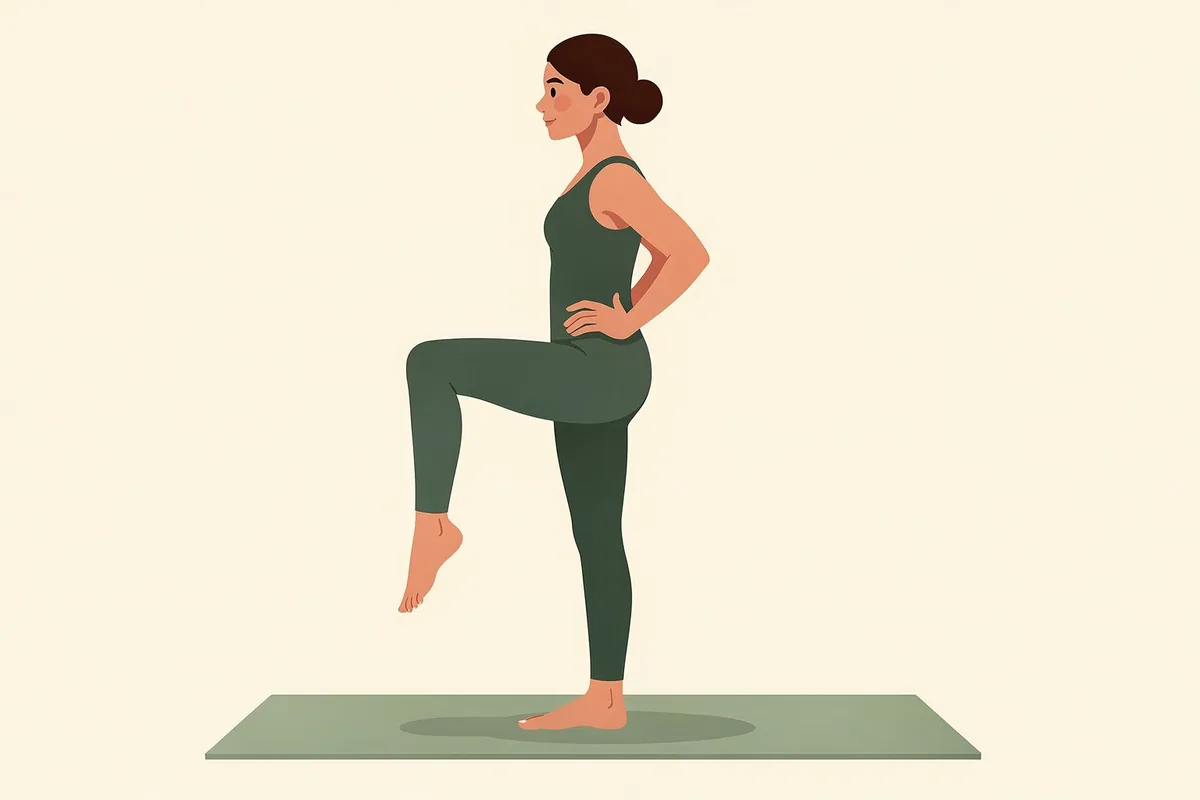
| Everyday example | Your hands pull your knee toward your chest | You lift your knee toward your chest with no hands |
| Typical training | Longer, relaxed holds (static stretching) | Slow movement through your range; holding positions with muscle effort |
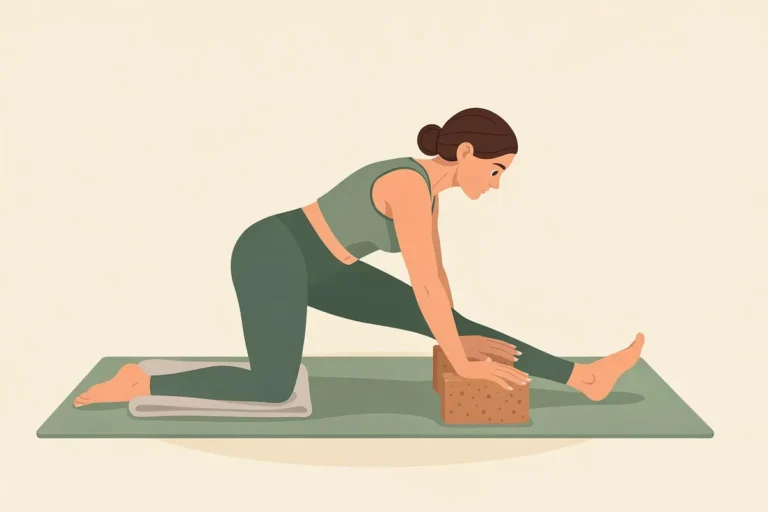
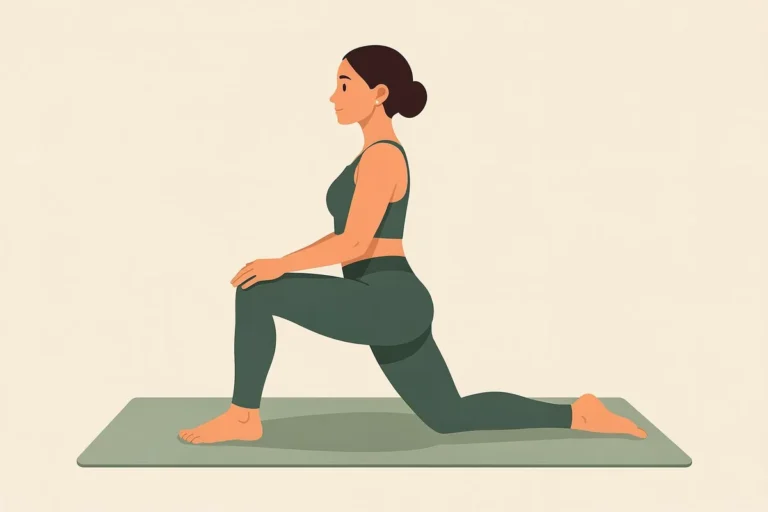
| Yoga examples | Supported Child’s Pose, a strap-assisted leg stretch | Low Lunge with arms up, Bridge Pose, Warrior II |
The table is based on ACE‘s comparison of the two.
Can you be flexible but not mobile?
Yes. An HSS physical therapist says a person can have great flexibility and still have poor mobility. ACE describes someone whose hip bends far while lying on a table, yet who can’t control that hip in a squat or lunge.
Small trials show the two can respond differently to training:
- Dancers. In a six-week trial in 39 female dance students (average age 17; four withdrew), three groups all gained passive range, with no difference between them: one strengthened the hip flexors at the end of their range, one stretched gently, one stretched hard. In active range, the strength and gentle-stretch groups improved significantly more than the hard-stretch group (Wyon et al., 2013).
- Athletes. Among 27 amateur athletes, the 13 who did six weeks of eccentric hamstring work (the muscle working as it lengthens) gained 11.4 degrees in a passive straight-leg raise within their group, but their active flexibility didn’t change significantly. The 14 controls showed no significant changes (Delvaux et al., 2020).
Both studies are small and in young, trained people, so read them as illustrations. Their shared point: more passive range doesn’t automatically mean more range you can use on your own.
How to notice the gap between flexibility and mobility at home
These checks are observations, not medical tests. They can’t tell you whether your range is “normal,” and none of our sources gives one number that defines normal for everyone. Move slowly, stop at a clear stretch, never push into pain, and compare your two sides, or yourself a few weeks later.
Check 1: lying leg raise
- Lie on your back with both legs long. If your lower back feels strained, bend your left knee and set that foot flat.
- Active: with your right knee straight and toes pointing up, lift the right leg as high as it goes on its own, keeping your hips and the other leg down. Note roughly where your foot points, for example at a spot on the ceiling, then lower it slowly.
- Passive: loop a strap or towel around the ball of your right foot. Knee straight and hips down, use the strap to bring the leg up gently until you feel a clear stretch behind the thigh. Note where it stops.
- Lower the leg and repeat on the left.
In a lab study of 75 healthy, recreationally active adults, the leg went higher on average when a tester lifted it (about 75 degrees) than when people lifted it themselves (about 67 degrees). The authors note that the active test directly involves the hip muscles, while the passive one depends more on whoever lifts the leg. After the participants tired out the muscles at the front of the hip, their active lift dropped while the passive raise went up (Muyor and Arrabal-Campos, 2016). These are averages from one study, not targets. If you’re pregnant, use Check 2 instead (see the caution box).
Check 2: standing knee lift
- Stand in Mountain Pose beside a wall or sturdy chair, one hand on it for balance. If your balance is steady, you can rest both hands on your hips instead.
- Active: with your torso upright, lift your right knee toward your chest as high as it goes without your hands. Try to hold it there a few seconds without leaning back or slumping.
- Passive: take hold of your right shin, or the back of the thigh, and ease the knee a little higher.
- Lower the foot and switch sides.
What the gap may suggest. If a limb goes much higher with help than without, the range is there but your control of it isn’t yet. ACE advises focusing on strength and control in that range, and strength training at the end of the range improved active range in the dancer trial (Wyon et al., 2013). If both versions feel short, ACE suggests combining stretching with active work. If one side is far more limited, a movement hurts, or your joints feel loose or “give way,” see a doctor or physical therapist rather than trying to fix it yourself.
Why do both flexibility and mobility matter?
Stretching widens your range. A 2024 meta-analysis pooled 77 studies in healthy people: regular stretching beat no stretching by a moderate margin, and static holds and contract-relax (PNF) stretching gave bigger gains than bouncing or dynamic stretching (Konrad et al., 2024). Stretching studies mostly measure passive range, though (Page, 2012): the flexibility side.
So does strength training. In a 2023 meta-analysis, resistance training raised range of motion by a moderate amount compared with no training (52 studies in healthy people), and in the 7 studies that compared it head to head with stretching, there was no significant difference between them. Body-weight-only training was the exception, with no significant gain, though that rested on just four results (Alizadeh et al., 2023). An earlier review of 11 randomized trials (452 people) found no difference in range gains between strength training and stretching, even when active and passive tests were analyzed separately, though the trials varied widely (Afonso et al., 2021).
Daily life needs both. Everyday jobs such as getting a mug down from a high shelf or picking a bag up off the floor need range you can control. Cleveland Clinic links staying flexible as you get older with staying mobile and independent.
Which is more important, mobility or flexibility?
We found no study that ranks one above the other; it depends on your goal. Think of flexibility as the range on offer and mobility as how much of it you can use. ACE‘s advice: if you have range but can’t control it, work on strength and control; if range itself is short, combine stretching with active work.
How yoga trains flexibility and mobility
One yoga session can do both jobs. What matters is how you do a pose, not only which pose it is:
- Relaxed, supported holds train flexibility: the floor, props or gravity do the work, as in a supported Child’s Pose or a strap-assisted leg stretch.
- Poses you hold with muscle effort train strength in range: Low Lunge with arms raised, Bridge Pose, Warrior II, Tree Pose.
- Slow, controlled movement trains mobility: Cat-Cow moves your spine through a range you control, breath by breath.
- Some poses mix both: in Downward-Facing Dog, your arms press you up while the backs of your legs lengthen.
To make a pose more active, remove a support (lift your hands off the blocks), slow down, or lift a limb, such as one leg in Bridge. To make it more passive, add props, relax and stay longer. New to yoga? Begin with yoga for beginners.
A 12-minute yoga routine for both
Each relaxed hold here is paired with active work for the same area. It’s a general sample, not a program tested in a study. You’ll need a mat, a strap or towel, two blocks or thick books, and a wall or sturdy chair.
| Pose | Time | Focus |
|---|---|---|
| 1. Mountain Pose | 1 min | Stand tall and breathe |
| 2. Standing knee lifts | 2 min | Active lifts, then a short assisted hold, each side |
| 3. Cat-Cow | 1 min | Slow spinal movement you control |
| 4. Low Lunge, supported then arms up | 3 min | Passive hold, then active hold, each side |
| 5. Downward-Facing Dog | 1 min | Arms work while the legs lengthen |
| 6. Bridge Pose | 2 min | Hip strength in range, 3 slow lifts |
| 7. Child’s Pose | 2 min | Relaxed, supported rest |
- Mountain Pose. Weight even on both feet, legs firm but not locked. Take 5 to 10 slow breaths.
- Standing knee lifts. Beside a wall or chair, lift one knee as high as you can with no hands, pause for a breath or two, lower. Do 5, then hug the knee in with your hand for about 20 seconds (65 or older? Hold the hug for up to a minute; see the weekly training section). Switch sides.
- Cat-Cow. On hands and knees, let your belly drop and chest lift as you breathe in; round your back as you breathe out. Go only as far as you can control.
- Low Lunge. Right foot forward with the knee over the ankle; left knee down on padding, with the weight just above the kneecap. With hands on blocks or your front thigh, ease your hips forward for about 45 seconds. Then raise your arms overhead and hold your torso upright on your own for about 30 seconds. Switch sides.
- Downward-Facing Dog. From hands and knees, send your hips up and back, knees bent as much as you need, hands pressing the floor away.
- Bridge Pose. Lie on your back with your knees bent and your feet flat, hip-width apart, heels a few inches from your hips, arms by your sides. Press through your feet to lift your hips only as high as you can without arching your lower back (ACE). Keep your knees pointing forward, not splaying out, and look straight up without turning your head. Stay for 5 breaths, then roll down slowly. Three lifts in all.
- Child’s Pose. Sit back toward your heels, forehead on the mat or a block, and let the floor hold you.
Each linked guide has full steps and easier versions. For a stiff area, our yoga for tight hips and yoga for tight hamstrings guides have longer routines.
How to train flexibility and mobility each week
- How often: the ACSM’s position stand advises stretching each major muscle-tendon group for about a minute in total per exercise, on two or more days each week (Garber et al., 2011).
- Per hold: most authors consider 10 to 30 seconds enough to build flexibility, a review notes. Repeat a hold to reach about a minute.
- Older adults: in a trial of 62 people aged 65 to 97 (average about 85) with tight hamstrings, 60-second holds, five days a week for six weeks, gained range faster than 15- or 30-second holds, and the gains lasted longer (Feland et al., 2001).
- More isn’t clearly better: the 2024 meta-analysis found that how much, how hard and how often people stretched made no significant difference (Konrad et al., 2024).
- Before or after exercise: some studies found that static stretching right before exercise lowered measured strength and running and jumping performance (Page, 2012). ACE says warm-ups should rarely rely on passive stretching alone, so warm up with active moves and keep long holds for afterward.
None of these sources sets a hold time for active work, so our short holds are a practical choice, not a research finding. See also how long to hold a yoga pose and the hold-time section of yoga for tight hamstrings.
Very flexible? Hypermobility is not the same as good mobility
The NHS describes joint hypermobility syndrome as having very flexible joints, which some people call being “double-jointed.” Some people with it have no symptoms; others get tiredness, recurring joint or muscle pain and stiffness, frequent sprains and strains, dislocations, or poor balance or coordination. The NHS explains that it is caused by weakness in the ligaments that hold the joints together.
So a lot of range isn’t the same as good mobility. The NHS says the main treatment is building muscle strength and fitness to protect the joints, and warns against overextending joints just because you can. In yoga, that means working in the middle of your range, holding poses with your muscles, and not sinking or locking into the end of a joint’s range, such as pushing your knees or elbows backward. If you think you may be hypermobile, talk to your doctor before adding more stretching; the NHS notes that doctors usually check with a scoring test of several joints.
Who should skip it or ask a doctor first
- Pain: stop any movement that causes sharp or lingering pain. A stretch should feel like a mild pull.
- Hypermobility, past dislocations or joints that feel unstable: ask your doctor or a physical therapist first, favor the active parts of the routine and skip the assisted end-of-range holds. The NHS advises against overextending your joints (NHS).
- Knee or hip injuries, or a lumbar spine condition: the NCCIH lists these among conditions that may mean changing or skipping poses. Low Lunge, Child’s Pose and the knee lifts load the knees and hips: pad your knees, use the easier versions, skip what hurts and ask your doctor or physical therapist what suits you.
- Osteoporosis or low bone density: avoid strong rounding of the spine. In the medical records of 89 patients hurt by yoga, poses with extreme spinal flexion and extension were the most common causes, and the authors advise people with osteoporosis to avoid extreme flexion (Lee et al., 2019). Keep Cat-Cow small, keep your back long in Child’s Pose, and ask your doctor first.
- Glaucoma: Downward-Facing Dog puts your head below your heart. In a small study (10 people with glaucoma, 10 without), eye pressure rose within a minute in all four head-down poses tested, most in Down Dog (Jasien et al., 2015). Skip it or ask your eye doctor.
- Pregnancy: check with your health care provider before you start, as the NCCIH advises. Skip the lying leg raise and Bridge Pose: the NCCIH advises against poses that keep you on your back for long, and in later pregnancy the NHS says to keep any time lying flat to a few minutes at most. Do an extra round of knee lifts instead, with a hand on the wall or chair. In Child’s Pose, widen your knees to make room for your belly, rest your forehead on a block and keep the hold short (the NCCIH also advises against long periods of being still). Come out of Downward-Facing Dog at once if you feel dizzy or queasy. If you need a rest, lie on your side, propped with pillows, not on your back.
- Wrist, elbow or shoulder problems: in Cat-Cow and Down Dog, rest on your fists or forearms, or skip the pose, and ask your doctor or physical therapist. The NCCIH lists preexisting injuries among reasons to modify yoga.
- Neck problems: skip Bridge Pose, or keep your hips low, and ask your physical therapist.
- New to yoga? The NCCIH notes that learning yoga on your own without supervision has been linked with more risk; a class with a qualified teacher is a safer start.
- Age 65 or older, balance problems or severe high blood pressure: talk to your doctor first. The NCCIH says older adults should take particular care and lists balance issues and severe high blood pressure among reasons to modify yoga.
What the research says
Evidence: moderate
Stretching: across 77 studies in healthy people, regular stretching increased range of motion by a moderate amount (Konrad et al., 2024); stretching studies mostly measure passive range (Page, 2012).
Strength training: it raised range compared with no training in 52 studies, showed no significant difference from stretching in 7 direct comparisons, but showed no significant gain with body weight alone (Alizadeh et al., 2023). A review of 11 trials (452 people) found no difference between strength training and stretching (Afonso et al., 2021).
Active range: the trials that measured it separately are small, with 35 dancers (Wyon et al., 2013) and 27 athletes (Delvaux et al., 2020).
Yoga: in trials whose participants averaged 60 or older, yoga improved lower-body flexibility (431 people in 7 trials) and leg strength (7 trials, 485 people) compared with no exercise. Against other exercise (3 trials, 225 people for each outcome), yoga still came out ahead, by a smaller margin for flexibility and by a similar margin for leg strength (Sivaramakrishnan et al., 2019). We found no yoga trial that measured active range on its own, so for yoga and mobility itself there is no good evidence either way, and no study has tested our routine or home checks.
Large reviews agree that both stretching and strength work widen range, but the active-range evidence is thin and the yoga trials were in older adults. Our rating: moderate.
Frequently asked questions
Is active flexibility the same as mobility?
Nearly. Active flexibility usually means how far your own muscles can move a joint. Mobility, as ACE uses the word, also includes controlling that range during real movement, with strength, coordination and balance.
Can you improve flexibility and mobility at any age?
Range can still improve later in life. In the trial of people aged 65 to 97, the 60-second group gained hamstring range at about 2.4 degrees a week, ahead of the 30-second (1.3) and 15-second (0.6) groups (Feland et al., 2001). In the 2023 meta-analysis, age didn’t change how much resistance training improved range (Alizadeh et al., 2023). Start gently and check with your doctor before you start if you live with a health condition. For safe practice without a teacher, see how to start yoga at home, and for yoga’s own flexibility research, does yoga improve flexibility?
Helpful gear for this
 Manduka Align yoga strap, 8 ft
Cotton strap 1.75 in wide with a zinc-alloy buckle, 8 ft long (maker's spec).
See it on Amazon Manduka cork yoga block
Solid cork, 9 x 6 x 4 in and 2.2 lb, firmer and heavier than foam for steadier support (maker's spec).
See it on Amazon Gaiam foam yoga blocks, pair
Two light foam blocks, 9 x 6 x 4 in each, one for each hand (maker's spec).
See it on Amazon
As an Amazon Associate we earn from qualifying purchases. How we choose gear
Sources
- McCall P. Mobility vs. Flexibility: Why the Difference Matters for Movement and Performance. ACE Certified (American Council on Exercise). May 2026., checked Nov 9, 2026
- American Council on Exercise (ACE). Exercise Library: Glute Bridge., checked Nov 9, 2026
- Hospital for Special Surgery (HSS) Newsroom. Here’s the Difference Between Flexibility and Mobility, and Why It Matters. May 29, 2018., checked Nov 9, 2026
- Page P. Current concepts in muscle stretching for exercise and rehabilitation. Int J Sports Phys Ther. 2012;7(1):109-119., checked Nov 9, 2026
- Wyon MA, Smith A, Koutedakis Y. A comparison of strength and stretch interventions on active and passive ranges of movement in dancers: a randomized controlled trial. J Strength Cond Res. 2013;27(11):3053-3059., checked Nov 9, 2026
- Delvaux F, Schwartz C, Decréquy T, et al. Influence of a field hamstring eccentric training on muscle strength and flexibility. Int J Sports Med. 2020;41(4):233-241., checked Nov 9, 2026
- Muyor JM, Arrabal-Campos FM. Effects of acute fatigue of the hip flexor muscles on hamstring muscle extensibility. J Hum Kinet. 2016;53:23-31., checked Nov 9, 2026
- Konrad A, Alizadeh S, Daneshjoo A, et al. Chronic effects of stretching on range of motion with consideration of potential moderating variables: a systematic review with meta-analysis. J Sport Health Sci. 2024;13(2):186-194., checked Nov 9, 2026
- Alizadeh S, Daneshjoo A, Zahiri A, et al. Resistance training induces improvements in range of motion: a systematic review and meta-analysis. Sports Med. 2023;53(3):707-722., checked Nov 9, 2026
- Afonso J, Ramirez-Campillo R, Moscão J, et al. Strength training versus stretching for improving range of motion: a systematic review and meta-analysis. Healthcare (Basel). 2021;9(4):427., checked Nov 9, 2026
- Sivaramakrishnan D, Fitzsimons C, Kelly P, et al. The effects of yoga compared to active and inactive controls on physical function and health related quality of life in older adults: systematic review and meta-analysis of randomised controlled trials. Int J Behav Nutr Phys Act. 2019;16(1):33., checked Nov 9, 2026
- Garber CE, Blissmer B, Deschenes MR, et al. American College of Sports Medicine position stand. Quantity and quality of exercise for developing and maintaining cardiorespiratory, musculoskeletal, and neuromotor fitness in apparently healthy adults: guidance for prescribing exercise. Med Sci Sports Exerc. 2011;43(7):1334-1359., checked Nov 9, 2026
- Feland JB, Myrer JW, Schulthies SS, et al. The effect of duration of stretching of the hamstring muscle group for increasing range of motion in people aged 65 years or older. Phys Ther. 2001;81(5):1110-1117., checked Nov 9, 2026
- Cleveland Clinic. Here’s How Being Flexible Is Good for Your Health. Health Essentials. September 25, 2024., checked Nov 9, 2026
- NHS. Joint hypermobility syndrome. Reviewed August 30, 2023., checked Nov 9, 2026
- National Center for Complementary and Integrative Health (NCCIH). Yoga: Effectiveness and Safety. Last updated August 2023., checked Nov 9, 2026
- NHS. Exercise in pregnancy. Reviewed September 24, 2026., checked Nov 9, 2026
- Lee M, Huntoon EA, Sinaki M. Soft tissue and bony injuries attributed to the practice of yoga: a biomechanical analysis and implications for management. Mayo Clin Proc. 2019;94(3):424-431., checked Nov 9, 2026
- Jasien JV, Jonas JB, de Moraes CG, Ritch R. Intraocular pressure rise in subjects with and without glaucoma during four common yoga positions. PLoS One. 2015;10(12):e0144505., checked Nov 9, 2026
Image credits: Illustration: AI-generated for YogaForFitness (FLUX.2 [pro]), checked for pose accuracy