Yoga for Runners: What It Can and Can’t Do, Plus a 15-Minute Routine
Quick answer
Yoga can help runners keep or gain flexibility and practice balance, and it makes a calm cool-down. Trials have not shown that stretching or yoga prevents running injuries or takes away next-day soreness, and there is no good evidence that a regular yoga practice makes you faster. Keep long holds for after a run or for rest days, not for the minutes before a hard run, and start with the 15-minute post-run routine below.
We may earn a commission when you buy through links on this page. It never changes what we recommend. As an Amazon Associate we earn from qualifying purchases.
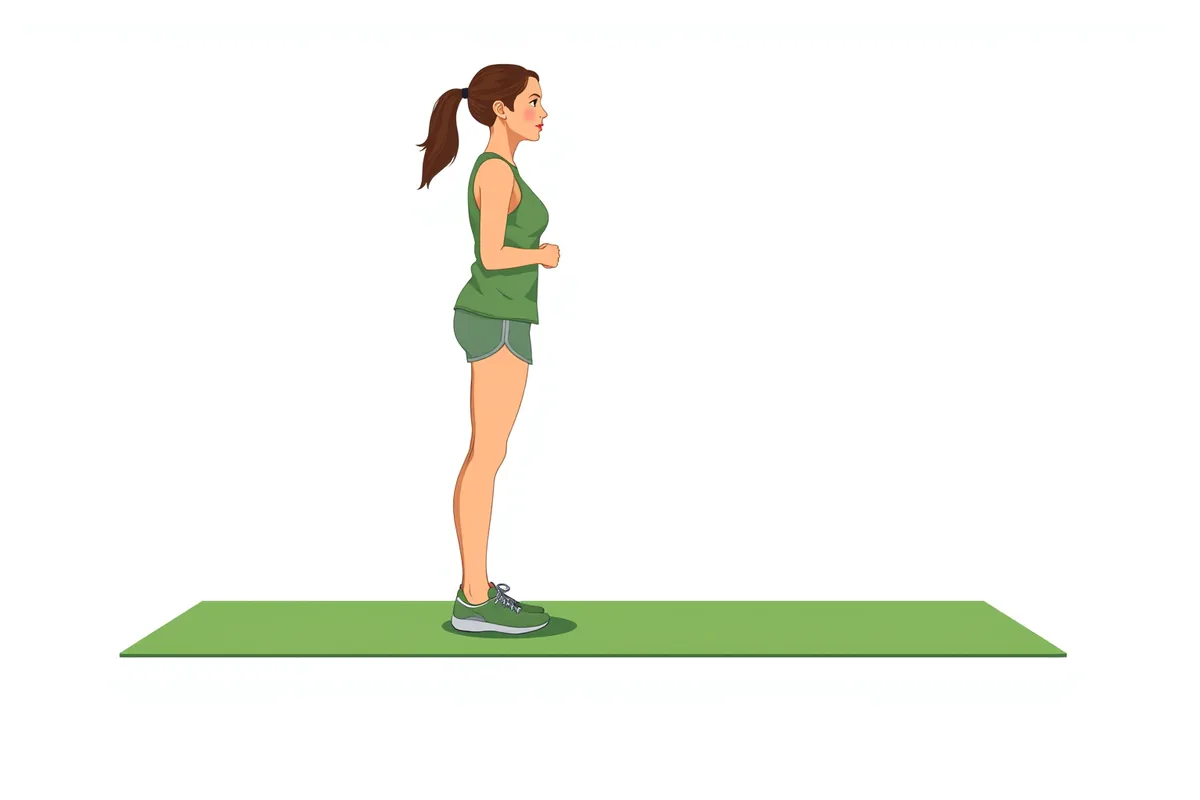
Runners usually come to yoga hoping for three things: looser legs, fewer injuries and a quicker bounce back after hard runs. Research supports the first. For the other two, trials so far show no clear effect, and very few studies have looked at yoga in runners at all.
This guide covers what the studies found, where yoga fits around your runs, and a short post-run routine built from poses that have step-by-step guides on this site. It opens our Yoga For section. Never done yoga? Read yoga for beginners first.
In this guide
- Is yoga good for runners?
- Does yoga prevent running injuries?
- Does yoga help you recover after a run?
- Does yoga make you a faster runner?
- Should you do yoga before or after running?
- A 15-minute post-run yoga routine
- Make it easier (props)
- How often should runners do yoga?
- Who should skip it or ask a doctor first
- What the research says
- Frequently asked questions
- Sources
Is yoga good for runners?
For flexibility, yes. Most of the other popular claims haven’t been shown. The short version:
| Hope | What studies show so far |
|---|---|
| More flexibility | Supported. Regular stretching widens range of motion, and small yoga studies in athletes point the same way. |
| Better balance | Some support for yoga in general and in small studies of athletes. We found no trial that measured balance in distance runners. |
| Fewer running injuries | Not shown. Stretching trials found no clear effect, and no trial has tested yoga for this in runners. |
| Less soreness the next day | Not in an amount you would notice. |
| Faster times | Not shown for a regular practice. One trial in teenagers found a small gain after a single session. Long still holds right before a run may even cost a little speed. |
| A calmer cool-down | One small study of athletes found slower breathing after yoga than after plain stretching. |
Flexibility. Stretching does widen range of motion: a 2024 meta-analysis pooled 77 studies and found a moderate gain over not stretching (Konrad et al., 2024). Yoga studies in athletes are much smaller. In one, 14 male college soccer players who added yoga sessions for 10 weeks improved on sit-and-reach, shoulder flexibility and one-leg balance tests. Those were changes within the group: the comparison group was the baseball team (12 players), and nobody was assigned at random (Polsgrove et al., 2016). A 2025 review of yoga studies in track and field athletes also reported better flexibility and balance, though some of its studies found little effect on performance; its summary doesn’t give the number of studies (Singh et al., 2025).
Balance. The NCCIH cites a 2014 review of yoga in healthy people: 11 of its 15 studies (688 participants) found improvement on at least one balance measure. Whether a more flexible or steadier runner gets hurt less or runs faster is a separate question.
Does yoga prevent running injuries?
No trial has tested it. The one study we found is a 2026 survey of 570 performance-oriented parkrun runners, in which those who did stretching or yoga were slightly more likely, not less, to report a leg injury in the past year; so were those who did resistance training (Wu et al., 2026). When the authors left out runners who had taken up such exercise to prevent or recover from an injury, the link disappeared. So the likeliest explanation is that injured runners start stretching, not that yoga causes injuries. Either way, the survey shows no sign of protection. The trial evidence is about stretching:
- A Cochrane review of ways to prevent leg injuries from running pooled 6 stretching trials with 5,130 participants and found no evidence that stretching lowered the number of soft-tissue injuries. The result was imprecise: the authors say it is compatible with either fewer or more injuries, so neither can be ruled out. The summary doesn’t say who the six stretching trials studied; of the review’s 25 trials, 19 were in military recruits and three in runners from the general public (Yeung et al., 2011).
- A 2014 meta-analysis of exercise programs for sports injuries found no benefit in its three stretching trials, two in army recruits and one online trial in the general population (Lauersen et al., 2014).
In that 2014 analysis, four strength training trials did show fewer injuries, less than a third as many as in the comparison groups. The review mixed sports and populations, so that figure isn’t about runners, and yoga isn’t strength training. The Cochrane authors called the evidence for preventing running injuries very weak overall. A yoga session can be a useful part of your week, but don’t count on it as injury protection.
Does yoga help you recover after a run?
Not in the sense of less muscle soreness, as far as stretching trials can tell.
- A Cochrane review of 12 studies in healthy adults found that stretching after exercise lowered soreness one day later by about 1 point on a 100-point scale (4 studies). Stretching before exercise lowered it by about half a point (3 studies). The authors concluded that stretching does not produce a meaningful reduction in soreness in healthy adults (Herbert et al., 2011).
- A 2021 meta-analysis (10 randomized trials, 229 participants in all, aged 17 to 38, mostly men) compared stretching after exercise with simply resting. Each comparison used only some of those trials, and none found a difference in soreness one to three days later or in getting strength back. The authors rated their confidence in the evidence as very low (Afonso et al., 2021).
Neither review was about runners in particular, and neither tested yoga. The one yoga study we found on soreness was small and not randomized: after a bench-stepping workout designed to cause soreness, 12 women who practiced yoga reported less of it than 12 matched women who didn’t (Boyle et al., 2004). That can’t show yoga was the cause.
A slow routine may help you wind down, though. In a crossover study of 20 male university athletes, 15 minutes of yoga after a 30-minute interval session brought a lower breathing rate over the next 15 minutes than 15 minutes of static stretching did (Petviset et al., 2025). That says nothing about next-day soreness or your next run.
Does yoga make you a faster runner?
That hasn’t been shown either. Two small studies in runners exist:
- One session before a mile. Ninety high school distance runners ran a mile, then were randomly assigned to brief yoga exercises, motivational shouting or nothing about 20 minutes before a second mile a week later. The yoga group improved more than the group that did nothing, but the effect was small, and the shouting group improved the most (Donohue et al., 2006). One session in teenagers says little about a regular practice.
- Yoga breathing. Eleven runners practiced three styles of yogic breathing for 30 minutes a day, six days a week, for three weeks. Two lung function measures improved, but running economy (the oxygen you use at a given pace) did not change significantly compared with 10 runners who did no breathing practice (Seltmann et al., 2020). The summary doesn’t describe the groups as randomly assigned. For breathing practice in its own right, see diaphragmatic breathing.
Should you do yoga before or after running?
Do the long, still holds after a run or on a rest day. Before a run, keep yoga short and moving.
Before a run. A review of studies in healthy, active people found that static stretching held for 60 seconds or more per muscle group was followed by an average 4.6% drop in performance on tests done minutes later, against 1.1% for shorter holds. When dynamic activity followed the stretching, there was no clear effect (Behm et al., 2016). A scoping review limited to running (11 small studies, 111 participants in all) found slightly worse running performance, about 1.4% on average, in the studies that tested static stretches of up to 90 seconds per muscle group. Running economy in those studies did not get worse. Its authors advise holds of 60 seconds or less per muscle before a run (Konrad et al., 2021). These effects are small, and they matter most before a race or a hard session. To warm up, the NHS suggests a brisk walk or a gentle jog for 5 to 10 minutes. If you want yoga as well, choose moving poses such as Cat-Cow and keep any holds to a few breaths.
After a run or on a rest day. There is no performance left to protect. The NHS describes stretching after exercise as a way to cool down, relax gradually and improve flexibility. After a run, walk or jog easily for 5 to 10 minutes first, as the NHS running page advises, then do the routine below.
A 15-minute post-run yoga routine
The routine starts standing and ends lying down. It stretches the calves, hamstrings, hip flexors and outer hips, with a little balance and back work. Hold each stretch at a mild pull, never into pain. If a minute feels long, do two 30-second holds. The poses add up to about 13 and a half minutes; moving between them takes the rest. It is a sample built from common beginner poses, not a program tested in a study.
| Pose | Time | Side |
|---|---|---|
| 1. Tree Pose | 30 s | Each side |
| 2. Cat-Cow | 1 min | — |
| 3. Downward-Facing Dog, pedaling | 1 min | — |
| 4. Low Lunge | 1 min | Each side |
| 5. Cobra Pose | 1 min (3 low lifts) | — |
| 6. Child’s Pose | 1 min | — |
| 7. Bridge Pose | 1 min 30 s (3 lifts) | — |
| 8. Reclined hamstring stretch with a strap | 1 min | Each side |
| 9. Reclined figure-four | 1 min | Each side |
| Rest on your back | 1 min | — |
- Tree Pose. Shoes off, next to a wall. Rest one foot against the inner ankle or calf of the standing leg, never against the knee. Tired legs wobble, so use the wall.
- Cat-Cow. On hands and knees, arch gently as you breathe in and round as you breathe out.
- Downward-Facing Dog, pedaling. Lift your hips up and back with both knees bent, then let one heel sink while the other knee bends, and keep switching. Lower your knees and rest halfway through if your wrists or shoulders tire.
- Low Lunge. One foot forward, back knee down on a folded blanket. Ease your hips forward until you feel a mild stretch at the front of the back hip.
- Cobra Pose. On your belly, hands under your shoulders, lift your chest a few inches with your elbows bent. Two or three breaths, then lower. Three lifts.
- Child’s Pose. Sit back toward your heels and rest your forehead on the mat or a block.
- Bridge Pose. On your back with your knees bent, press your feet down and lift your hips without turning your head. About five breaths, three lifts.
- Reclined hamstring stretch with a strap. Steps below.
- Reclined figure-four. Steps below.
Each linked guide has full steps, easier versions and its own cautions. The last two stretches are described here.
Reclined hamstring stretch with a strap
- Stay on your back with both knees bent and both feet on the floor.
- Bring your right knee in and place the middle of a strap, belt or towel across the ball of your right foot. Hold one end in each hand.
- Push your right heel toward the ceiling until you feel a pull along the back of the thigh. Stop there, even if your knee is still bent, and don’t lock the knee.
- Keep both hips heavy on the floor and your shoulders relaxed. Breathe slowly for about a minute.
- Bend the knee to come out, then change legs.
More in yoga for tight hamstrings.
Reclined figure-four
- Still on your back, bend both knees and plant your feet.
- Rest your right ankle on your left thigh, close to the knee, with the right foot flexed. Your legs now make the shape of a 4.
- If that is enough of a stretch in the right buttock and outer hip, stay. For more, lift the left foot off the floor and hold behind the left thigh with both hands. Back off if you feel it in the right knee.
- Keep your head and tailbone down. After about a minute, lower the foot and change sides.
More in yoga for tight hips.
Short on time? Low Lunge and the two reclined stretches take about six minutes.
Make it easier (props)
- A strap, belt or towel for the hamstring stretch. You can also loop it behind your thigh in the figure-four if your hands don’t reach. See how to use a yoga strap.
- A folded blanket or towel under your back knee in Low Lunge and under both knees in Cat-Cow.
- Two blocks or thick books under your hands in Low Lunge and under your forehead in Child’s Pose.
- A wall beside you for Tree Pose, and under your hands for a standing version of Downward-Facing Dog.
Helpful gear for this
 Manduka Align yoga strap, 8 ft
Cotton strap 1.75 in wide with a zinc-alloy buckle, 8 ft long (maker's spec).
See it on Amazon Manduka cork yoga block
Solid cork, 9 x 6 x 4 in and 2.2 lb, firmer and heavier than foam for steadier support (maker's spec).
See it on Amazon Gaiam foam yoga blocks, pair
Two light foam blocks, 9 x 6 x 4 in each, one for each hand (maker's spec).
See it on Amazon
As an Amazon Associate we earn from qualifying purchases. How we choose gear
How often should runners do yoga?
No study has compared different amounts of yoga in runners, so the best guide is general flexibility advice. The American College of Sports Medicine’s position stand calls for flexibility work for every major muscle group on two or more days a week, adding up to about 60 seconds per exercise (Garber et al., 2011). The routine above, done after two or three runs a week, meets that for the legs and hips; it doesn’t stretch the upper body. More is fine if it feels good, but in the 2024 meta-analysis, the amount and frequency of stretching didn’t significantly change the gains (Konrad et al., 2024).
A physical therapist and yoga teacher at the Hospital for Special Surgery suggests that people who run every day swap one run for yoga and another for low-impact cardio such as swimming, and add strength training on a few days. That is one expert’s advice, not a trial result. For how stretching differs from mobility work, see mobility vs flexibility.
Who should skip it or ask a doctor first
- Sharp pain, swelling or pain in one spot on a bone. Don’t stretch through it, and don’t run on it. Pain you can pinpoint on a bone, which at first shows up only toward the end of exercise, can be a bone stress injury. If you suspect one, the AAOS says to see a doctor as soon as possible and to rest from whatever causes the pain. No yoga pose treats an injury.
- A pulled hamstring or calf. Sharp pain that strikes suddenly in the back of the thigh, perhaps with a popping feeling and later swelling or bruising, suggests a hamstring injury. The NHS advises rest for the first 2 to 3 days, and medical help if it is very painful, walking or standing hurts, or there is a lot of swelling or bruising or it keeps growing. A calf strain can feel like a kick to the back of the lower leg; the NHS running page says to stop running at once. Leave out poses 3, 7 and 8 while either hurts, and ask a doctor or physical therapist when to stretch again.
- Long-lasting pain deep in the buttock, at the sitting bone. This can be a hamstring tendon problem (proximal hamstring tendinopathy), which is seen in distance runners (Nasser et al., 2021). Have it checked before you do hamstring stretches or forward folds.
- Tired legs. Yoga can strain you too: the NCCIH says sprains and strains are its most common injuries, most often at the knee or lower leg. Stay at a mild pull and don’t force a pose after a hard run.
- Knee pain. The NHS says not to run with knee pain, to see a doctor straight away for severe pain or a swollen knee, and to get it checked if it hasn’t gone after a week. Cat-Cow, Low Lunge and Child’s Pose put weight on the knees or bend them deeply: pad your knees, or keep to the poses on your back.
- Sudden sharp pain at the back of the ankle. The NHS says to see a doctor straight away, because the Achilles tendon may be torn. Leave out Downward-Facing Dog and Low Lunge until you have been seen.
- A hip or knee replacement, or recent surgery. After a hip replacement, MedlinePlus says not to cross your legs or ankles when you are sitting, standing or lying down, and to avoid bending the hip past a right angle; you need to be careful especially in the first few months. That rules out the figure-four, Child’s Pose and the strap stretch, and probably Low Lunge. Skip the routine until your surgeon or physical therapist tells you which movements are safe for you.
- Wrist, elbow or shoulder problems. Cat-Cow, Downward-Facing Dog and Cobra put weight on your hands. Use the wall version of Downward-Facing Dog, rest on your forearms, or skip them, and ask your doctor or physical therapist.
- Knee or hip injuries, a lower back (lumbar spine) condition, severe high blood pressure, balance problems or glaucoma. The NCCIH names all of these as conditions that can call for changing or leaving out poses. Talk to your doctor first. Cobra and Bridge bend the lower back backward, so come out of either if it pinches. With high blood pressure, or if you feel lightheaded after a run, use the wall version of Downward-Facing Dog and get up from the floor slowly. With glaucoma, skip Downward-Facing Dog or do it with your hands on a wall: in a small study of four head-down poses, pressure inside the eye went up within a minute, and that pose raised it most (Jasien et al., 2015).
- Osteoporosis or low bone density. The authors of a review of 89 yoga injury cases, 13 of them spinal compression fractures, advise people with weak bones to avoid extreme rounding of the spine (Lee et al., 2019). Make Cat-Cow a small movement, don’t curl down hard in Child’s Pose, and check with your doctor before you start.
- Pregnancy. The NCCIH advises a check by your health care provider before you exercise. Skip Cobra, which is done on your belly. From Bridge onward the routine is done lying face up; the NCCIH says to avoid poses that keep you on your back for long, and the NHS says not to lie flat for more than a few minutes in later pregnancy. Use seated versions instead: on a sturdy chair, sit toward the front edge, put a strap under one foot and stretch that leg out; then rest one ankle on the opposite thigh and sit tall. In Child’s Pose, widen your knees to make room for your belly. Rest sitting up or on your side, keep a hand on the wall in Tree Pose, and stop if you feel dizzy, too hot or unwell.
- Age 65 or older, or new to yoga. The NCCIH advises extra caution for older adults, and notes that learning yoga without supervision has been linked with more risk. Do Tree Pose with a hand on a wall, and start with a beginner class or how to start yoga at home.
What the research says
Evidence: limited
Research on yoga for runners is thin and mixed, so we rate it as limited.
- Tested in runners: one randomized trial of a single short yoga session before a mile run in 90 teenagers (a small gain over doing nothing), one three-week study of yoga breathing in 11 runners (no significant change in running economy), and one survey (no sign of fewer injuries).
- Tested in other athletes: small studies with better flexibility and balance after weeks of yoga; the one we describe had no random assignment and reports changes within the yoga group.
- Stretching, the closest stand-in: it reliably widens range of motion (77 studies). For injuries (6 trials in one review, 3 in another) and next-day soreness (4 trials of stretching after exercise, 3 of stretching before), reviews found no clear effect. For injuries, soreness and faster times from regular practice, our rating is “no good evidence.” The “limited” label rests on the small flexibility and balance studies in athletes and the one short trial in teenage runners.
- Not tested at all: this routine, and whether taking up yoga changes a runner’s injury risk.
The label describes yoga for runners and athletes as studied so far, not yoga in general. For that, see benefits of yoga.
Frequently asked questions
Is hot yoga good for runners?
We found no trial of hot yoga in runners. The NCCIH warns of overheating and dehydration as particular risks of hot yoga, so think twice about a heated class after a long or sweaty run. It also says to avoid hot yoga during pregnancy. A class at normal room temperature teaches the same poses.
Can yoga fix runner’s knee?
Yoga isn’t a treatment for knee pain. The NHS advises against running on a painful knee and says a doctor or physical therapist can recommend exercises to help you recover. See the caution box above for when to get it checked, and skip kneeling poses until then.
Sources
- Yeung SS, Yeung EW, Gillespie LD. Interventions for preventing lower limb soft-tissue running injuries. Cochrane Database Syst Rev. 2011;(7):CD001256., checked Nov 13, 2026
- Lauersen JB, Bertelsen DM, Andersen LB. The effectiveness of exercise interventions to prevent sports injuries: a systematic review and meta-analysis of randomised controlled trials. Br J Sports Med. 2014;48(11):871-877., checked Nov 13, 2026
- Herbert RD, de Noronha M, Kamper SJ. Stretching to prevent or reduce muscle soreness after exercise. Cochrane Database Syst Rev. 2011;(7):CD004577., checked Nov 13, 2026
- Afonso J, Clemente FM, Nakamura FY, et al. The Effectiveness of Post-exercise Stretching in Short-Term and Delayed Recovery of Strength, Range of Motion and Delayed Onset Muscle Soreness: A Systematic Review and Meta-Analysis of Randomized Controlled Trials. Front Physiol. 2021;12:677581., checked Nov 13, 2026
- Behm DG, Blazevich AJ, Kay AD, McHugh M. Acute effects of muscle stretching on physical performance, range of motion, and injury incidence in healthy active individuals: a systematic review. Appl Physiol Nutr Metab. 2016;41(1):1-11., checked Nov 13, 2026
- Konrad A, Močnik R, Nakamura M, Sudi K, Tilp M. The Impact of a Single Stretching Session on Running Performance and Running Economy: A Scoping Review. Front Physiol. 2021;11:630282., checked Nov 13, 2026
- Konrad A, Alizadeh S, Daneshjoo A, et al. Chronic effects of stretching on range of motion with consideration of potential moderating variables: a systematic review with meta-analysis. J Sport Health Sci. 2024;13(2):186-194., checked Nov 13, 2026
- Donohue B, Miller A, Beisecker M, et al. Effects of brief yoga exercises and motivational preparatory interventions in distance runners: results of a controlled trial. Br J Sports Med. 2006;40(1):60-63., checked Nov 13, 2026
- Seltmann CL, Killen LG, Green JM, O’Neal EK, Swain JC, Frisbie CM. Effects of 3 Weeks Yogic Breathing Practice on Ventilation and Running Economy. Int J Exerc Sci. 2020;13(2):62-74., checked Nov 13, 2026
- Wu H, Brooke-Wavell K, Stevinson C, Fang H, Zhong K, Blagrove RC. Associations between training behaviors and injuries in performance-oriented parkrunners using traditional statistical methods and machine learning. PLoS One. 2026;21(8):e0350075., checked Nov 13, 2026
- Polsgrove MJ, Eggleston BM, Lockyer RJ. Impact of 10-weeks of yoga practice on flexibility and balance of college athletes. Int J Yoga. 2016;9(1):27-34., checked Nov 13, 2026
- Singh D, Kalra S, Mohammad M, Munjal J, Danish M, Ajmera P. Effect of yoga on selected performance metrics and mental health of track and field athletes: A systematic review. J Bodyw Mov Ther. 2025;45:199-205., checked Nov 13, 2026
- Boyle CA, Sayers SP, Jensen BE, Headley SA, Manos TM. The effects of yoga training and a single bout of yoga on delayed onset muscle soreness in the lower extremity. J Strength Cond Res. 2004;18(4):723-729., checked Nov 13, 2026
- Petviset H, Pakulanon S, Rusmeeroj S, Rukdang B. Yoga vs. Static Stretching: Recovery Impact on Male Athletes’ Post-HIIT Heart Rate, Respiratory Rate, Blood Pressure, and Heart Rate Variability Analysis. Int J Exerc Sci. 2025;18(6):79-91., checked Nov 13, 2026
- Garber CE, Blissmer B, Deschenes MR, et al. American College of Sports Medicine position stand. Quantity and quality of exercise for developing and maintaining cardiorespiratory, musculoskeletal, and neuromotor fitness in apparently healthy adults: guidance for prescribing exercise. Med Sci Sports Exerc. 2011;43(7):1334-1359., checked Nov 13, 2026
- National Center for Complementary and Integrative Health (NCCIH). Yoga: Effectiveness and Safety. Last updated August 2023., checked Nov 13, 2026
- NHS. Knee pain and other running injuries. Page last reviewed November 25, 2022., checked Nov 13, 2026
- NHS. How to stretch after exercising. Page last reviewed March 16, 2026., checked Nov 13, 2026
- NHS. Hamstring injury. Page last reviewed July 28, 2025., checked Nov 13, 2026
- American Academy of Orthopaedic Surgeons (AAOS). Stress Fractures. OrthoInfo., checked Nov 13, 2026
- Nasser AM, Vicenzino B, Grimaldi A, Anderson J, Semciw AI. Proximal Hamstring Tendinopathy: A Systematic Review of Interventions. Int J Sports Phys Ther. 2021;16(2):288-305., checked Nov 13, 2026
- Hospital for Special Surgery (HSS). Yoga for Runners: How to Use Yoga to Improve Your Runs. June 14, 2021., checked Nov 13, 2026
- NHS. Exercise in pregnancy. Page last reviewed September 24, 2026., checked Nov 13, 2026
- Lee M, Huntoon EA, Sinaki M. Soft tissue and bony injuries attributed to the practice of yoga: a biomechanical analysis and implications for management. Mayo Clin Proc. 2019;94(3):424-431., checked Nov 13, 2026
- Jasien JV, Jonas JB, de Moraes CG, Ritch R. Intraocular pressure rise in subjects with and without glaucoma during four common yoga positions. PLoS One. 2015;10(12):e0144505., checked Nov 13, 2026
- MedlinePlus Medical Encyclopedia. Taking care of your new hip joint., checked Nov 13, 2026
Image credits: Illustration: AI-generated for YogaForFitness (FLUX.1-schnell), checked for pose accuracy
