Chair Yoga for Seniors: 12 Moves and a Printable Chart
Quick answer
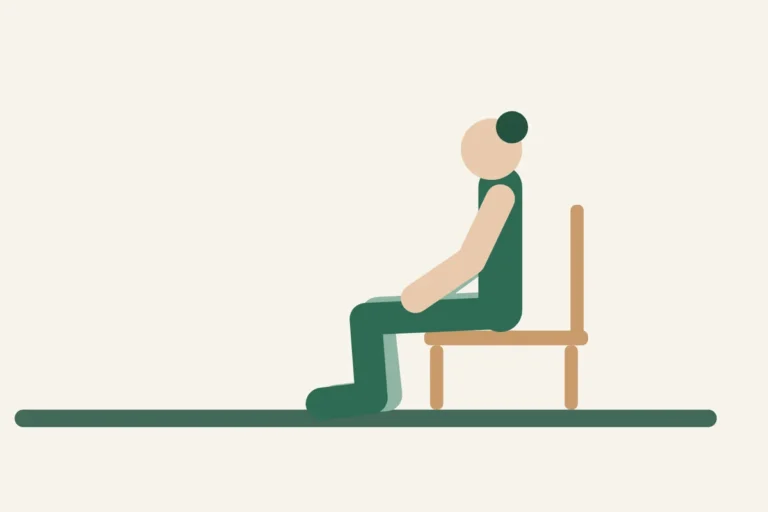
Chair yoga for seniors is gentle yoga done seated on a sturdy chair without wheels. Sit near the front edge with both feet flat, move slowly, and stop at a mild stretch. This page gives 12 seated moves, a one-page chart you can print and a 10-minute order. Research on chair yoga is limited, and it doesn't replace the walking, strength and balance exercise health agencies recommend for older adults.
We may earn a commission when you buy through links on this page. It never changes what we recommend. As an Amazon Associate we earn from qualifying purchases.
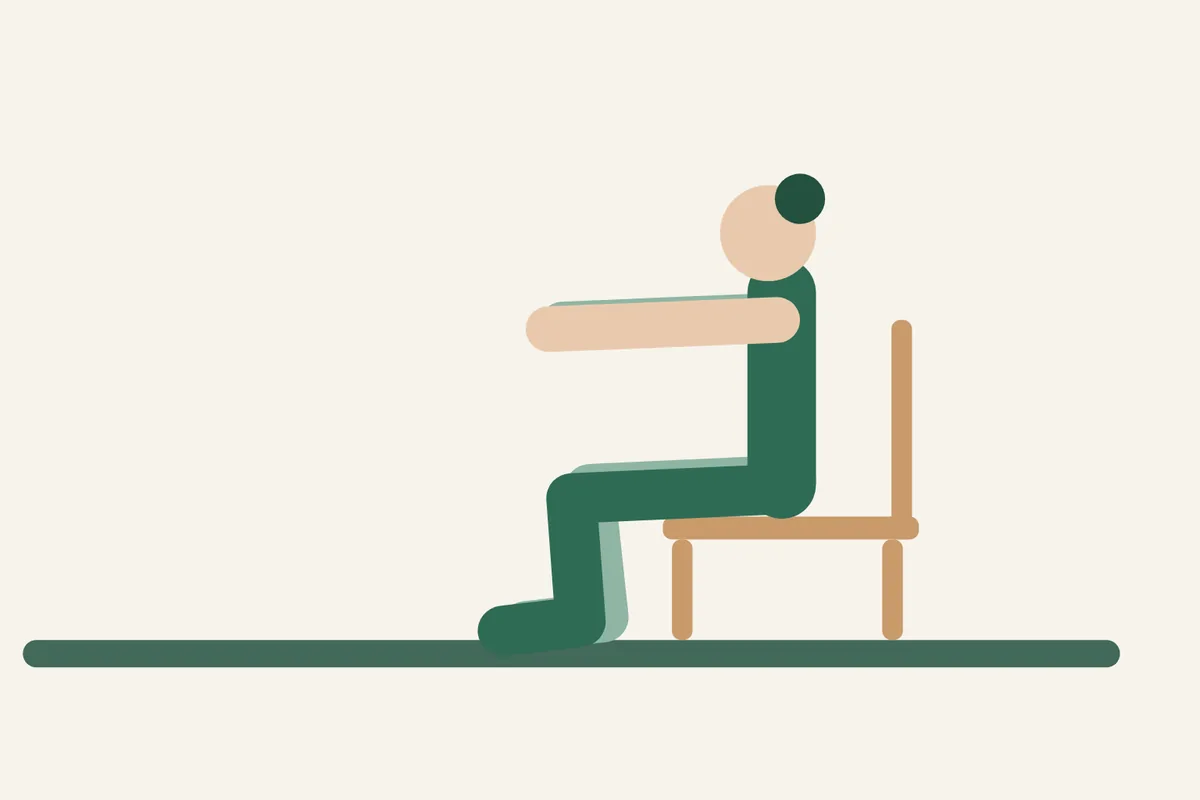
Chair yoga for seniors is yoga done sitting on a chair, or standing while you hold one, so you can stretch, breathe and move without getting down on the floor. This guide gives you 12 gentle seated moves, a one-page chart you can print from this page and a 10-minute order to follow. Choose a sturdy chair without wheels, sit near the front edge with both feet flat, and stop at a mild stretch, never pain. Research on chair yoga is limited, and it is no substitute for the activity health agencies recommend for older adults. It’s part of our Yoga For guides.
New to yoga? Yoga for beginners and how to start yoga at home cover the basics. Nothing here is medical advice, and none of it promises better balance, less pain or fewer falls.
In this guide
- What is chair yoga, and who is it for?
- Set up your chair
- Chair yoga exercises for seniors: the one-page chart
- The 12 moves, step by step
- A 10-minute order
- How long, how often, and is chair yoga enough exercise?
- How this differs from our desk sequence
- Make it easier (props)
- Who should skip it or ask a doctor first
- What the research says
- Frequently asked questions
- Sources
What is chair yoga, and who is it for?
Harvard Health describes chair yoga as yoga done seated, with standing poses sometimes done while holding a chair. It says anyone can try it and that it can be especially helpful if you have trouble balancing, find it hard to stand for long, or find getting down to and up from the floor difficult.
That is the idea behind chair yoga for seniors with limited mobility: the chair does the work of the floor. You keep slow breathing, gentle spine movement and easy stretches, and leave out deep bends and balance poses. Most reviews we cite include people with an average age of 60 or more, but fitness varies far more than age does.
A chair lowers the risk of falling during practice but doesn’t remove it: one review noted a fall during a yoga session in one study. And a chair routine is not a full exercise plan (see below).
Set up your chair
- Pick a steady chair. Cleveland Clinic suggests a firm-seated chair with a back, such as a dining chair without arms, and says to avoid couches, soft chairs and chairs with wheels. Harvard Health also advises one that doesn’t tip, wobble or roll.
- Use a non-slip floor, as YogaEasy advises. Pushing the chair back against a wall is our own tip, so it can’t slide when you lean.
- Sit near the front edge, feet flat, about hip-width apart, knees over ankles. If your feet don’t reach the floor, rest them on a sturdy box or thick book.
- After a hip replacement, follow your surgeon’s chair advice. MedlinePlus lists a firm, straight-backed chair with armrests and hips higher than knees.
Chair yoga exercises for seniors: the one-page chart
All 12 moves fit on this chart. There is no PDF to download. To print it, use your browser’s print command (Ctrl+P on Windows, Cmd+P on a Mac) and check the preview first, because the fit depends on your browser and paper. Details and easier options follow the chart.
| # | Move | How | Hold |
|---|---|---|---|
| 1 | Seated Mountain | Sit tall, feet flat, hands on thighs, shoulders soft | 5 slow breaths |
| 2 | Belly breath | Hand on belly, breathe in through the nose, out slowly | 5 breaths |
| 3 | Neck tilt and turn | Ear toward shoulder, then look over each shoulder, small and slow | 3 breaths each side, then 2 slow turns each way |
| 4 | Shoulder rolls | Shrug up, roll back, then roll forward | 5 rolls each way |
| 5 | Seated cat-cow | Hands on knees: lift the chest as you breathe in, round gently as you breathe out | 5 slow rounds |
| 6 | Reach up | Lift both arms as high as is comfortable, palms facing in | 3 breaths |
| 7 | Side bend | One hand on the seat, other arm up and over | 3 breaths each side |
| 8 | Gentle twist | Hand to the opposite knee, turn from the middle of your back | 3 breaths each side |
| 9 | Hamstring stretch | One heel forward, toes up, hinge a little from the hips | 3 breaths each side |
| 10 | Hip stretch | Ankle on the opposite shin or thigh, sit tall | 3 breaths each side |
| 11 | Ankle and foot circles | Lift one foot, point, flex and circle | About 10 seconds each way |
| 12 | Closing Mountain | Palms together, slow breaths, pause before you stand | 5 breaths, then pause |
If a move feels like too much, skip it or take the easier option. Pain, dizziness or shortness of breath means stop.
Before you start: after a hip replacement, skip moves 9 and 10 unless your surgeon says they are OK. With glaucoma or dizziness, keep your head up in move 9. With osteoporosis, keep moves 5 and 8 small. Ask your doctor if you are unsure.
The 12 moves, step by step
We wrote these steps in our own words after checking them against several teaching sources (listed under Sources). Harvard Health holds each of its sample chair moves for 3 to 5 breaths, so we use that range.
1. Seated Mountain
Works: posture and a steady base, like Mountain Pose but seated.
- Perch near the front of the seat, feet flat, knees over ankles.
- Rock gently from one sitting bone to the other, then settle in the middle.
- Let the top of your head float up and rest your hands on your thighs.
- Take five slow breaths.
2. Belly breath
Works: slow, easy breathing. See diaphragmatic breathing for the full technique.
- Rest one hand on your belly.
- Breathe in through your nose and feel the belly rise.
- Breathe out slowly and feel it settle. Repeat for five breaths, without forcing or holding.
3. Neck tilt and turn
Works: the sides and back of the neck.
- Sit tall with your hands on your thighs.
- Let your right ear drift toward your right shoulder until you feel a mild stretch on the left. Don’t pull with your hand.
- Stay for three breaths, come back to center and switch sides.
- Then turn your head slowly to look over one shoulder, then the other, only as far as is comfortable.
Keep these small, and skip neck circles and tipping your head back. Cleveland Clinic uses a similar ear-to-shoulder stretch.
Easier: tilt only halfway.
4. Shoulder rolls
Works: the shoulders and base of the neck.
- Lift both shoulders toward your ears and let them drop.
- Roll them back in slow circles about five times, then forward about five times.
5. Seated cat-cow
Works: gentle spine movement. Cat-Cow has the floor version.
- Sit tall with your hands on your knees.
- Breathe in and lift your chest a little, chin level.
- Breathe out and round your back gently, letting your head follow.
- Repeat five slow rounds.
Watch out for: big, deep rounding. A review of 89 patients with yoga-related injuries found poses with extreme forward or backward bending of the spine were most often involved, and advised people with low bone density to avoid extreme spinal flexion (Lee et al., 2019). Keep this small, and favor the lifting half if you have osteoporosis or osteopenia.
6. Reach up
Works: the shoulders, ribs and upper back.
- Sit tall and breathe in as you lift both arms forward and up, as high as feels comfortable, palms facing each other.
- Keep your shoulders away from your ears. Stay three breaths, then lower on an out-breath.
Easier: lift only to shoulder height, or one arm at a time. If raising your arms makes you light-headed, lower them and breathe.
7. Side bend
Works: the sides of the ribs and waist.
- Place your left hand on the seat beside you.
- Breathe in and lift your right arm. Breathe out and lean gently left, both sitting bones on the seat, chest facing forward.
- Stay three breaths, come up on an in-breath and switch sides.
8. Gentle twist
Works: the middle back, with a small turn.
- Sit tall with both feet flat and both sitting bones on the seat.
- Rest your right hand on the outside of your left knee. Steady yourself with your left hand on the seat behind your hip or on the chair back.
- Breathe in and grow taller. Breathe out and turn your ribs a little to the left.
- Stay three breaths, return to center and switch sides.
Watch out for: twisting from your neck or pulling yourself around with your arms. The turn should come from the middle of your back. If it strains your neck, keep your chin in line with the middle of your chest instead of turning your head, as Yoga International suggests. With osteoporosis, keep the turn small and ask your doctor.
9. Seated hamstring stretch
Works: the backs of the thighs. The floor version is Seated Forward Fold.
- Slide to the front edge of the seat and hold it with your left hand.
- Extend your right leg, heel on the floor and toes up, with a soft bend in the knee.
- Rest your right hand on your thigh and lean forward a little from the hips, back long, until you feel a mild pull behind the thigh.
- Stay three breaths, return upright and switch sides.
Watch out for: letting your head drop below your heart. An ACE Fitness article on chair exercises notes that many older adults can easily become light-headed, so it suggests keeping the head above the heart as you stretch (ACE). Head-down yoga positions also raised eye pressure in a small study, which matters with glaucoma (see the caution box).
Easier: loop a belt or strap around your foot, keep the leg slightly bent and don’t lean (YogaEasy shows a strap version).
10. Seated hip stretch
Works: the outer hip and buttock. Yoga for tight hips has more hip stretches.
- Sit at the front of the seat, feet flat.
- Rest your right ankle on your left shin, or higher on the thigh just above the knee if comfortable.
- Sit tall. For more stretch, lean forward a little with a long back.
- Stay three breaths and switch sides.
Skip it after a hip replacement or with a hip precaution. MedlinePlus lists not crossing your legs or ankles and not bending the hip past a right angle among the rules after surgery.
Easier (not after a hip replacement): keep the foot on the floor, knee turned slightly out, and just sit tall.
11. Ankle and foot circles
Works: the ankles and feet.
- Hold the seat with one hand and lift your right foot a few inches.
- Point your toes, then flex them back, three or four times.
- Circle the foot slowly one way, then the other, about 10 seconds each way, as Cleveland Clinic’s stretching guide suggests. Switch feet.
12. Closing Mountain
- Return to Seated Mountain with your palms together at your chest or on your thighs.
- Take five slow breaths.
- Before you stand, stay seated a few breaths, then rise slowly with a hand on the chair. MedlinePlus says some people get symptoms of low blood pressure when they stand up too quickly.
A 10-minute order
This order adds up to about 10 minutes. The timings are our plan, not a researched dose.
| Part | Moves | About how long |
|---|---|---|
| Breath and posture | 1 Seated Mountain, 2 Belly breath | 1 min 30 s |
| Neck and shoulders | 3 Neck tilt and turn, 4 Shoulder rolls | 1 min 30 s |
| Spine and arms | 5 Seated cat-cow, 6 Reach up | 1 min 30 s |
| Sides and middle back | 7 Side bend, 8 Gentle twist | 2 min |
| Legs and feet | 9 Hamstring stretch, 10 Hip stretch, 11 Ankle and foot circles | 2 min 30 s |
| Finish | 12 Closing Mountain, then pause before standing | 1 min |
Short on time? Do moves 1, 5, 7 and 12 for about three minutes.
How long, how often, and is chair yoga enough exercise?
No study has set the right dose for chair yoga. The trials we read used teacher-led programs: 45-minute classes twice a week for 8 weeks (Park et al., 2017) and a 12-week program (Tew et al., 2024). For home, Harvard Health’s sample moves use 3 to 5 repetitions, and it says you can pick a couple of moves for a quick stretch. A short session on most days is a plan you can adjust, not a prescription.
On its own, it isn’t enough exercise. The CDC says adults 65 and older need at least 150 minutes a week of moderate-intensity activity, muscle-strengthening on at least 2 days a week, and activities that improve balance, as abilities and conditions allow (CDC). The WHO recommends that older adults also do varied multicomponent activity, emphasizing functional balance and strength training at moderate or greater intensity, on 3 or more days a week, to enhance function and prevent falls (Bull et al., 2020).
None of the studies we read measured whether a gentle seated session counts as moderate intensity, so we can’t say it counts toward those minutes. Think of it as a warm-up, a cool-down, or a gentle day between walking and strength days. Chair exercises for seniors covers strength.
How this differs from our desk sequence
Yoga for desk workers has its own seated sequence for people who sit all day, with wrist stretches, a chest opener and a standing lunge. This guide is built for older adults: every move works with a hand on the chair, nothing needs standing balance, and it adds ankle and foot work, fall-aware safety notes and a chart.
Make it easier (props)
You don’t need to buy anything.
- A sturdy chair without wheels, against a wall if you can.
- A rolled towel or small cushion behind your lower back if sitting tall is tiring.
- A strap or an old belt for the hamstring stretch. See how to use a yoga strap.
Helpful gear for this
 Manduka begin yoga mat, 5 mm
5 mm TPE mat, 68 x 24 in, light to carry, with a center alignment stripe (maker's spec).
See it on Amazon Gaiam foam yoga blocks, pair
Two light foam blocks, 9 x 6 x 4 in each, to raise the floor under your hands (maker's spec).
See it on Amazon Hugger Mugger cotton D-ring yoga strap, 10 ft
Cotton webbing 1.5 in wide with a metal D-ring buckle, 10 ft long (maker's spec).
See it on Amazon
As an Amazon Associate we earn from qualifying purchases. How we choose gear
Who should skip it or ask a doctor first
- Talk to your doctor first if you have any health condition, take medicines that cause dizziness, or haven’t been active lately. The NCCIH says people with knee or hip injuries, lumbar spine disease, severe high blood pressure, balance problems or glaucoma, older adults and pregnant women may need to change or skip poses. It also says yoga-related injuries treated in emergency departments are more common in people 65 and older. Harvard Health adds checking first with back, shoulder or hip problems or recent abdominal, shoulder or hip surgery.
- Falls and balance: stay seated, hold the chair whenever you want support, keep your feet flat, and don’t lean so far that the chair shifts. Stand only at the end, slowly.
- Dizziness: stop and sit still. MedlinePlus says low blood pressure is a problem when it causes dizziness or fainting. Rise slowly, and tell your doctor if it happens more than once.
- Osteoporosis or low bone density: avoid strongly rounded spine bends (Lee et al., 2019). Keep cat-cow small and the twist gentle. That abstract names extreme forward and backward bending, not twists, so ask your doctor how much turn is right.
- Hip replacement: skip moves 9 and 10 unless your surgeon or physical therapist says they’re OK, and ask about the rest. MedlinePlus lists not crossing your legs, not bending the hip past 90 degrees and keeping knees and feet pointed straight ahead, especially in the first months. Rules depend on your surgery.
- Glaucoma: keep your head above your heart. In a study of 10 people with glaucoma and 10 without, four head-down yoga positions raised eye pressure within a minute, and it fell back within two minutes of sitting up (Jasien et al., 2015). Keep move 9 upright or skip it, and ask your eye doctor.
- Joint pain: Cleveland Clinic’s chair-exercise guide says joint pain, or pain that doesn’t settle, means stop and back off.
- Chest pain, fainting, or sudden weakness or numbness: stop and call 911.
What the research says
Evidence: limited
The evidence for chair yoga is limited. Most trials are small and short, they mix kinds of yoga, and none tested this sequence.
Chair yoga trials. In a pilot of 131 community-dwelling older adults with lower-body osteoarthritis who couldn’t do standing exercise, 66 did chair yoga and 65 a health education program, each for 45 minutes twice a week for 8 weeks. Chair yoga reduced pain interference more, and that held at 3 months. Pain scores, gait speed and fatigue also improved in the chair yoga group during the program but not afterward, and balance didn’t change (Park et al., 2017). In a pragmatic trial of 454 adults aged 65 and over with two or more long-term conditions, a 12-week chair-based program added to usual care did not significantly change quality of life over 12 months (adjusted difference 0.020, 95% CI -0.006 to 0.045). Falls and most other secondary outcomes didn’t differ significantly either, apart from pain items, and there were no serious related adverse events (Tew et al., 2024).
Yoga more broadly. A 2019 review of 22 trials in older adults with an average age of 60 or more, not selected for a disease, found better balance than inactive controls in 7 studies (265 people; effect size 0.70, with results that varied widely) and better lower-limb strength in 7 studies (485 people). Against active comparison groups such as tai chi, chair aerobics or walking, balance was not significantly different in 5 studies (264 people); lower-limb strength favored yoga in 3 studies (225 people). Three of the 22 trials used chair yoga. Four studies reported adverse events in yoga groups, including a groin strain, a fall during a session and musculoskeletal pain (Sivaramakrishnan et al., 2019). A 2016 review found a small balance gain in 6 trials (307 people aged 60 and over) (Youkhana et al., 2016). A 2023 review of 33 trials (2,384 people aged 65 and over, mostly Hatha yoga, often Iyengar or chair-based) reported moderate-certainty evidence for gait speed and lower-body strength and endurance against education or no intervention, and possibly no benefit over exercise (Loewenthal et al., 2023). We read only its abstract, so we can’t give per-outcome trial counts.
Falls. The Cochrane review of exercise to prevent falls covered 108 trials and 23,407 community-dwelling older adults. Exercise of all types cut the rate of falls by 23% (59 studies, 12,981 people), and balance and functional exercises by 24% (39 studies, 7,920 people). Its abstract does not list yoga as a category and says no trials compared flexibility or endurance exercise with a control (Sherrington et al., 2019). We found no trial showing chair yoga prevents falls.
Overall: some small positive trials and reviews, a larger trial without a clear benefit on its main outcome, and no study of this routine.
Frequently asked questions
Is chair yoga for seniors over 60 safe?
It can be a gentle way to move, but nobody can promise a result. The largest chair-yoga trial we found (454 people) reported no serious related adverse events, but trials can’t rule out rare problems, and one yoga trial reported a fall during a session. Your health conditions matter more than your age, so talk to your doctor if you have any.
Is chair yoga good for beginners?
Yes, if you take it slowly. Chair yoga for beginners can start with just the first three moves, adding more over a few sessions. Read the caution box first, and stop if anything hurts.
Is there a free printable chair yoga chart or PDF?
Not a PDF download. The one-page chart above is a table on this page. Print it with your browser’s print command and check the preview.
Can chair yoga improve balance or prevent falls?
Reviews found small to moderate balance gains for yoga compared with no exercise, but results were not clearly better than other exercise, and the largest chair-yoga trial we found showed no significant difference in falls. Treat chair yoga as a gentle extra, not a balance program.
Sources
- National Center for Complementary and Integrative Health (NCCIH). Yoga: Effectiveness and Safety. Last updated August 2023., checked Nov 19, 2026
- Harvard Health Publishing (Klein S; reviewed by Shmerling RH). Chair yoga: Benefits of a mind-body practice without the risk of falling. February 11, 2025., checked Nov 19, 2026
- Sivaramakrishnan D, Fitzsimons C, Kelly P, et al. The effects of yoga compared to active and inactive controls on physical function and health related quality of life in older adults: systematic review and meta-analysis of randomised controlled trials. Int J Behav Nutr Phys Act. 2019;16(1):33., checked Nov 19, 2026
- Youkhana S, Dean CM, Wolff M, Sherrington C, Tiedemann A. Yoga-based exercise improves balance and mobility in people aged 60 and over: a systematic review and meta-analysis. Age Ageing. 2016;45(1):21-29., checked Nov 19, 2026
- Loewenthal J, Innes KE, Mitzner M, Mita C, Orkaby AR. Effect of yoga on frailty in older adults: a systematic review. Ann Intern Med. 2023;176(4):524-535., checked Nov 19, 2026
- Park J, McCaffrey R, Newman D, Liehr P, Ouslander JG. A pilot randomized controlled trial of the effects of chair yoga on pain and physical function among community-dwelling older adults with lower extremity osteoarthritis. J Am Geriatr Soc. 2017;65(3):592-597., checked Nov 19, 2026
- Tew GA, Wiley L, Ward L, et al. Chair-based yoga programme for older adults with multimorbidity: RCT with embedded economic and process evaluations. Health Technol Assess. 2024;28(53):1-152., checked Nov 19, 2026
- Sherrington C, Fairhall NJ, Wallbank GK, et al. Exercise for preventing falls in older people living in the community. Cochrane Database Syst Rev. 2019;1(1):CD012424., checked Nov 19, 2026
- Bull FC, Al-Ansari SS, Biddle S, et al. World Health Organization 2020 guidelines on physical activity and sedentary behaviour. Br J Sports Med. 2020;54(24):1451-1462., checked Nov 19, 2026
- Centers for Disease Control and Prevention (CDC). Older Adult Activity: An Overview. Page dated December 4, 2025., checked Nov 19, 2026
- Lee M, Huntoon EA, Sinaki M. Soft tissue and bony injuries attributed to the practice of yoga: a biomechanical analysis and implications for management. Mayo Clin Proc. 2019;94(3):424-431., checked Nov 19, 2026
- Jasien JV, Jonas JB, de Moraes CG, Ritch R. Intraocular pressure rise in subjects with and without glaucoma during four common yoga positions. PLoS One. 2015;10(12):e0144505., checked Nov 19, 2026
- MedlinePlus (U.S. National Library of Medicine). Taking care of your new hip joint. Reviewed November 7, 2024., checked Nov 19, 2026
- MedlinePlus (U.S. National Library of Medicine). Low blood pressure. Last updated January 28, 2019., checked Nov 19, 2026
- Cleveland Clinic (Jevnikar T, PT). 11 chair exercises for seniors, older adults and people with limited mobility. April 18, 2024., checked Nov 19, 2026
- Cleveland Clinic (Wichman L, MD). Stretching 101: exercises and benefits. November 4, 2025., checked Nov 19, 2026
- Antoian F. Chair exercises for older adults: 5 for strength, flexibility and balance. ACE Fitness. Last updated October 22, 2026., checked Nov 19, 2026
- Karnes A. An accessible, fully seated chair yoga practice. Yoga International., checked Nov 19, 2026
- Savage J. Chair yoga sequence for hips and hamstrings. YogaEasy. Modified May 3, 2026., checked Nov 19, 2026
Image credits: Illustration: YogaForFitness (vector figure), drawn from the steps above