Pranayama for Beginners: 5 Simple Yoga Breathing Practices
Quick answer
Start pranayama sitting upright, with comfortable breaths and no breath holds. Learn slow belly breathing first, then equal breathing, humming bee breath, ujjayi and alternate nostril breathing, and leave fast or breath-holding practices such as kapalbhati and bhastrika for lessons with a qualified teacher.
We may earn a commission when you buy through links on this page. It never changes what we recommend. As an Amazon Associate we earn from qualifying purchases.
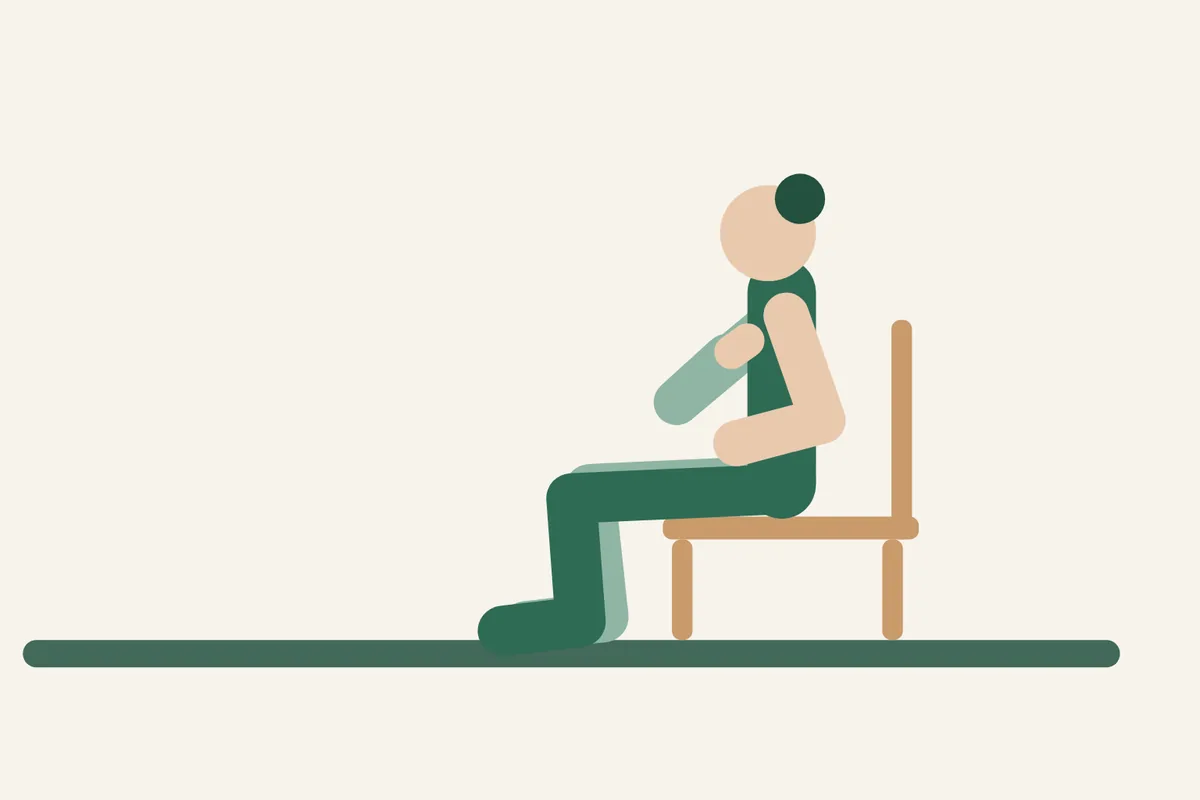
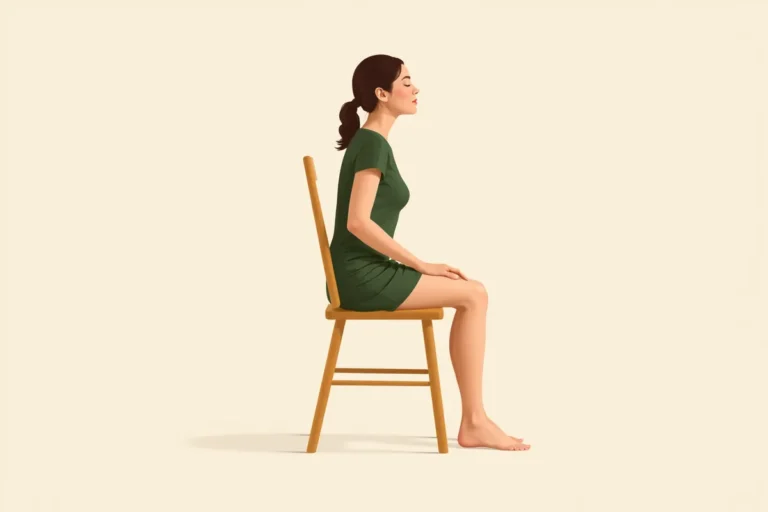
Pranayama is the breathing side of yoga: you deliberately change the pace, path or sound of your breath. A safe way in is to sit upright in a chair or on a cushion, keep every breath comfortable, skip the pauses and learn one practice at a time, starting with the simplest. We suggest about five minutes a session at first.
Below are five gentle practices in a suggested order, with cautions, dizziness advice and the research. You’ll find more in our Breathing guides. Check the safety box first if you are pregnant or have a heart, lung, eye or mental health condition.
In this guide
- What is pranayama?
- How do you start pranayama breathing safely?
- Five pranayama practices for beginners
- What does a first month of practice look like?
- Should beginners try kapalbhati or bhastrika pranayama?
- What should you do if you feel dizzy or anxious?
- Common beginner mistakes
- Make it easier (props)
- Who should skip it or ask a doctor first
- What the research says
- Frequently asked questions
- Sources
What is pranayama?
The Sanskrit word joins prana (life energy, closely tied to the breath) and ayama (to extend or draw out). In the classical eight-limb outline of yoga attributed to Patanjali, it is the fourth limb, after the ethical guidelines and the postures (YogaEasy). Yoga as practiced in the United States usually emphasizes postures, breathing techniques and meditation (NCCIH), so you may already have met some of this in class.
Some techniques slow the breath and leave it flowing, some add pauses (called kumbhaka), and others drive it fast and hard. That difference matters more for safety than the Sanskrit names do. This page teaches the flowing kind. The NCCIH advises practicing yoga with a qualified instructor and says learning on your own without supervision has been associated with increased risks, so a class or teacher is the best check on your technique.
How do you start pranayama breathing safely?
Add one practice at a time. This order is our own suggestion, running from the fewest moving parts to the most. No study has tested it. It fits the general advice from YogaEasy to build up gradually, with breath awareness and ujjayi before alternate nostril breathing, and breath holds only after that.
| Order | Practice | What’s new | Pause or skip it if |
|---|---|---|---|
| 1 | Belly breathing | Feeling the breath low down | Breathing practice makes you feel worse |
| 2 | Equal breathing | A matching count in and out | Counting makes you strain or tense up |
| 3 | Humming bee breath | A hum on each out-breath | The sound or focus leaves you agitated |
| 4 | Ujjayi | A slightly narrowed throat | You can’t breathe through your nose |
| 5 | Alternate nostril | Your hand closes one side at a time | Either nostril is blocked |
Before any of them:
- Sit somewhere stable. A chair with a back is ideal. Rarely, severe overbreathing makes someone faint (Cleveland Clinic).
- Choose a calm moment. One teacher advises practicing on a light stomach and staying within your comfort zone (Sovik, Yoga International).
- Keep breaths comfortable, not huge. Gasping or rushing to refill means the count or effort is too much.
- No holds. Let each in-breath turn into the out-breath without clamping your throat.
- Stop early. Dizziness, tingling or rising unease means return to normal breathing (see what to do).
Five pranayama practices for beginners
1. Slow belly breathing
This is the base for the other four: the breath moves your belly while your chest and shoulders stay quiet.
- Sit back in the chair, feet down, and let your shoulders and jaw go soft.
- Rest one hand flat across the top of your chest and the other on your upper belly, just under the ribs.
- Breathe in slowly through your nose and let the lower hand move outward.
- Let the air out slowly through lightly puckered lips while that hand sinks back.
- Continue for two or three minutes, keeping the top hand as still as you comfortably can.
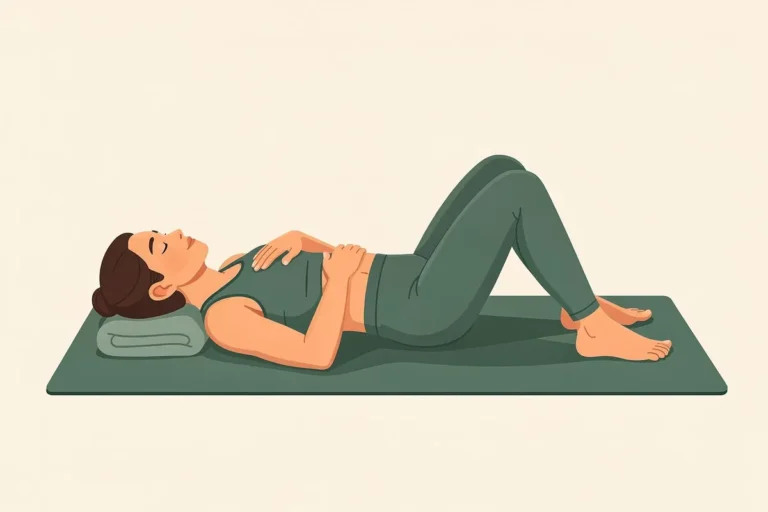
The method is adapted from Cleveland Clinic, which starts people at 5 to 10 minutes, three or four times a day; the shorter first session here is our choice. For the lying-down version and the research, see our diaphragmatic breathing guide. (If you’re pregnant, stay sitting.)
Skip or change it if you have COPD, asthma or anxiety and haven’t checked with your provider; Cleveland Clinic advises asking whether the technique suits you.
2. Equal breathing (sama vritti)
Sama vritti means roughly “equal movement.” The fuller version matches four parts, including two holds. Beginners can drop the holds and simply make the in-breath and out-breath the same length (Savage, YogaEasy).
- Sit upright and watch a few natural breaths without changing them.
- Breathe out gently.
- Breathe in through your nose while you silently count to four.
- Without stopping, breathe out through your nose to the same count.
- Repeat for about two minutes, then let the counting go.
If four feels tight, count to two or three instead. Longer counts, such as six, can wait until four is easy. A metronome or a pacing app can keep the rhythm for you (YogaEasy).
Skip or change it if counting makes you anxious: go back to plain belly breathing. Once you add the two holds, this becomes box breathing, which has its own steps and cautions.
3. Bhramari pranayama (humming bee breath)
You hum as you breathe out. The sound gives your attention somewhere to rest and tends to stretch the out-breath without any counting.
- Sit comfortably, on a chair with your feet flat or on a cushion on the floor. Close your eyes if that feels good.
- Take a natural breath or two.
- Part your teeth slightly, let your lips touch lightly and loosen your jaw.
- Breathe in through your nose.
- With your mouth closed, hum at a low to medium pitch for as long as the out-breath lasts comfortably. Keep the volume moderate.
- Do six humming breaths, then sit quietly and breathe normally.
The hum should never leave you gasping for the next breath (McCall, Yoga International). Another teacher suggests two to three minutes a day, building toward five only while it stays pleasant (Grady, Yoga International).
Some versions place the fingers over the ears, eyes and face. Learn the plain hum first. McCall suggests that people with anxiety, depression or claustrophobia would probably do better to skip the full hand position.
Skip or change it if you start to feel agitated. McCall’s advice is to ease off and breathe normally.
4. Ujjayi pranayama (ocean breath)
In ujjayi you narrow your throat slightly so the breath makes a soft, hushing sound, a bit like distant waves. Many people first hear it in flowing yoga classes.
- Sit tall and comfortable. Hold one palm in front of your mouth.
- Open your mouth and breathe out as if fogging a mirror, making a whispered “haaa.”
- Keep that gentle narrowing as you breathe in, still with your mouth open. Practice a few breaths.
- Close your mouth and keep the same soft sound while breathing in and out through your nose.
- Make both halves equally long and smooth, with no pause between them. Let the breath come from low down.
- Continue for up to two minutes, then relax your throat.
The open-mouth warm-up comes from YogaEasy, and the seated, even, pause-free pattern from Anderson, Yoga International. If one half of the breath runs longer, shorten it to match the other. Check your jaw and neck for tension, and don’t let yourself feel starved of air. It should sound like a whisper, not a snore you have to push.
Skip or change it if your nose or sinuses are blocked, so nasal breathing isn’t possible. Some pregnant people find ujjayi too heating to keep up through a whole practice (YogaEasy); drop the sound if that’s you.
5. Nadi shodhana pranayama (alternate nostril breathing)
Here the air goes through a single nostril at any moment. It comes last because your hand, your count and your attention all have a job.
- Sit with your head, neck and trunk upright. Close your eyes if you like.
- Raise your right hand and fold your index and middle fingers into your palm.
- Take one easy breath in through both nostrils.
- Rest your thumb lightly against your right nostril to close it. Breathe out through the left, then in through the left.
- Lift your thumb and close the left nostril with your ring finger. Breathe out through the right, then in through the right.
- Switch sides after every full breath until you’ve done three on each side.
- Rest your hand in your lap and let three easy breaths flow through both sides of your nose.
That makes one round. Add up to two more when it feels easy. Bring your hand to your face rather than dropping your head to your hand, and match the length of each in-breath and out-breath. These steps are based on Sovik’s method, which says to hold the breath only under a teacher’s careful supervision. Other teachers switch sides at a different point, and Cleveland Clinic’s version adds a pause of a beat or two, which we leave out here. See alternate nostril breathing for more on this one.
Skip or change it if either nostril is blocked. This is our own practical call, since you can’t complete the pattern as written: wait until it clears.
What does a first month of practice look like?
Treat this as a loose plan. Stay on a step for as long as you like, and move on only when the current one feels easy. The timings are our suggestion, not a tested program.
| Stage | Practice | About how long |
|---|---|---|
| Days 1 to 3 | Belly breathing | 3 minutes |
| Days 4 to 7 | Belly breathing, then equal breathing | 4 to 5 minutes |
| Week 2 | Add six humming breaths | 5 minutes |
| Week 3 | Try ujjayi in place of equal breathing | 5 minutes |
| Week 4 | Finish with one round of alternate nostril breathing, trimming the rest to fit | About 5 minutes |
You don’t have to keep all five. A few quiet breaths can also open or close a home yoga session (see how to start yoga at home for planning one). For guided rest, try yoga nidra.
Should beginners try kapalbhati or bhastrika pranayama?
Not on your own. Kapalbhati pranayama (“skull shining” breath) pairs fast, forceful out-breaths with passive in-breaths (Haller et al., 2023). Bhastrika, or bellows breath, is classed as a fast technique in a 2025 review (Mütze et al., 2025), and one teacher groups it with kapalbhati as a powerful practice. Leave both, and long breath holds, until you can learn them from a qualified teacher who knows your health history. The reasons:
- Official advice. If you’re new to yoga, the NCCIH says to avoid extreme practices, and it names forceful breathing among them.
- A collapsed lung has been reported. Doctors described a healthy 29-year-old woman whose lung collapsed, which they attributed to kapalbhati (Johnson et al., 2004). They called it the only report of its kind known then. One case can’t tell you how often this happens.
- Some people react badly. In a trial of 74 people with post-traumatic stress disorder, one group did pranayama, with kapalbhati as the first choice plus breath holds, at the start of therapy sessions. Nine of them had repeated minor reactions: anxiety or a feeling of constriction kept eight from doing the practice properly, and one dropped out. In an exploratory analysis, people with repeated reactions fared worse than those having therapy alone. Across everyone assigned, adding pranayama made no significant difference to the main symptom score (Haller et al., 2023).
- Teachers’ precautions. A teacher writing for YogaEasy advises against fast rhythms or breath holds for people with asthma, heart disease or high blood pressure, and in pregnancy (Ekhart).
- Straining. Bearing down with your mouth and nose shut, called the Valsalva maneuver, briefly raises blood pressure and increases pressure in the eyes and belly (Cleveland Clinic). A beginner’s hold that turns into bearing down is worth avoiding.
What should you do if you feel dizzy or anxious?
- Stop the technique. Drop the count, hum or hand position.
- Stay seated and let your breathing settle by itself. Resist taking big breaths to “recover”: deep breaths taken to ease the symptoms can keep overbreathing going (Cleveland Clinic).
- Notice other signs. Fast, deep breathing can bring lightheadedness, weakness, breathlessness, a pounding heart, and tingling or numbness in the arms or around the lips (Cleveland Clinic). If anxiety has set off overbreathing, Cleveland Clinic suggests breathing out slowly through pursed lips.
- Call it a day. For dizziness, tingling or agitation during humming breath, Grady advises switching to simple belly breathing and ending that practice for the day. We’d end the session after any practice that brings these on.
- Get urgent help when it’s more than that. Go to an emergency department for chest pain, difficulty breathing or bluish lips, skin or nails, which can signal a collapsed lung. Seek care right away if rapid breathing is something you’ve never had before (Cleveland Clinic).
If unease returns each time, stop practicing and talk with your doctor or therapist. The NCCIH notes that relaxation techniques occasionally increase anxiety, bring intrusive thoughts or cause a fear of losing control.
Common beginner mistakes
- Chasing longer counts. Shorten the count as soon as it feels forced.
- Breathing too big. Fast, deep breaths can leave you lightheaded.
- Overworking the throat or hand. Ujjayi needs only a slight narrowing, and a nostril only a light touch.
- Adding everything at once. One new practice at a time shows which one causes trouble.
Make it easier (props)
- A firm chair with your feet flat, in place of sitting on the floor.
- A cushion or folded blanket under your hips, high enough that your thighs slope down. McCall suggests this for floor sitting.
- Yoga blocks or books to rest your feet on if the chair is too high.
- A pillow on your lap to rest the raised arm’s elbow during alternate nostril breathing.
- A timer with a gentle tone, so you aren’t watching the clock.
Helpful gear for this
 Hugger Mugger zafu meditation cushion
Round cushion, 15 x 15 x 5 in, buckwheat-hull fill, removable cotton cover you can hand-wash (maker's spec).
See it on Amazon Gaiam zafu meditation cushion
15 in round and 5 in high, buckwheat fill you can add or remove, machine-washable cover (maker's spec).
See it on Amazon Gaiam rectangular yoga bolster
25 x 12 x 5 in bolster to lie back on or put under your knees, machine-washable cover (maker's spec).
See it on Amazon
As an Amazon Associate we earn from qualifying purchases. How we choose gear
Who should skip it or ask a doctor first
- Heart disease or high blood pressure: talk with your doctor first, as the NCCIH advises for anyone with a health condition. Yoga teacher Esther Ekhart advises against fast rhythms and breath holds if you have heart disease or high blood pressure. Cleveland Clinic advises care with straining-type holds if you have disease of the heart valves or coronary arteries, or a heart condition present from birth. Don’t use breathing practice to put off medical care.
- Asthma, COPD or another lung condition: check with your doctor or respiratory therapist first, and keep using the treatments they recommend; breathing practice is an add-on, not a replacement (Cleveland Clinic). For asthma, Ekhart advises against fast-rhythm breathing and breath holds.
- Retinopathy, lens implants or other eye conditions: ask your eye doctor before any hold. Cleveland Clinic says people with retinopathy, or with lens implants such as after cataract surgery, shouldn’t strain against a held breath.
- Anxiety, panic attacks, trauma history, epilepsy or a psychiatric condition: talk to your doctor or therapist first. The NCCIH mentions rare reports of some relaxation techniques triggering or aggravating symptoms in people who have epilepsy or certain psychiatric conditions, or who have lived through abuse or trauma.
- Pregnancy: get your health care provider’s go-ahead, and ask your midwife or doctor before trying any breath hold. Sit up and keep sessions short: the NCCIH advises avoiding activities that involve long periods of being still or lying on your back, and the NHS says to avoid staying flat on your back beyond a few minutes in later pregnancy. Yoga teachers advise skipping breath holds, kapalbhati and bhastrika in pregnancy (Heagberg, Yoga International; Ekhart, YogaEasy); Heagberg suggests smooth alternate nostril or humming breath instead.
- Blocked nose: postpone ujjayi if you can’t breathe through your nose. We’d wait with alternate nostril breathing too.
- Driving or using machinery: save these for later. Some steps close your eyes or occupy a hand, and Cleveland Clinic rules out box breathing at the wheel.
- Swimming and water: don’t hyperventilate before going underwater or try to hold your breath underwater for long periods; you can pass out and drown (CDC).
What the research says
Evidence: limited
We found no trial of this five-practice routine or its order. Studies test other mixtures, single techniques or slow breathing in general, so none of them promises a result from the steps above.
Stress and mood. In a 2023 meta-analysis of many kinds of breathwork (12 randomized trials, 785 adults), people who practiced reported somewhat less stress than comparison groups. Most studies had a moderate risk of bias (Fincham et al., 2023). A 2025 review looked at pranayama in people with mental disorders. Against waiting lists or attention controls (3 trials, 324 patients), symptoms improved by a small amount. When high-risk trials were removed, the main analysis (2 trials, 304 patients) no longer showed a clear difference. It found no significant effect on depression. Most programs in that review used Sudarshan Kriya, a method that mixes breathing speeds, so it isn’t a test of the gentle practices here (Mütze et al., 2025).
Slow breathing against fair comparisons. In a placebo-controlled trial of 400 adults, four weeks of paced breathing at about 5.5 breaths a minute helped no more than paced breathing at an ordinary 12 a minute for stress, anxiety, depression or wellbeing. Both groups improved (Fincham et al., 2023). In a 12-week trial of 100 healthy adults learning yoga-based slow breathing, anxiety scores fell, and making the out-breath longer than the in-breath was not significantly better than keeping them equal. With no group that skipped breathing practice, the trial can’t show that breathing caused the drop (Birdee et al., 2023).
Blood pressure. A 2026 review of pranayama for people with high blood pressure (7 trials, 683 people) found a lower heart rate (5 trials, 439 people). For systolic blood pressure, its random-effects analysis, which allows for differences between trials, showed no statistically clear change, though another statistical model did. Diastolic pressure showed no clear change (Chidambaram et al., 2026).
Some results are encouraging, but they are mixed, the trials differ widely and fairer comparisons have sometimes found nothing extra. Hence our label: limited.
Frequently asked questions
How long should a beginner practice pranayama?
A few minutes. Grady’s advice for humming breath is two to three minutes a day, working up to five if it stays comfortable. We’d borrow five minutes as the ceiling for a whole session in your first weeks. Stop sooner whenever you feel unwell.
Sources
- National Center for Complementary and Integrative Health (NCCIH). Yoga: Effectiveness and Safety. Last updated August 2023., checked Nov 26, 2026
- YogaEasy Team. Pranayama. YogaEasy. Modified July 30, 2026., checked Nov 26, 2026
- Ekhart E. What is pranayama? YogaEasy. Modified March 9, 2026., checked Nov 26, 2026
- Cleveland Clinic. Diaphragmatic breathing. Medically reviewed March 30, 2022., checked Nov 26, 2026
- Savage J. How to practice Samavritti breath. YogaEasy., checked Nov 26, 2026
- McCall T. 5 ways to practice bhramari. Yoga International., checked Nov 26, 2026
- Grady M. Calm your mind with brahmari (bee breath). Yoga International., checked Nov 26, 2026
- Anderson S. Ujjayi pranayama: victory breath. Yoga International., checked Nov 26, 2026
- YogaEasy Team. A guide to Ujjayi breath. YogaEasy., checked Nov 26, 2026
- Sovik R. Joyous mind: the practice of nadi shodhanam (alternate nostril breathing). Yoga International., checked Nov 26, 2026
- Cleveland Clinic. How and why to try alternate nostril breathing. Health Essentials. September 7, 2022., checked Nov 26, 2026
- Heagberg K. 6 tips for modifying your class for pregnant students. Yoga International., checked Nov 26, 2026
- Cleveland Clinic. Hyperventilation. Medically reviewed July 1, 2024., checked Nov 26, 2026
- Cleveland Clinic. Collapsed lung (pneumothorax). Medically reviewed November 16, 2023., checked Nov 26, 2026
- Cleveland Clinic. Valsalva maneuver. Last updated June 9, 2022., checked Nov 26, 2026
- Cleveland Clinic. Breathwork for beginners: what to know and how to get started. Health Essentials. May 19, 2023., checked Nov 26, 2026
- Centers for Disease Control and Prevention. Preventing drowning. September 29, 2025., checked Nov 26, 2026
- NHS. Exercise in pregnancy. Reviewed September 24, 2026., checked Nov 26, 2026
- National Center for Complementary and Integrative Health (NCCIH). Relaxation techniques: what you need to know. Updated June 2021., checked Nov 26, 2026
- Johnson DB, Tierney MJ, Sadighi PJ. Kapalabhati pranayama: breath of fire or cause of pneumothorax? A case report. Chest. 2004;125(5):1951-1952., checked Nov 26, 2026
- Haller H, Mitzinger D, Cramer H. The integration of yoga breathing techniques in cognitive behavioral therapy for post-traumatic stress disorder: a pragmatic randomized controlled trial. Front Psychiatry. 2023;14:1101046., checked Nov 26, 2026
- Mütze C, Mitzinger D, Haller H. Effectiveness of pranayama for mental disorders: a systematic review and meta-analysis of randomized controlled trials. Front Psychiatry. 2025;16:1616996., checked Nov 26, 2026
- Fincham GW, Strauss C, Montero-Marin J, Cavanagh K. Effect of breathwork on stress and mental health: a meta-analysis of randomised-controlled trials. Sci Rep. 2023;13:432., checked Nov 26, 2026
- Fincham GW, Strauss C, Cavanagh K. Effect of coherent breathing on mental health and wellbeing: a randomised placebo-controlled trial. Sci Rep. 2023;13:22141., checked Nov 26, 2026
- Birdee G, Nelson K, Wallston K, et al. Slow breathing for reducing stress: the effect of extending exhale. Complement Ther Med. 2023;73:102937., checked Nov 26, 2026
- Chidambaram Y, Saravana Kumar P, Gunasekar S, et al. The effect of yogic breathing (Pranayama) on heart rate and blood pressure in patients with hypertension: a systematic review and meta-analysis. Indian Heart J. 2026;78(3):135-143., checked Nov 26, 2026
Image credits: Illustration: YogaForFitness (vector figure), drawn from the steps above