4-7-8 Breathing: How to Do It and What the Evidence Says
Quick answer
Count to 4 while you inhale through your nose, hold for 7, then exhale through your mouth for 8, with the tip of your tongue just behind your upper front teeth. Empty your lungs before the first round. Dr. Andrew Weil's handout caps beginners at four of these breaths at a time.
We may earn a commission when you buy through links on this page. It never changes what we recommend. As an Amazon Associate we earn from qualifying purchases.
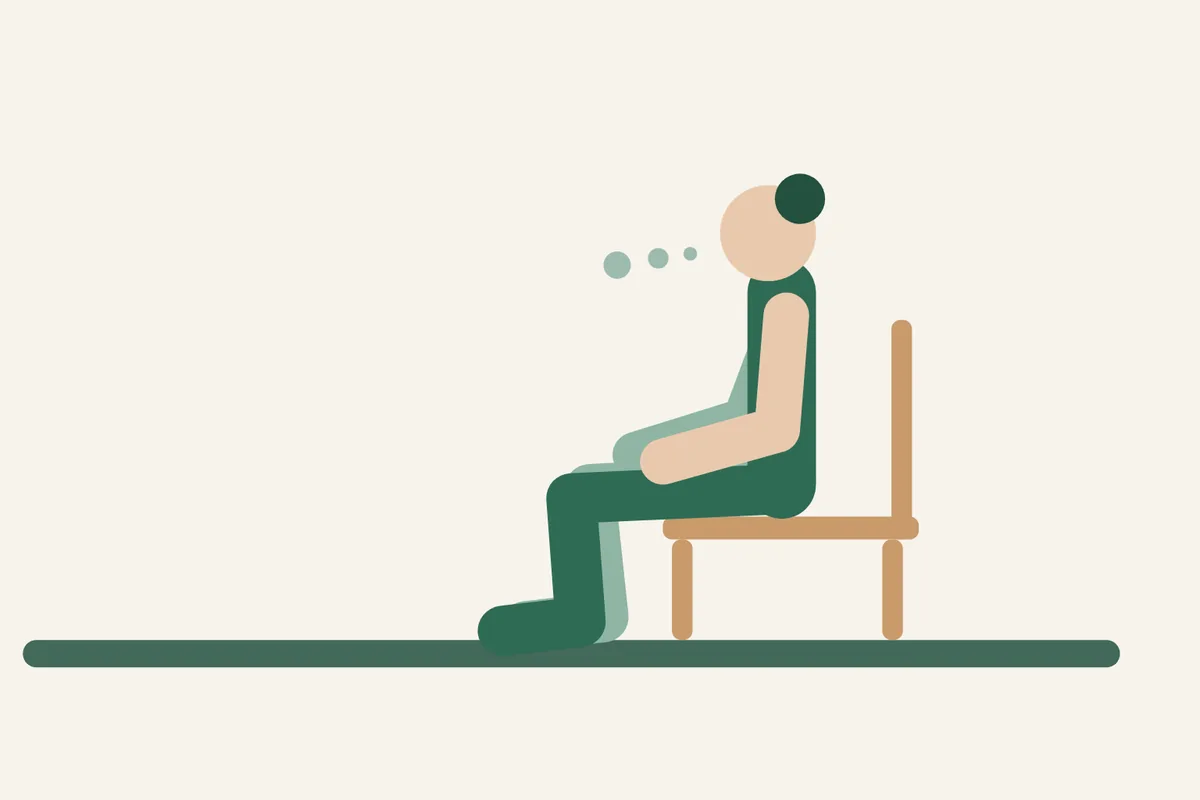
4-7-8 breathing is a counted pattern: a quiet breath in, a long pause, and an even longer breath out. Integrative medicine doctor Andrew Weil popularized it, and Cleveland Clinic traces its roots to pranayama, the breathing practices of yoga. You’ll also see it written as 4 7 8 breathing.
Because it includes a long breath hold, check the safety list first if you’re pregnant or have a heart, blood pressure, eye, lung or mental health condition. New to breath practice? Start with relaxed belly breathing, which has no pauses. Our Breathing section has more techniques.
In this guide
- How to do the 4-7-8 breathing technique
- How many breaths, and how many times a day?
- What if holding for 7 is too long?
- Common mistakes
- What if you feel dizzy?
- Does 4-7-8 help you fall asleep?
- Can it calm anxiety?
- Does it lower blood pressure?
- 4-7-8 vs box breathing
- Who should skip it or ask a doctor first
- What the research says
- Frequently asked questions
- Sources
How to do the 4-7-8 breathing technique
Choose a safe spot, never behind the wheel, because you may feel lightheaded at first.
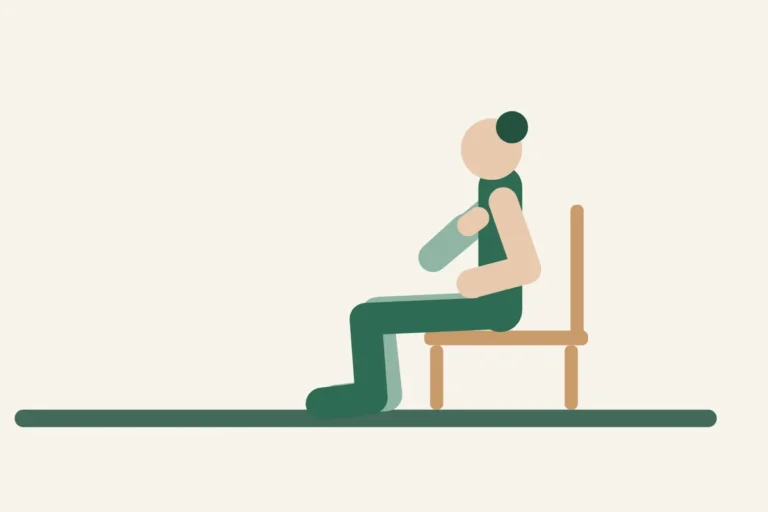
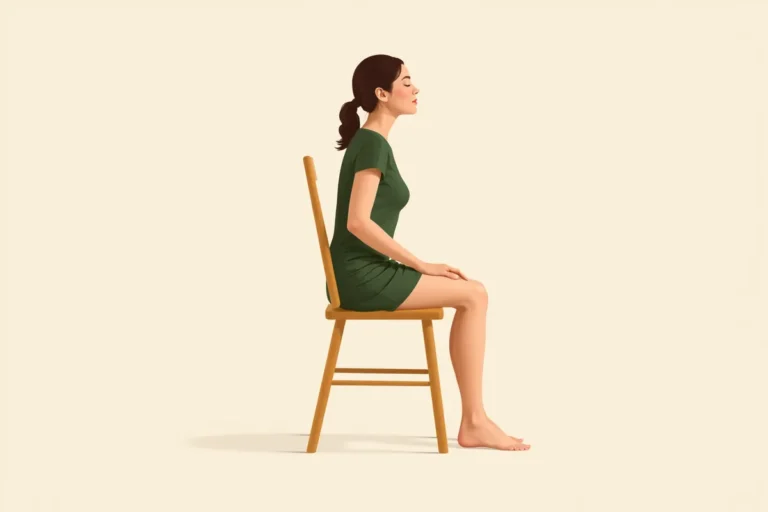
- Sit up with a straight back, in a supportive chair if you like. Soften your shoulders and jaw.
- Park your tongue tip on the gum ridge behind your top front teeth. Leave it there for the whole set.
- Before you start counting, let your air out through your mouth until you feel empty, with an audible whoosh.
- Shut your lips. Count to 4 in your head as air flows silently in through your nose.
- Keep the air in while you count to 7. Don’t strain or squeeze.
- Open your lips and whoosh the air out around your tongue for a count of 8. If the out-breath feels clumsy, purse your lips a little.
- You’ve done one breath. Repeat steps 4 to 6 three more times, then let your breathing run on its own while you stay seated for a moment.
The tongue position, whoosh, counts and set of four come from Dr. Weil’s patient handout, published by the University of Arizona’s Andrew Weil Center for Integrative Medicine. Cleveland Clinic’s instructions follow the same pattern and ask for a gentle, unstrained hold.
How many breaths, and how many times a day?
Start small.
| Source | Breaths per sitting | How often |
|---|---|---|
| Weil’s handout | No more than 4 in the first month; later up to 8 if you wish | At least twice a day |
| Cleveland Clinic specialist | 3 | Twice a day |
| A 2026 tinnitus trial | 4 | Morning and evening for 6 weeks |
Cleveland Clinic’s own step list runs through four cycles, while its integrative medicine specialist, Melissa Young, MD, suggests three at a sitting (Cleveland Clinic). The trial used the four-breath set, done seated (Kirazli et al., 2026).
If each count lasts one second, a breath takes 19 seconds and four breaths take 76. To make it stick, Cleveland Clinic suggests picking two regular points in your day, such as waking up and getting ready for bed.
What if holding for 7 is too long?
Count faster. Weil’s handout says the 4:7:8 proportion matters more than how long each count lasts. If the hold is a struggle, it advises speeding up the whole breath in that proportion, then slowing down as practice makes it easier. Cleveland Clinic likewise says to keep the counts and set a speed that feels comfortable.
| Count speed | In, hold, out (seconds) | One breath |
|---|---|---|
| Two counts a second | 2, 3.5, 4 | 9.5 seconds |
| Three counts every two seconds | About 2.7, 4.7, 5.3 | About 13 seconds |
| One count a second | 4, 7, 8 | 19 seconds |
These speeds are our own arithmetic examples. We found no study that compares them or shows a best way to progress.
If even a quick count leaves you tense or short of air, our suggestion is to drop the pause. Breathe slowly in, then let a slightly longer breath out follow. That’s no longer 4-7-8, and that’s fine. Our pranayama for beginners guide offers gentle practices without holds.
Common mistakes
- Forcing a slow count. If the 7 feels long, count faster and keep the 4:7:8 ratio, as Weil’s handout advises. You can slow down as it gets easier.
- Bearing down during the pause. Straining against a closed mouth and nose is called the Valsalva maneuver, and it briefly changes blood pressure and heart rate (Cleveland Clinic). Your chest, throat and belly should stay loose.
- Filling up to bursting. A comfortable breath is easier to hold than the biggest one you can manage.
- Adding breaths too soon. Stick with Weil’s limit of four during your first month.
- Only reaching for it in a crisis. Weil’s handout asks for practice at least twice a day, as well as using it when something upsetting happens.
What if you feel dizzy?
Stop. Weil’s handout describes early lightheadedness as passing, and Cleveland Clinic’s specialist says beginners may feel lightheaded or a bit short of breath. Neither is a reason to push on.
- Drop the count and let your breathing find its own rhythm.
- Stay seated, or lie down until the feeling passes and then rise slowly, as the NHS advises. If you’re pregnant, lie on your side rather than your back; the NHS gives the same advice for pregnant people who faint.
- Don’t gulp air to recover. When overbreathing is behind the symptoms, deep breaths can keep it going.
- Hold off on driving, ladders and machinery while you’re dizzy (NHS).
- If you try again another day, we suggest a faster count, only two breaths, or no hold.
See a doctor if dizziness doesn’t go away or keeps returning, or if it comes with fainting or a change in your pulse (NHS). Call 911 if chest pain is new, starts suddenly or lasts more than five minutes despite rest or medicine. Rapid breathing you’ve never had before needs medical help right away.
Does 4-7-8 help you fall asleep?
That hasn’t been shown. None of the studies we found timed how long it took people to drop off, so we know of no test behind promises of sleep within a minute. Weil suggests it for bedtime, and Cleveland Clinic goes further, saying it has been shown to help sleep. The trials below are what we found, so take the bedtime advice as practitioners’ advice rather than a settled research finding.
Two trials did ask about sleep:
- People with tinnitus (ringing in the ears). After six weeks, the average insomnia questionnaire score in the 4-7-8 group had gone from about 8 to about 4, while a group given only an information session stayed near 12. The comparison group started with higher scores, though not significantly so, participants knew which group they were in, and 12 of 60 people were left out of the analysis (Kirazli et al., 2026).
- People on dialysis. Sleep ratings were better than with usual care after eight weeks, but participants practiced four breathing techniques together, so nobody can say what 4-7-8 added (Güvener and Koç, 2025).
For long-lasting insomnia, guidelines put a structured program called cognitive behavioral therapy for insomnia first, and NCCIH says relaxation methods by themselves don’t look especially promising for sleep. See a doctor if you’ve had trouble sleeping for months or it’s affecting your daily life (NHS).
You can still use the pattern as one quiet step at lights-out. If guided rest appeals more than counting, read about yoga nidra.
Can it calm anxiety?
It may ease short-term nerves for some people, based on a handful of small trials.
- After weight-loss surgery: 90 patients were split into three groups. Afterward, momentary anxiety scores were lower in the 4-7-8 group than in the deep breathing or usual care groups (Aktaş and İlgin, 2023).
- Before endoscopy: in 75 adults 65 and older, the average anxiety score fell from about 60 to 48 with 4-7-8 and rose from 60 to about 62 with usual care. A third group that squeezed a stress ball improved more, from 58 to 40 (Parlak et al., 2026).
- With tinnitus: after six weeks, stress and general anxiety scores ended lower than with information alone, but anxiety scores already differed between the groups at the start (Kirazli et al., 2026).
None of these trials set out to study people with an anxiety disorder or panic attacks. Weil’s handout calls the exercise a “natural tranquilizer,” yet we found no study comparing it with calming medicine. If anxiety lasts, get help from a qualified health professional, and don’t change prescribed medicine on your own.
Does it lower blood pressure?
Don’t count on it. Some readings dipped after practice, but the research hasn’t shown that the pattern caused a drop.
- In 43 healthy people aged 19 to 25, heart rate and systolic pressure (the top number) were lower after one session lying down, within both the short-sleep and adequate-sleep groups. The fall in the top number was about 3 to 4 mm Hg. No group simply rested without the breathing (Vierra et al., 2022).
- In the endoscopy trial, systolic pressure fell within the 4-7-8 group, but the 4-7-8, stress ball and usual care groups did not differ significantly in blood pressure or heart rate (Parlak et al., 2026).
- In 84 college students, neither 4-7-8 nor the other patterns tested changed blood pressure in a meaningful way (Marchant et al., 2025).
A registered study of the pattern in people with high blood pressure, with 75 volunteers planned for its randomized three-month breathing part, is listed as completed in September 2026, and we found no published results of that test. Keep following the treatment plan your doctor prescribed (NCCIH).
4-7-8 vs box breathing
Box breathing makes four parts equal and pauses twice. The 4-7-8 pattern pauses once, for longer than the in-breath, and gives the most time to breathing out. Cleveland Clinic describes 4-7-8 as the somewhat trickier of the two and links it to sleep. It presents box breathing as something to use at almost any time of day (not while driving).
| Feature | 4-7-8 | Box |
|---|---|---|
| Counts | 4 in, 7 held, 8 out | 4 in, 4 held, 4 out, 4 held |
| Pauses per breath | One | Two |
| Longest part | Out-breath | All equal |
| One breath at a count a second | 19 seconds | 16 seconds |
One experiment put both through the same test. It measured 84 students during box (square) breathing, 4-7-8 and two patterns paced at six breaths a minute. The six-a-minute patterns raised heart rate variability, the beat-to-beat variation in heart timing, more than box breathing or 4-7-8 did, by a small to medium margin. No pattern changed mood in a meaningful way (Marchant et al., 2025).
Who should skip it or ask a doctor first
- Pregnancy: first ask your provider whether anything rules out exercise for you. NCCIH also warns pregnant people off long spells of keeping still or lying face up. Yoga teachers Kat Heagberg at Yoga International and Esther Ekhart at YogaEasy advise against breath holds in pregnancy, so leave 4-7-8 out unless your midwife or doctor says otherwise. Breathe slowly without pauses, sitting up. The NHS warns that in later pregnancy, a flat-on-the-back position may bring on dizziness and is bad for the baby.
- Heart disease, a rhythm problem or high blood pressure: get your doctor’s view before you try the 7-count pause; NCCIH lists severe high blood pressure among conditions that may call for changes. If you were born with a heart condition, or have trouble with your heart valves or coronary arteries, Cleveland Clinic says to be careful about straining on a held breath. Ekhart, writing for YogaEasy, advises against breath retention with heart disease or high blood pressure.
- Glaucoma and other eye conditions: check with your eye doctor first. NCCIH names glaucoma as one reason a yoga practice may need adjusting. For retinopathy, or an artificial lens in the eye (after cataract surgery, for example), Cleveland Clinic rules out the Valsalva maneuver, the deliberate strain against a closed airway.
- Asthma, COPD or another lung condition: talk with your doctor or respiratory therapist first, as NCCIH advises for people with health conditions, and keep using the treatment they prescribed. A breathing exercise is an add-on, not a replacement. Ekhart’s YogaEasy guidance advises against breath holds with asthma.
- If you have panic attacks, epilepsy, a mental health diagnosis or past trauma: check with a doctor or therapist before you start. Relaxation methods now and then leave people more anxious, and NCCIH mentions a few reports of symptoms appearing or getting worse in people with epilepsy, some psychiatric conditions, or a past that includes abuse or trauma.
- Driving and machinery: don’t practice while doing either. Stay where a dizzy moment can’t hurt you.
- Any health problem: don’t use breathing practice to put off seeing a doctor (NCCIH).
What the research says
Evidence: limited
We searched PubMed on November 28, 2026, and counted nine studies that measured something in the body, mood, sleep, pain or exercise after people practiced 4-7-8.
| Study | Who and how | Main finding |
|---|---|---|
| Vierra 2022 | 43 healthy young adults, one session, no rest-only comparison | Lower heart rate and systolic pressure within both sleep groups; heart rate variability results mixed |
| Aktaş 2023 | 90 people after weight-loss surgery, randomized trial | Lower momentary anxiety than with deep breathing or usual care |
| Buxton 2024 | 18 male lifters, with and without it in random order | No difference in lifting power or speed; heart rate recovered more after 2 of 5 sets |
| Marchant 2025 | 84 students, several patterns each | Six-a-minute breathing raised heart rate variability more than 4-7-8 did; no meaningful blood pressure or mood change |
| Güvener 2025 | 69 dialysis patients, randomized, four techniques together | Better pain, sleep and symptom scores than usual care |
| Eskimez 2026 | Knee replacement patients, one group only | Average pain rating about 7.3 before, 6.3 just after, 3.8 half an hour later |
| Kirazli 2026 | 60 people with tinnitus randomized, 48 analyzed, 6 weeks | Lower tinnitus, stress and insomnia scores than information alone; anxiety scores already differed at the start |
| Parlak 2026 | 75 older adults before endoscopy, randomized | Less fear and anxiety than usual care; body measures no different between groups |
| Avcık 2026 | 34 students, random crossover, 10-minute sessions | Heart rate variability no different from the other conditions; mood and stress results differed by sex |
Avcık’s team compared 4-7-8 with alternate nostril breathing and resting breathing. They report less stress and negative mood with 4-7-8 in women, while men saw bigger reductions with alternate nostril breathing. The knee study had nothing to compare against, so time and other care could explain the falling pain scores.
What’s still missing: any timed test of falling asleep, trials aimed at anxiety disorders, anything that followed people for longer than eight weeks, and a test of what the seven-count hold itself adds. We found no systematic review of 4-7-8. We left out four other papers that used it within a technology experiment or a rotating student wellness program. On November 28, 2026, a ClinicalTrials.gov search showed 35 registered studies, 22 of them marked completed, none with results posted there.
We rate the evidence as limited. The pattern has been tested, sometimes in randomized trials, but the studies are mostly small and short, cover narrow groups and don’t all agree.
Frequently asked questions
Is the 4-7-8 breathing technique dangerous?
Safety has barely been studied. The squat study reported that people tolerated the breathing well (Buxton et al., 2024), and the endoscopy researchers observed no adverse events in their breathing group (Parlak et al., 2026). Groups that small can’t rule out uncommon problems. Lightheadedness is possible, and anyone named in the safety box above needs advice first.
Can you do 4-7-8 breathing lying down?
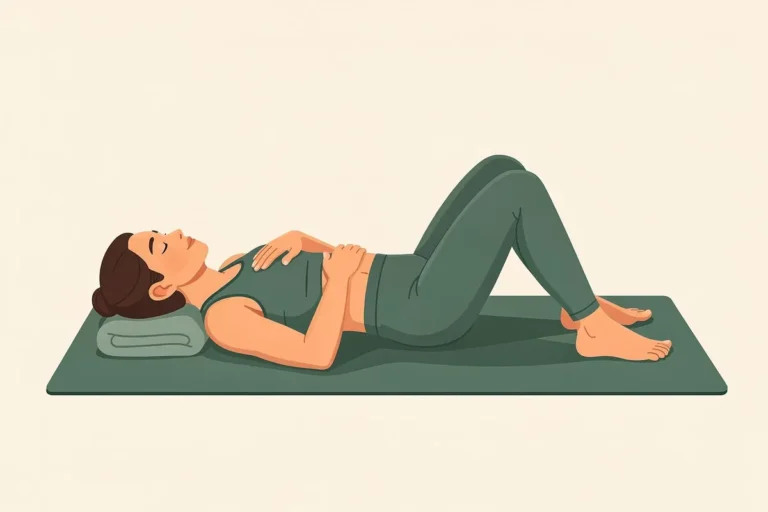
Often, yes. Weil’s handout prefers sitting with a straight back, while Cleveland Clinic says you can do it in bed when you’re using it for sleep. Learn it sitting up first. In pregnancy, don’t practice on your back, and get advice before any hold.
How soon will you notice a difference?
No one can say for sure. Weil’s handout says the effect is subtle at first and grows with repetition. The trials don’t map out a timeline: some measured people right after one session, others after six or eight weeks.
Helpful gear for this
 Hugger Mugger zafu meditation cushion
Round cushion, 15 x 15 x 5 in, buckwheat-hull fill, removable cotton cover you can hand-wash (maker's spec).
See it on Amazon Gaiam zafu meditation cushion
15 in round and 5 in high, buckwheat fill you can add or remove, machine-washable cover (maker's spec).
See it on Amazon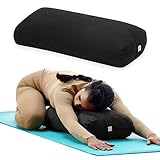 Gaiam rectangular yoga bolster
25 x 12 x 5 in bolster to lie back on or put under your knees, machine-washable cover (maker's spec).
See it on Amazon
As an Amazon Associate we earn from qualifying purchases. How we choose gear
Sources
- Weil A. 4-7-8 breath (patient handout). Andrew Weil Center for Integrative Medicine, University of Arizona., checked Nov 28, 2026
- Cleveland Clinic. How to do the 4-7-8 breathing exercise. Health Essentials. September 6, 2022., checked Nov 28, 2026
- Cleveland Clinic. Breathwork for beginners: what to know and how to get started. Health Essentials. May 19, 2023., checked Nov 28, 2026
- Cleveland Clinic. Valsalva maneuver. Last updated June 9, 2022., checked Nov 28, 2026
- Cleveland Clinic. Hyperventilation. Last updated July 1, 2024., checked Nov 28, 2026
- Cleveland Clinic. Chest pain. Last updated June 21, 2023., checked Nov 28, 2026
- National Center for Complementary and Integrative Health (NCCIH). Relaxation techniques: what you need to know. Updated June 2021., checked Nov 28, 2026
- National Center for Complementary and Integrative Health (NCCIH). Yoga: Effectiveness and Safety. Last updated August 2023., checked Nov 28, 2026
- NHS. Dizziness. Reviewed April 21, 2023., checked Nov 28, 2026
- NHS. Fainting. Reviewed August 17, 2026., checked Nov 28, 2026
- NHS. Insomnia. Reviewed March 19, 2024., checked Nov 28, 2026
- NHS. Exercise in pregnancy. Reviewed September 24, 2026., checked Nov 28, 2026
- Heagberg K. 6 tips for modifying your class for pregnant students. Yoga International., checked Nov 28, 2026
- Ekhart E. What is pranayama? YogaEasy. Modified March 9, 2026., checked Nov 28, 2026
- Vierra J, Boonla O, Prasertsri P. Effects of sleep deprivation and 4-7-8 breathing control on heart rate variability, blood pressure, blood glucose, and endothelial function in healthy young adults. Physiol Rep. 2022;10(13):e15389., checked Nov 28, 2026
- Aktaş GK, İlgin VE. The effect of deep breathing exercise and 4-7-8 breathing techniques applied to patients after bariatric surgery on anxiety and quality of life. Obes Surg. 2023;33(3):920-929., checked Nov 28, 2026
- Buxton JD, Grose HM, DeLuca JD, et al. The effects of slow breathing during inter-set recovery on power performance in the barbell back squat. J Hum Kinet. 2024;93:93-103., checked Nov 28, 2026
- Marchant J, Khazan I, Cressman M, Steffen P. Comparing the effects of square, 4-7-8, and 6 breaths-per-minute breathing conditions on heart rate variability, CO2 levels, and mood. Appl Psychophysiol Biofeedback. 2025;50(2):261-276., checked Nov 28, 2026
- Güvener YÖ, Koç Z. The effect of breathing exercises on pain, sleep, and symptom management in patients undergoing hemodialysis: a randomized controlled trial. Sleep Breath. 2025;29(2):170., checked Nov 28, 2026
- Eskimez Z, Keskin A, Kurt E, et al. 4-7-8 breathing techniques make it possible to reduce pain associated with total knee arthroplasty: a new technique in respiratory exercises. J Perianesth Nurs. 2026;41(1):48-53., checked Nov 28, 2026
- Kirazli G, Baran S, Uysal GS, et al. The effect of 4-7-8 breathing exercise technique on tinnitus handicap, psychological factors, and sleep quality in tinnitus patients: a randomized controlled study. Brain Behav. 2026;16(2):e70854., checked Nov 28, 2026
- Parlak AG, Çullu M, Özkaraca Z. The effect of stress ball and 4-7-8 breathing technique on preprocedure fear, anxiety, and physiological parameters in elderly patients undergoing endoscopy: a randomized controlled study. Gastroenterol Nurs. 2026;49(6):388-398., checked Nov 28, 2026
- Avcık FE, Koç F, Aktop A. Acute psychophysiological effects of 4-7-8 and nadi shodhana breathing: a randomized crossover study. Appl Psychophysiol Biofeedback. 2026 (online ahead of print)., checked Nov 28, 2026
- ClinicalTrials.gov. NCT07018128: expression of genes relating hypertension in Thailand and the efficacy of 4-7-8 breathing control on reducing blood pressure in individuals with hypertension (study record)., checked Nov 28, 2026
- ClinicalTrials.gov. Registered studies listing 4-7-8 breathing as an intervention (search)., checked Nov 28, 2026
Image credits: Illustration: YogaForFitness (vector figure), drawn from the steps above