- Level: Beginner
- Pose type: Prone · Backbend
- Body area: Spine · Lower back · Upper back · Chest
- Props: blanket
Cobra Pose (Bhujangasana)
Pronounced boo-jahn-GAHS-ah-nah
Quick answer
Lie on your belly with your hands under your shoulders and your elbows bent and close to your sides. Press the tops of your feet and your pelvis into the floor, then lift your chest a few inches. Stay low, keep your neck long, and come down if your lower back pinches.
We may earn a commission when you buy through links on this page. It never changes what we recommend. As an Amazon Associate we earn from qualifying purchases.
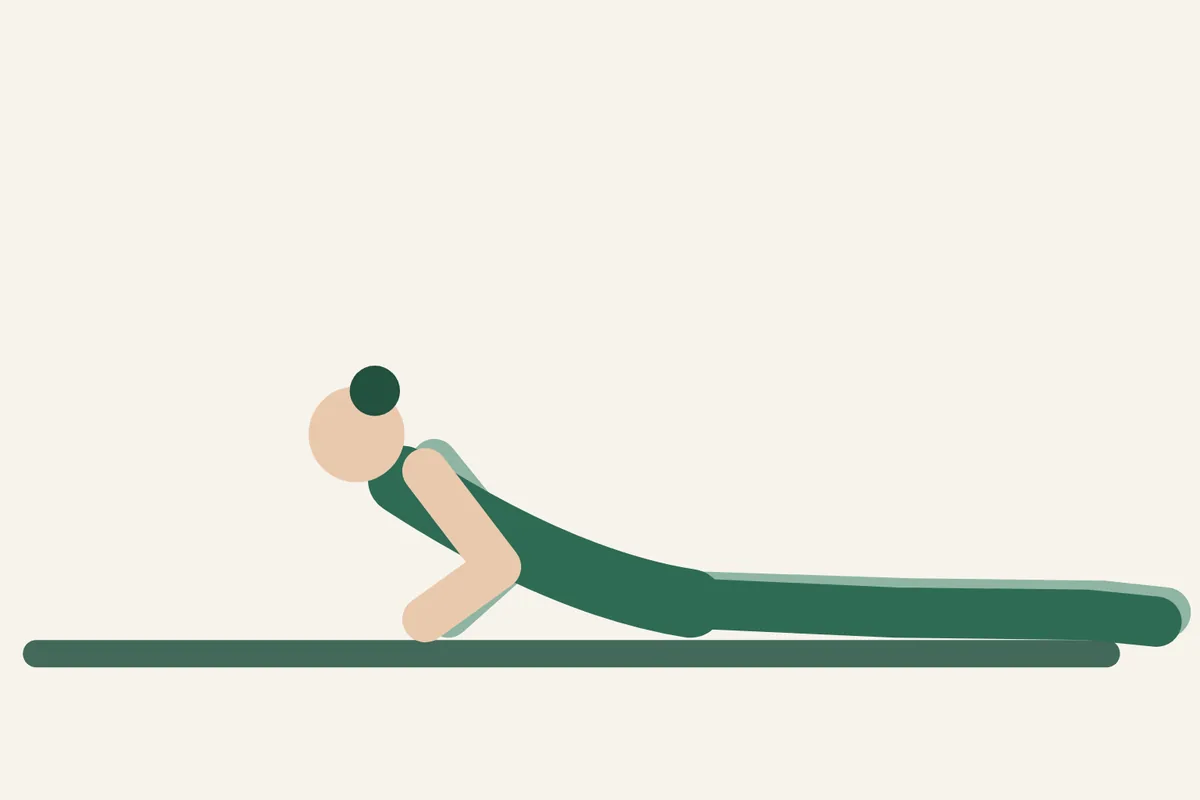
Cobra Pose is a small backbend you do lying face down. Your legs and pelvis rest on the floor, your hands sit beside your chest, and you peel your head and chest up while the rest of you stays grounded. It shows up in many sun salutations, in gentle classes and in beginner routines, and it is the usual way to learn backbending before bigger shapes such as Upward-Facing Dog.
The key word for beginners is *low*. A good Cobra lifts your chest only as high as your back is happy to go, which is often just a few inches. Lifting higher by straightening your arms doesn’t make the pose better, and it is an easy way to end up with a pinch in your lower back. This guide covers the setup, the cues, the gentler Baby Cobra and Sphinx versions, and who should check with a clinician first. It is part of our pose library. New to yoga? Start with yoga for beginners.
In this guide
How to do Cobra Pose
- Lie face down on your mat with your legs straight behind you, about hip-width apart. Rest your forehead on the floor.
- Point your toes straight back so the tops of your feet lie flat on the mat.
- Bend your elbows and set your palms flat on the floor under your shoulders, or a little ahead of them, fingers pointing forward.
- Hug your elbows in toward your ribs so they point back toward your feet, not out to the sides.
- Press the tops of your feet, your thighs and the front of your pelvis gently into the floor. Your legs stay where they are for the whole pose. Draw your lower belly gently in, away from the floor.
- As you breathe in, lift your head and then your chest away from the floor, a few inches to start. Use the muscles of your back first, then add a light press from your hands.
- Keep your elbows bent. Check that your hip bones and the fronts of your thighs still touch the mat.
- Let your shoulders move down and back, away from your ears, and look at the floor a little ahead of your hands so your neck stays long.
- Stay for a few slow breaths, or lift and lower a few times with your breath. To come out, breathe out and lower your chest and forehead to the floor. Rest with your head turned to one side, or press back into Child’s Pose.
Alignment cues
- Legs and pelvis: they are your anchor. The tops of the feet, the fronts of the thighs and the front of the pelvis stay on the floor. If your hips start to lift, you have gone higher than Cobra.
- Elbows: bent and close to your sides. They point back toward your heels, not out like wings.
- Hands: flat, with the weight spread across your palms and fingers. The hands help, but your back muscles should do most of the lifting. A quick test: can you hover your hands off the floor for a breath? If you can, your back is working.
- Shoulders: broad and away from your ears. Think of your chest moving forward and up between your arms rather than your shoulders hunching up.
- Spine: spread the bend along your back, so you feel your upper back join in and not only your lower back. Picture your breastbone moving forward, not your belly pushing down.
- Lower back: you may feel it working. You should not feel it pinch.
- Neck and gaze: your neck continues the gentle curve of your back. Look down and ahead, or straight ahead if that is comfortable. Avoid tipping your head far back to look at the ceiling.
- Breath: lift as you breathe in, lower as you breathe out, and keep breathing while you hold.
Common mistakes
- Pushing too high. Straightening the arms to lift the chest higher moves the bend into the lower back. Keep your elbows bent and come down until the pinch is gone.
- Hips leaving the floor. If your pelvis lifts, you are drifting toward Upward-Facing Dog. Bend your elbows more so your hips settle back down. The ACE cue is the same: limit how far you straighten your arms so your hips stay on the mat.
- Elbows flaring out. Wide elbows tend to pull your shoulders forward and up toward your ears. Tuck them in.
- Shrugging. Shoulders up by your ears squeeze your neck. Slide them down and back before you lift.
- Cranking the neck. Throwing your head back to look up crowds the back of your neck. Keep your chin level and your gaze low.
- Holding your breath. If you can’t breathe easily, you are working too hard. Lower down a little.
Watch out for: sharp or pinching pain in your lower back, tingling or pain running down a leg, or dizziness. Come down, rest, and try Sphinx or Baby Cobra instead. If leg symptoms or back pain keep coming back, see a doctor or physical therapist.
Make it easier (props)
- A blanket under your pelvis and thighs. Fold a blanket into a long, flat strip and lie with it under the front of your hips and thighs. It softens a hard floor under your hip bones, and some people find their lower back feels less crowded with it.
- A blanket under your feet. If the tops of your feet or your ankles ache, slide a thin folded blanket under your shins and feet.
- Forearms down (Sphinx). Rest on your forearms instead of your hands. Your wrists carry no weight, and the bend is usually milder (see Variations).
- Hands a little farther forward. Placing your hands slightly ahead of your shoulders lightens the backbend and eases the angle in your wrists.
- Smaller lift, more rounds. Lift a few inches, lower, and repeat a few times with your breath instead of holding one higher Cobra.
Helpful gear for this pose
 Manduka begin yoga mat, 5 mm
5 mm TPE mat, 68 x 24 in, light to carry, with a center alignment stripe (maker's spec).
See it on Amazon Gaiam foam yoga blocks, pair
Two light foam blocks, 9 x 6 x 4 in each, to raise the floor under your hands (maker's spec).
See it on Amazon Hugger Mugger cotton D-ring yoga strap, 10 ft
Cotton webbing 1.5 in wide with a metal D-ring buckle, 10 ft long (maker's spec).
See it on Amazon
As an Amazon Associate we earn from qualifying purchases. How we choose gear
Variations
- Baby Cobra (low Cobra). Set up the same way, then lift your head and chest only an inch or a few, using your back muscles. Keep your hands on the floor with little or no weight in them, or let them hover just above the mat. Most beginners can start here, and it is close to the low version the beginner routine uses.
- Sphinx Pose. The gentler forearm version. Lie on your belly and place your elbows under your shoulders, forearms parallel and pointing forward, palms down. Press your forearms lightly into the floor and let your chest lift and move forward while your belly and hips stay down. To soften the bend even more, slide your elbows farther forward. Sphinx is a good choice for sore wrists, or when your lower back pinches in Cobra.
- Full Cobra. If your back is comfortable after some practice, you can lift a little higher by pressing more into your hands, still with your elbows soft and your pelvis on the floor. Only go as high as your back allows without pinching.
- Cobra in a flow. In many sun salutations, Cobra comes after you lower to the floor and before Downward-Facing Dog. Faster classes may use Upward-Facing Dog in the same spot. You can always swap in Cobra.
Poses to do before and after
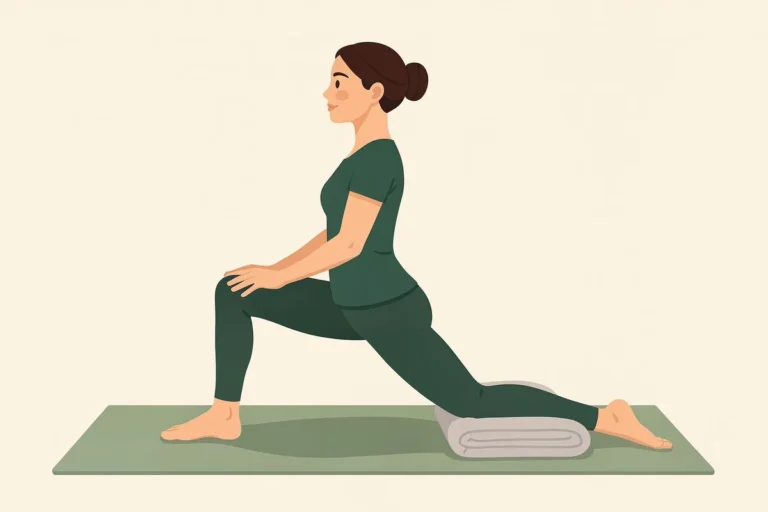
- Before: Cat-Cow moves your spine gently through rounding and arching, a good warm-up for any backbend. A Low Lunge stretches the front of your hips, which lengthen in Cobra too.
- After: press back into Child’s Pose, which gently rounds your back in the opposite direction. Or turn your head to one side and rest on your belly for a few breaths.
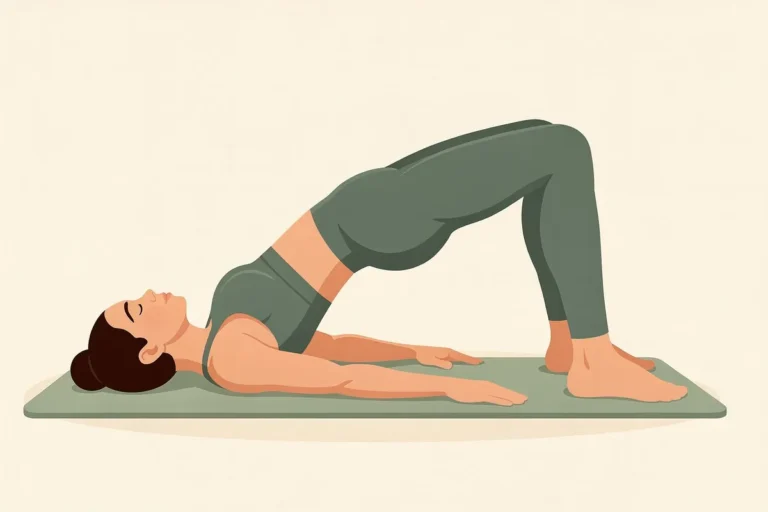
- Next steps: Bridge Pose is another beginner backbend, done lying on your back. If your lower back is the reason you’re here, see our guide to yoga for lower back pain.
- Read next: how to start yoga at home shows how to fit poses like this one into a short home session.
Who should skip it or ask a doctor first
- Lower-back pain or a diagnosed back condition. The NCCIH lists lumbar spine disease among the health conditions that may call for changes to your yoga practice. Cobra bends your lower back backward, so keep it very low or use Sphinx. If Cobra causes lower-back pain, stop and talk to your doctor, as the ACE advises.
- Spinal stenosis or spondylolisthesis. Bending the lower back backward can make spinal stenosis symptoms worse, while sitting or leaning forward may ease them (NIAMS). So talk to your doctor or physical therapist before trying Cobra. MedlinePlus lists bending backward among the things that can make sciatica pain worse, particularly when stenosis is behind it. With spondylolisthesis, doctors may ask you to change activities so your lower back isn’t overextended (MedlinePlus). Mayo Clinic doctors who reviewed 89 patients with yoga-related injuries found that the poses most often involved had bent the spine to an extreme, forward or backward (Lee et al., 2019).
- Recent abdominal surgery, including a C-section or hernia repair. Cobra puts your weight on your belly and stretches the front of your body. Ask your surgeon when lying face down and stretching the abdomen are OK for you.
- Pregnancy. Get checked by your health care provider before exercising, as the NCCIH advises. Lying face down presses on your belly and gets uncomfortable as pregnancy goes on, so skip Cobra once it does, and ask your doctor or midwife about poses on your belly. Don’t switch to lying on your back instead: the NCCIH advises avoiding yoga poses with long periods on your back, and the NHS advises against lying flat on your back for longer than a few minutes late in pregnancy. For a gentle backbend without lying down, try the Cow half of Cat-Cow on your hands and knees, or sit tall on a chair and lift your chest. Ask your doctor or midwife what suits you.
- Wrist or shoulder injuries. The NCCIH lists preexisting injuries among the conditions that may call for changes. Use Sphinx to take your wrists out of it, or Baby Cobra with your hands hovering to take weight off your shoulders. Ask your doctor or physical therapist if a joint is injured.
- Neck problems. Keep your gaze low and your neck long, and don’t tip your head back. In a 2026 case report, a woman’s dizziness and blurred vision during yoga, mostly in Upward-Facing Dog and Camel, were linked to an artery in her neck being pressed, and the authors point to neck hyperextension and turning as the risk (Shenouda et al., 2026). This is one case, but stop at once if you feel dizzy or your vision changes during a backbend, and seek medical care.
- Osteoporosis or low bone density. Cobra is not the strongly rounded spine shape that Mayo Clinic doctors advise people with low bone density to avoid. They also urge care with extreme backbends, though (Lee et al., 2019). Keep the pose low and ask your doctor or physical therapist which positions suit your bones.
- Older adults. People 65 and older are treated in emergency rooms for yoga injuries at a higher rate than younger adults, the NCCIH notes, so extra care makes sense. Getting down to and up from the floor is part of this pose, so take it slowly.
- Other conditions the NCCIH lists: glaucoma, balance problems, severe high blood pressure, and knee or hip injuries may also mean adapting your practice. Talk with your health care provider about your own needs.
What the research says
Evidence: no good evidence
No trial we could find has tested Cobra Pose by itself for any health benefit. That is why the chip above says “No good evidence.” A PubMed search for Bhujangasana and “cobra pose” turned up only a handful of yoga papers. None tested Cobra alone for a health outcome; in most, Cobra was one pose in a set. The most useful ones:
- Three poses for period pain. In one trial, 92 female students aged 18 to 22 with painful periods were split into a group that practiced Cobra, Cat and Fish poses in the second half of their cycle, before their periods and a group that did nothing. Pain was less intense and shorter in the yoga group than in the control group (Rakhshaee, 2011). It was a single small trial with no comparison exercise, and it tested three poses together, so it can’t show what Cobra does by itself.
- A yoga program for chronic low back pain. Cobra, with modifications, was part of all 12 weekly classes in a yoga program (study protocol), and Sphinx was in 9 of them. The trial enrolled 320 adults with chronic low back pain, mostly from low-income communities. After 12 weeks, yoga matched physical therapy for pain and back function, yet it did not beat a third group that was given a book and newsletters about back care (Saper et al., 2017). Across many studies of yoga for low back pain, the NCCIH sums up the evidence as “a slight benefit.”
- Muscles at work. In a lab study of 8 trained yoga practitioners doing a 12-pose sun salutation, the broad muscle of the mid and lower back (latissimus dorsi) worked harder while Cobra was held than during the hold of any other pose in the sequence, at about 37% of its maximum effort (Mullerpatan et al., 2020). (All muscles worked harder while moving between poses.) That describes effort, not a health outcome.
None of these studies shows what Cobra Pose does for your health on its own. Its value is practical: an easy-to-scale first backbend that you can keep as low as your back likes.
Frequently asked questions
What is the difference between Cobra and Upward-Facing Dog?
They look alike, but the base is different. In Cobra, your pelvis and thighs stay on the floor and your elbows usually stay bent. In Upward-Facing Dog, you straighten your arms fully and lift your thighs and knees off the floor, so only your hands and the tops of your feet touch the mat.
| Cobra | Upward-Facing Dog | |
|---|---|---|
| On the floor | tops of feet, legs, pelvis, hands | hands and tops of feet only |
| Arms | elbows bent, close to your sides | straight |
| Weight on your hands | light | more of your body weight |
| Intensity | milder, easy to keep low | a bigger backbend |
It’s common to learn Cobra first and adding Upward-Facing Dog later, once lifting your chest feels easy.
What is the difference between Cobra and Sphinx?
In Sphinx, you rest on your forearms with your elbows under your shoulders. Your forearms share the load, the bend is usually milder and your wrists get a rest. In Cobra, you lift from your hands and back instead. If Cobra pinches your lower back or hurts your wrists, try Sphinx.
How long should you hold Cobra Pose?
Start with 2 to 5 slow breaths, or lift and lower 3 to 5 times with your breath. The ACE suggests holding its version for 15 to 30 seconds. Come down sooner if your lower back starts to complain. Our guide to how long to hold a yoga pose has more.
Is Cobra Pose good for lower back pain?
No study we found has looked at Cobra alone as a back pain remedy. It was one of many poses in a 12-week yoga program for chronic low back pain that did about as well as physical therapy, but no better than a book and newsletters about back care (see the research box). Bending backward doesn’t suit every back. With spinal stenosis, for example, standing, walking or arching the lower back can make symptoms worse, while sitting or leaning forward often eases them (NIAMS). If your back hurts, ask a doctor or physical therapist whether backbends suit you, and don’t use yoga to put off seeing a health care provider, as the NCCIH advises.
Is Cobra Pose good or bad for sciatica or a herniated disc?
It depends on the cause, which is why it’s worth asking your doctor or physical therapist first. Backward bending is one of the movements that can worsen sciatica pain, more so when spinal stenosis is the cause (MedlinePlus). We found no study of Cobra for a herniated disc. If a backbend sends pain, tingling or numbness down your leg, stop.
Why does Cobra Pose hurt my lower back?
Often because you have lifted too high, often by straightening your arms, so the bend has piled up in your lower back. Bend your elbows, come down until the pinch fades, and spread the lift into your upper back. A blanket under your hips or the Sphinx version can help. Like any exercise, yoga can cause pain. When researchers tracked 354 students of two yoga studios over one year, 10.7% reported new pain that yoga had caused (Campo et al., 2018). If the pain lasts after you stop, see a doctor or physical therapist.
Is Cobra Pose safe during pregnancy?
Lying on your belly gets harder as your bump grows, so ask your doctor or midwife whether it’s still OK for you. For a gentle backbend without lying down, try Cow on your hands and knees from Cat-Cow, or sit tall on a chair and lift your chest. Don’t swap it for poses on your back: the NCCIH advises avoiding poses with long periods of lying on your back during pregnancy.
Does Cobra Pose increase height or burn belly fat?
We found no study showing that Cobra makes you taller or burns belly fat. It is a gentle backbend, not a weight-loss method.
Sources
- National Center for Complementary and Integrative Health (NCCIH). Yoga: Effectiveness and Safety. Last updated August 2023., checked Nov 9, 2026
- American Council on Exercise (ACE). Exercise Library: Cobra Stretch., checked Nov 9, 2026
- National Institute of Arthritis and Musculoskeletal and Skin Diseases (NIAMS). Spinal Stenosis. Last reviewed November 2023., checked Nov 9, 2026
- MedlinePlus (U.S. National Library of Medicine). Spondylolisthesis. Reviewed August 27, 2024., checked Nov 9, 2026
- MedlinePlus (U.S. National Library of Medicine). Sciatica. Reviewed August 27, 2024., checked Nov 9, 2026
- Lee M, Huntoon EA, Sinaki M. Soft tissue and bony injuries attributed to the practice of yoga: a biomechanical analysis and implications for management. Mayo Clin Proc. 2019;94(3):424-431., checked Nov 9, 2026
- Shenouda M, Bruce E, Jaiswal S, Arogundade EO, Garami Z, Lee AG. Yoga Causing Vertebrobasilar Ischemia with Neuro-Ophthalmic Presentation: A Case Report. Case Rep Ophthalmol. 2026;17(1):365-370., checked Nov 9, 2026
- NHS. Exercise in pregnancy. Page last reviewed September 24, 2026., checked Nov 9, 2026
- Rakhshaee Z. Effect of three yoga poses (cobra, cat and fish poses) in women with primary dysmenorrhea: a randomized clinical trial. J Pediatr Adolesc Gynecol. 2011;24(4):192-196., checked Nov 9, 2026
- Saper RB, Lemaster C, Delitto A, et al. Yoga, Physical Therapy, or Education for Chronic Low Back Pain: A Randomized Noninferiority Trial. Ann Intern Med. 2017;167(2):85-94., checked Nov 9, 2026
- Saper RB, Sherman KJ, Delitto A, et al. Yoga vs. physical therapy vs. education for chronic low back pain in predominantly minority populations: study protocol for a randomized controlled trial. Trials. 2014;15:67., checked Nov 9, 2026
- Mullerpatan RP, Agarwal BM, Shetty TV. Exploration of Muscle Activity Using Surface Electromyography While Performing Surya Namaskar. Int J Yoga. 2020;13(2):137-143., checked Nov 9, 2026
- Campo M, Shiyko MP, Kean MB, Roberts L, Pappas E. Musculoskeletal pain associated with recreational yoga participation: A prospective cohort study with 1-year follow-up. J Bodyw Mov Ther. 2018;22(2):418-423., checked Nov 9, 2026
Image credits: Illustration: YogaForFitness (vector figure), drawn from the steps above